RSS

How to Fix Canada’s Housing Crisis: Seven Bold Solutions

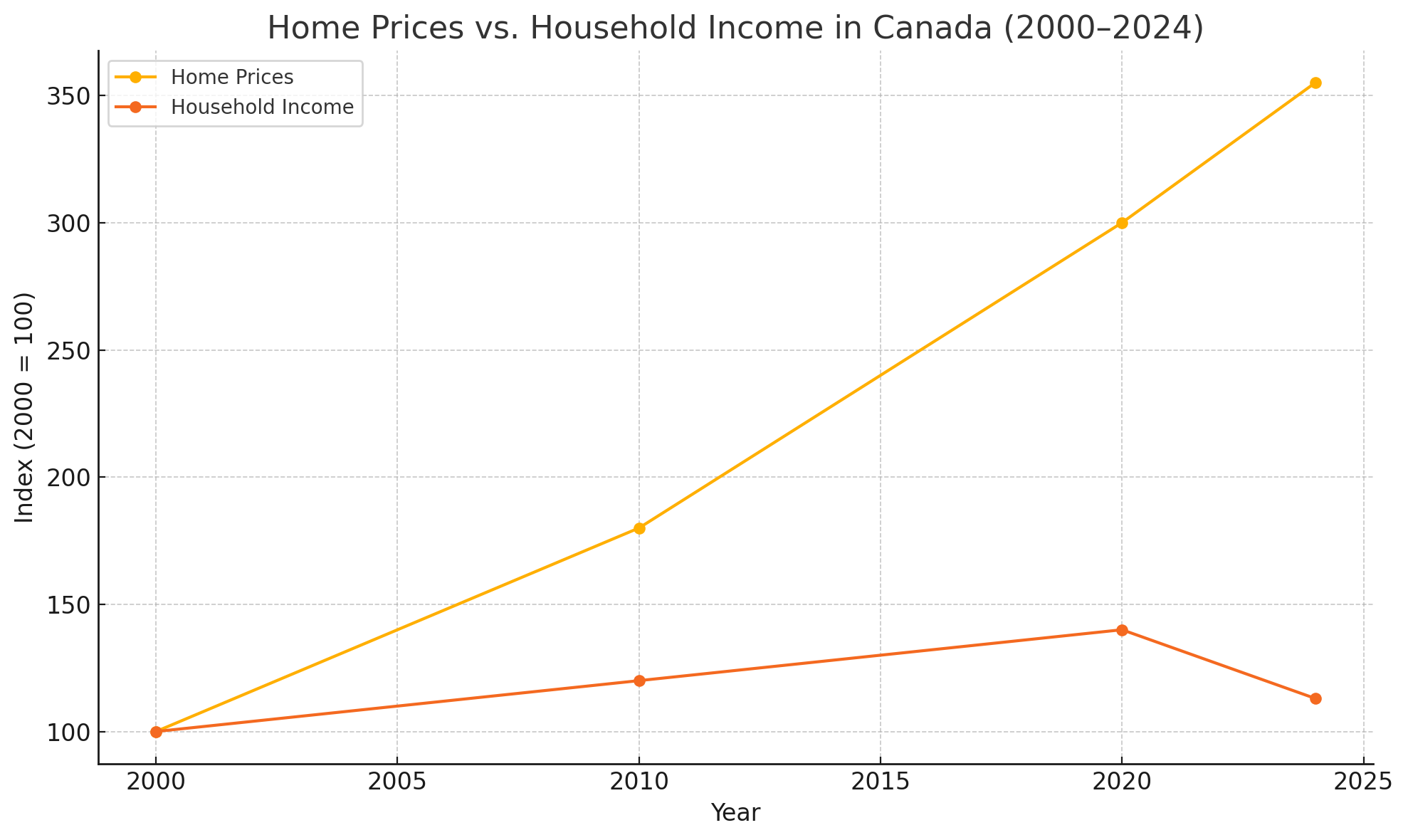
Canada is in the throes of a housing crisis defined by sky-high prices and a dire shortage of affordable homes. By 2021, Canadian home prices had surged 355% since 2000 while household incomes rose only 113%​.

  • This has made Canada one of the least affordable housing markets in the world​.

  • Renting offers little relief: rents have been climbing at roughly double the rate of inflation, with increasing overcrowding and homelessness as a result​ mpamag.com.

  • Meanwhile, the country’s population is growing rapidly, adding pressure to a housing supply that isn’t keeping up. The Canada Mortgage and Housing Corporation (CMHC) projects we need about 5.8 million new homes by 2030 to restore affordability – a massive goal we are far from on track to meet​ multiculturalmeanderings.com .

How did we get here?

For decades, housing policy has treated homes as investment assets rather than a basic necessity​ mpamag.com.

Since the 1990s, Canada pulled back on public housing programs, relying on the private market to provide shelter​ mpamag.com.

Here’s a chart showing how Canadian home prices have dramatically outpaced household incomes from 2000 to 2024. This visual clearly supports the article’s point about affordability deteriorating over time.
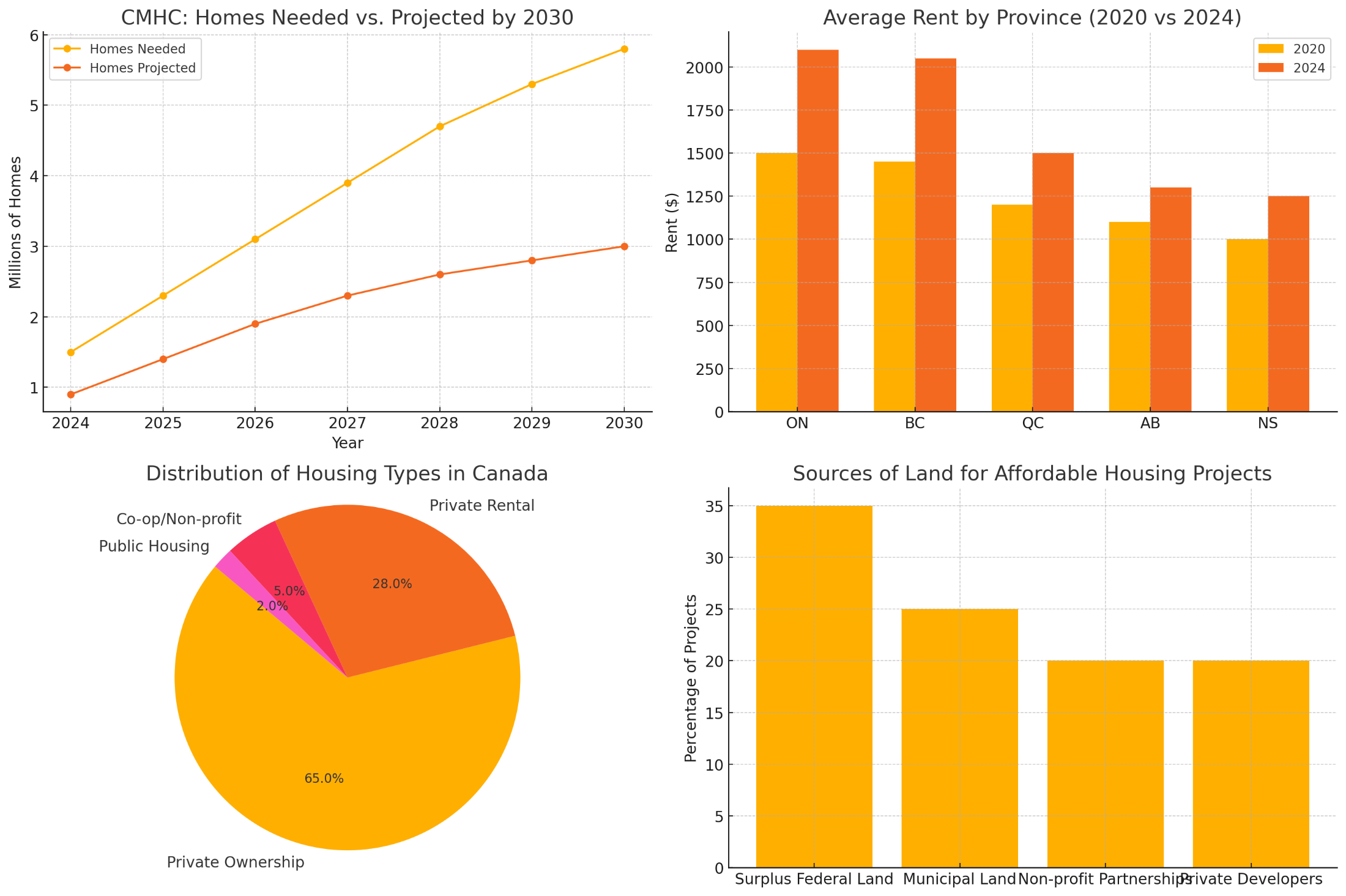
  • CMHC Homes Needed vs. Projected (2024–2030) – Highlights the growing shortfall in housing supply needed to restore affordability.

  • Average Rent by Province (2020 vs. 2024) – Shows how rents have surged in several provinces.

  • Housing Type Distribution in Canada – Demonstrates the small share of social and public housing compared to private ownership and rentals.

  • Land Use for Affordable Housing Projects – Illustrates potential sources of land for new affordable housing.

The result is a perfect storm of low supply and high demand, where owning or even renting a decent home is out of reach for many Canadians. Solving this crisis will require bold, creative action on multiple fronts – there is no single silver bullet. Below, we outline seven ambitious but entirely doable solutions that address both affordability and supply. Each idea is inspired by expert recommendations (as highlighted in Maclean’s magazine) and real-world examples of positive change.

1. Implement a National Social-Housing Program

One fundamental solution is to bring back a robust national social-housing program – a federally-led effort to build non-market housing (such as public, co-op, and non-profit homes) at a large scale. Canada once had strong social housing initiatives: before 1993, federal programs helped create hundreds of thousands of affordable units across the country​ mpamag.com. But funding was withdrawn in the early 1990s, and construction of social housing plummeted. Today, only a tiny fraction of Canadian housing is publicly funded, leaving us with “one of the lowest rates of social housing in the world,” according to housing researcher Carolyn Whitzman​ multiculturalmeanderings.com.

Reviving a national housing program would mean direct government investment to build affordable homes that remain outside the speculative market. This could include new subsidized rentals, community housing projects, and supportive housing for vulnerable groups. Other wealthy countries offer models: many European cities are building beautiful, affordable public housing and co-operatives at a faster pace than Canada​ oakland.overdrive.com.

For example, Vienna and Singapore have successfully maintained extensive social housing that keeps rents reasonable for citizens. A Canadian national program could similarly create hundreds of thousands of permanently affordable units, easing pressure on the private market. Importantly, it would treat housing as essential infrastructure – like schools or hospitals – rather than a commodity. As Whitzman notes, back in the 1970s (another period of high immigration and population growth) Canada actually built more housing than we do today, precisely because we had robust federal programs and incentives for purpose-built rental housingmulticulturalmeanderings.com.
Re-establishing such a program now would directly increase supply at the low-cost end, provide homes for those in core need, and help make housing a human right in practice, not just in principle.

2. Reform Zoning Laws to Allow Greater Density

Another key to unlocking supply and affordability is overhauling restrictive zoning laws. In many Canadian cities, outdated municipal zoning rules forbid multi-unit housing on the majority of residential land, effectively mandating sprawl and scarcity. These rules – often called single-family zoning – mean that on a given lot it may be illegal to build anything other than a detached house. This strangles the creation of townhomes, duplexes, small apartment buildings, and other denser, more affordable forms of housing. As Maclean’s bluntly puts it: too many local governments “refuse to allow the housing abundance Canada needs,” and it’s time for higher levels of government to step in​ oakland.overdrive.com.

Reforming zoning laws would involve allowing greater density, especially in urban and suburban neighborhoods well-served by transit and infrastructure. Provinces or cities could change rules to permit duplexes, triplexes and garden suites on lots that currently allow only single houses. They can also pre-zone more areas for mid-rise apartment buildings and mixed-use development. Some progress is underway – for instance, cities like Edmonton and Minneapolis have already eliminated single-family-only zoning, and Ontario has moved to legalize duplexes and triplexes on most residential lots. But much more needs doing across the country. By embracing “gentle density” and mid-rise development, communities can add housing supply without altering neighborhood character drastically. Even modest densification can have a big impact: imagine if every block in a city added a couple of duplexes or a small apartment – it would create thousands of new homes over time. Denser housing forms are also generally cheaper per unit, making home ownership or rent more attainable. Governments beyond the local level may need to incentivize or mandate zoning changes if cities drag their feet. The bottom line is that zoning must evolve to accommodate Canadian families’ needs, not block them. Unlocking zoning constraints will open up space for builders to construct the missing middle housing (townhomes, multiplexes, low-rises) that can fill the gap between single houses and high-rise condos.

3. Invest in High-Speed Rail to Connect Urban and Rural Regions

It might not be obvious at first, but transportation policy can be housing policy. A bold proposal in the mix is to build high-speed rail lines linking major cities with smaller towns and rural areas. The idea: fast trains would “connect inexpensive communities to bustling urban labour markets”, making it feasible for people to live in more affordable regions while working in big-city jobs​ oakland.overdrive.com. In essence, Canada isn’t short on land – we’re short on connected land. By shrinking travel times, high-speed rail can vastly expand the range of housing options accessible to Canadians.

Imagine being able to commute from a town 200 km away to a downtown office in under an hour thanks to a bullet train. Suddenly, a house in a small city or rural area (where prices are much lower and space is ample) becomes a viable home for someone who works in Toronto, Montreal or Vancouver. This takes pressure off the overheated urban housing markets and distributes demand more evenly. As one advocate explained, “we’re a country that’s not short of land, what we’re short of is connected land,” and fast rail can bridge that gap​ voicetube.com.

Countries like Japan, France, and Spain have used high-speed rail to successfully decentralize growth – people can live in regional cities and still participate in the economy of major hubs. In Canada, strategic rail corridors (for example, Toronto-Ottawa-Montreal or Edmonton-Calgary) could open up new housing frontiers. High-speed rail investments would also create jobs and environmental benefits (by reducing car dependence). Of course, these projects are expensive and long-term – but their impact can be transformative. Faster, more frequent inter-city trains would knit our communities closer together. With improved transit connections, young families might find it realistic to buy an affordable home in a smaller community and still pursue opportunities in a larger centre. Housing affordability isn’t just about building more homes where people already live, but also about connecting people to where homes are more affordable. High-speed rail is a visionary way to do exactly that​ oakland.overdrive.com.

4. Repurpose Surplus Public Lands for Affordable Housing

All levels of government own vast lands and properties – from empty lots to underused office buildings – that could be unlocked for housing. Repurposing surplus public land for affordable housing is a solution hiding in plain sight. The federal government has already identified and started releasing some surplus lands (many of them former office complexes with big parking lots) for development of new homes​ macleans.ca. This is a great start, but we need to go much further. Maclean’s notes that underused public land could house hundreds of thousands of Canadians if made available​ oakland.overdrive.com.

Instead of sitting idle or being sold off to the highest bidder for luxury condos, public lands can be retained for projects that maximize public benefit: mixed-income housing, non-profit developments, or other affordable homes.

Consider the possibilities: a disused government warehouse could be converted into loft apartments; a vacant city-owned lot could become a site for co-op housing; surplus school board lands or parking lots could host new mid-rise residential buildings. Because the land is already publicly owned, these projects could dramatically cut costs – one of the biggest expenses in housing is land acquisition. By offering public land at low or no cost to affordable housing providers, governments can spur construction of homes that ordinary Canadians can afford. We’ve seen promising examples: some municipalities are mapping their unused parcels for housing initiatives, and Crown corporations like Canada Lands Company have turned former military bases into civilian communities. In Mississauga, for instance, surplus federal lands are being leveraged to build thousands of new housing units as part of development plans​ discountmags.ca.

Additionally, partnerships can be formed to include community amenities (parks, community centers) alongside housing on these lands, creating vibrant new neighborhoods. Every level of government – federal, provincial, municipal – should conduct an audit of property holdings and fast-track any “lazy land” into the pipeline for affordable housing. By turning parking lots and empty buildings into homes, we not only increase supply but also revitalize areas for public good. It’s a win-win strategy to make use of resources we already have.

5. Support Innovative Housing Models like Tiny Home Communities

Tackling the housing crisis also means thinking outside the typical real-estate box. One innovative approach gaining traction is the development of tiny home communities and other alternative housing models. Tiny homes – usually under 300 square feet – can be built quickly and cheaply, providing immediate shelter for people who might otherwise be unhoused or unable to afford a conventional house. Maclean’s highlighted a striking example: in Gatineau, Quebec, a village of brightly colored shipping-container tiny homes has been established in a parking lot, pointing the way out of homelessness for its residents​ oakland.overdrive.com.

These micro-dwelling communities offer safety, dignity, and privacy at a fraction of the cost of traditional housing.

One of the most inspiring case studies is the 12 Neighbours project in Fredericton, New Brunswick. This initiative, started in 2021 by local tech millionaire Marcel LeBrun, set out to create a community of 99 affordable tiny homes for people in need​ en.wikipedia.org. In just two years, 96 tiny houses have been built – roughly one new home every week – and the community is now complete​ globalnews.ca.

Each small home is permanent, comfortable, and paired with supports on-site to help residents rebuild their lives. LeBrun’s vision was not just to give people a roof overhead, but to foster a supportive village where “the community becomes the healing agent.” Indeed, residents like “Mayor Al” – a former homeless man who earned his affectionate nickname among neighbours – have experienced life-changing improvements since moving in, gaining stability, purpose and a sense of belonging​ globalnews.ca. Projects like 12 Neighbours demonstrate how innovative models can make a real dent in homelessness and housing insecurity.

Beyond tiny homes, other novel housing ideas include modular prefab housing (factory-built units that can be assembled rapidly on-site), laneway suites and backyard homes (small dwellings on existing properties), and co-living arrangements that blend private and shared spaces to cut costs. Embracing these innovations can quickly add flexible, affordable options to our housing mix. Not every household needs or wants a full-size traditional house. By supporting pilot projects and scaling up successes like the Gatineau container village or Fredericton’s 12 Neighbours, governments and communities can diversify the housing supply. These models often face zoning or code barriers (for example, minimum unit size rules or NIMBY resistance), so part of the solution is adjusting regulations to allow creative approaches. Ultimately, every Canadian needs a safe, dignified home, and innovative models are proving that we can deliver housing in new, cost-effective ways – whether it’s a cluster of tiny houses, a converted shipping container, or a modular apartment building. We should encourage this kind of experimentation, and when it works, expand it across the country.

6. Introduce a “Gentrification Tax” to Curb Speculative Investment

Runaway housing prices aren’t just a product of supply and demand – they’re also driven by speculation and investment treating homes as commodities. To temper this and capture value for the public, some experts propose a “gentrification tax” or similar measures to rein in speculative gains. The concept is to tax the windfall profits that flippers, speculators, and even long-term owners reap from rapidly rising property values, and then reinvest that money in affordable housing initiatives​ linkedin.com, canadianarchitect.com. In other words, when someone sells a property for a huge profit simply because the market spiked (not due to their own improvements), a portion of that unearned gain would go back to the community.

One specific proposal, championed by groups like Architects Against Housing Alienation (AAHA) in Toronto, is a Gentrification Tax on home sales. For example, a tax could be applied to the sale of residential real estate in gentrifying neighborhoods, where property values have shot up. The funds from this tax would be earmarked to buy or build deeply affordable housing, likely through community land trusts or non-profits​ canadianarchitect.com. This helps offset the displacement effect of gentrification by directly funding new affordable units in the area. Another variant, suggested by UBC’s Generation Squeeze lab, is a surtax on expensive homes nationwide – such as a modest annual tax on homes valued above $1 million​ linkedin.com. That proposal, published in Macleans’, envisioned a 0.2% tax on $1M+ homes (scaling up to 1% on $2M+ homes) which could raise $5 billion annually for housing affordability programs​ linkedin.com. Critics cried foul at the idea of taxing home equity, but it highlights a key point: Canada’s housing wealth has ballooned so much that even a tiny levy on the top end could generate significant funding to help those left behind in this market.

The goal of these taxes is two-fold: deter pure speculation (by reducing the easy windfalls that attract speculative buyers) and generate revenue to invest in housing solutions. We’ve already seen governments use taxation to cool the market – for instance, British Columbia’s Speculation and Vacancy Tax and Foreign Buyers Tax helped somewhat to deter non-resident speculators and reintroduced vacant units back onto the rental market. A gentrification or windfall tax would take this a step further by addressing domestic speculation and the rapid equity gains longtime owners have seen. Of course, such policies must be designed carefully to target true windfalls and not unduly burden average homeowners. But if oil companies can face windfall taxes during profit booms, the argument goes, why not capture some excess housing profits to benefit society​linkedin.com?  By putting a price on speculative investment, we can send a signal that homes exist to house people first and foremost. The proceeds can then help fund the social housing, rental supports, and other measures needed to fix the crisis. It’s a bold idea, but one that forces a much-needed conversation about housing as a shared public good.

7. Expand Rent Control Policies to Protect Tenants

While we work on adding new housing, we must also protect those Canadians already housed but struggling with ever-rising rents. Expanding and strengthening rent control is a crucial solution to prevent evictions and instability for millions of renters. Rent control refers to laws that limit how much landlords can increase rents annually and under what conditions. Right now, rent control in Canada is a patchwork: some provinces like Ontario and BC have annual caps on rent hikes (tied roughly to inflation), but there are major exceptions. For instance, Ontario exempts all new rental units first occupied after November 2018 from rent control entirely​ macleans.ca , meaning if you live in a newer building, your landlord can raise the rent by any amount each year. This often leads to huge spikes or the practice of “renovictions” (landlords evicting tenants under the guise of renovations, then re-renting at a much higher price). Such loopholes erode affordability and put tenants constantly at risk of being priced out.

To fix this, governments should consider broadening rent control to cover more units and closing loopholes. An expanded rent control regime might include vacancy control – tying the cap to the unit, so landlords can’t circumvent the rules by switching tenants. It could also apply to currently exempted units, so that all renters have basic protections no matter when their home was built. Critics of rent control often claim it discourages developers from building rentals. But a balanced approach can address those concerns (for example, by offering developers other incentives to build, or by exempting the first couple of years of a new building before controls kick in). The priority is to stop the bleeding for tenants here and now. Rents in many cities have seen double-digit percentage jumps year-over-year, far outpacing incomes. This has led to situations where families must move far away, downsize dramatically, or end up homeless because they can’t absorb a sudden rent hike. Stronger rent control can temper these increases. For example, British Columbia has a province-wide annual cap (2% for 2023) and disallows additional increases above that except in limited cases – a policy that provides renters some predictability.

By expanding rent controls, we buy time for renters until more housing supply comes online. It is essentially a consumer protection measure: just as we have interest rate caps or utility price regulation to prevent gouging, rent regulation protects people from extreme housing cost shocks. Importantly, rent control should be paired with better tenant rights enforcement – such as accessible tribunals to challenge illegal evictions or hikes – so that the rules have real teeth. In the bigger picture, keeping Canadians housed stably is not just an economic issue but a social one: when people aren’t worried about losing their home, they can invest in their communities, their jobs, and their family’s future. Expanding these protections is a signal that we value the housing security of renters (who make up about one-third of Canadian households) as much as the interests of investors. Over the long run, more fundamental solutions (like building more units) will ease pressure on rents, but until then, rent control is a critical safeguard to ensure the crisis doesn’t deepen for those at the mercy of the current market.

Conclusion: Turning Bold Ideas into Action

Canada’s housing crisis wasn’t created overnight, and it won’t be solved with half-measures. The strategies outlined above – from a national social-housing program to rent controls – are ambitious, interconnected solutions that together address both the supply of homes and the affordability of those homes. Each idea reinforces the others: for instance, using public land for social housing can produce affordable units quickly, while stronger tenant protections prevent displacement as neighborhoods change. Implementing these solutions will require political will, coordination across governments, and broad public support. This is where concerned citizens and stakeholders come in. We need to collectively insist that housing be treated as a top priority and a basic human right. That might mean urging our leaders to invest budget dollars in housing programs, supporting zoning changes in our neighborhoods, or voting for policies that tax speculative gains to fund affordable homes.

The broader implication of all these ideas is a re-balancing of our approach to housing. Do we see housing as mere real estate, or as the foundation of healthy communities? The status quo has left too many people locked out and anxious about the future. By contrast, the vision behind these solutions is a Canada where everyone can find a decent place to live at a reasonable cost, whether they are a young adult starting out, a family building a life, or a senior on a fixed income. Imagine the ripple effects of solving this crisis: more young Canadians could form households and start families without crippling debt​ news.ubc.ca; employers in expensive cities could attract workers who no longer fear unaffordable rent; neighborhoods could stay diverse and vibrant instead of pricing out all but the wealthy. Ultimately, fixing the housing crisis is about building the kind of society we want – one that values inclusion, stability, and opportunity.

It’s easy to feel overwhelmed by the scale of the challenge, but the examples we’ve discussed (like Fredericton’s tiny home village, or cities that have successfully up-zoned) show that progress is possible. Each bold idea starts with a single step: a pilot project, a new law, a community initiative. As individuals, we can educate ourselves and others about these solutions, push back against NIMBYism (“not in my backyard” resistance to new housing), and support organizations making a difference. Perhaps most importantly, we can reframe housing in our national conversation – from a lottery of sky-high prices to a collective project of nation-building. Canada has overcome housing shortages in the past when it had a “we’re all in this together” mentality, such as the post-war era that built middle-class suburbs and the 1970s programs that developed co-ops and public housing. We can do it again, updated for the 21st century.

The housing crisis may be complex, but it is not insurmountable. By embracing these seven solutions – and treating them with the urgency and boldness that the situation demands – we can make tangible progress. It’s time to turn these ideas into action. The sooner we start, the sooner we make Canada affordable again for all. Each of us has a stake in this outcome, and each of us can be part of the solution. Let’s build a future where every Canadian has a place to call home. Homes for all – it’s entirely within our reach, if we choose to make it happen. oakland.overdrive.com

Sources:

  • Maclean’s, “How to Fix Canada’s Housing Crisis” (Mar. 2025 cover story)​

oakland.overdrive.com

·         ​Treleaven, Sarah. Maclean’s: “How one Canadian tech millionaire built a tiny-home community” (Feb. 5, 2024)​ en.wikipedia.org

  • Mendoza, Candy. Canadian Mortgage Professional: “Canada’s housing crisis: Why it’s more than just supply and demand” (Oct. 7, 2024)​ mpamag.com

  • Whitzman, Carolyn – Interview in Maclean’s: “Stopping immigration won’t fix Canada’s housing crisis” (Sept. 2023)​ multiculturalmeanderings.com

  • Reuters: “Canada's housing affordability crisis may persist for years” (Sept. 30, 2024)​

reuters.com

  • Global News: “Fredericton tiny home community providing housing, opportunity” (Apr. 20, 2024)​ globalnews.ca

·         ​Architects Against Housing Alienation (AAHA) – Not For Sale! campaign demands (2023)​

canadianarchitect.com

  • Steve Pomeroy, summary of Macleans (Aug. 2022): proposal to tax windfall housing gains​

and Generation Squeeze report. linkedin.com


Read

Bank of Canada Lowers Interest Rates

What This Means for the GTA Real Estate Market

The Bank of Canada (BoC) has just announced a reduction in its overnight rate, a move that could significantly impact the Greater Toronto Area (GTA) real estate market. Whether you’re a buyer, seller, investor, or homeowner, this shift in monetary policy will likely shape housing trends in the coming months.

Let’s break down what this rate cut means for you.

What Does the Interest Rate Cut Mean?

The overnight rate is the interest rate at which banks lend money to each other, and it directly influences mortgage rates. A lower overnight rate typically leads to lower borrowing costs, making mortgages more affordable.

While fixed mortgage rates are tied more closely to bond yields, variable mortgage rates are directly affected by the BoC’s decision. As a result, many homebuyers with variable-rate mortgages could see immediate relief on their monthly payments.

How Will This Impact Buyers?

For buyers, lower interest rates mean cheaper borrowing costs, increasing affordability. Here’s how:
Lower Monthly Payments – Buyers with variable-rate mortgages will see a drop in their payments.
Higher Purchasing Power – With lower rates, buyers may qualify for larger loan amounts, allowing them to consider more expensive properties.
Increased Buyer Activity – A drop in rates often encourages more buyers to enter the market, leading to higher competition, especially in high-demand areas like Toronto, Markham, Richmond Hill, and Vaughan.

What Buyers Should Do Now:
🔹 If you’ve been on the fence about buying, this could be a good time to lock in a lower mortgage rate before prices rise due to increased demand.
🔹 Get pre-approved for a mortgage to take advantage of the lower rates and secure your buying power.

What Does This Mean for Sellers?

Lower interest rates generally lead to more demand for housing, which benefits sellers in several ways:
📈 More Buyers in the Market – As borrowing becomes more affordable, more buyers will actively search for homes.
💰 Stronger Home Prices – Increased competition may lead to higher offers, benefiting sellers who have well-priced and well-marketed properties.
Faster Sales – With more active buyers, homes in desirable locations may sell quicker.

What Sellers Should Do Now:
🔹 If you’ve been thinking about selling, this could be the right time to list your home before more properties come onto the market.
🔹 Work with a real estate professional to price your home correctly and market it effectively to attract serious buyers.

How Will Investors Be Affected?

For real estate investors, lower interest rates mean:
🏠 Better Cash Flow – Lower mortgage payments improve rental property cash flow.
📈 Increased Property Value – A more active market can drive up property appreciation.
💡 More Demand for Rentals – While buying activity may increase, not everyone will purchase immediately, keeping rental demand strong.

What Investors Should Do Now:
🔹 Analyze investment opportunities while financing is more affordable.
🔹 Consider refinancing existing properties to secure lower interest rates.

What About Existing Homeowners?

For homeowners with variable-rate mortgages, monthly payments will likely decrease. Those with fixed-rate mortgages may not see an immediate impact but should consider their refinancing options when their term is up.

What Homeowners Should Do Now:
🔹 If you have a variable-rate mortgage, check how the new rate will affect your payments.
🔹 If you have a fixed-rate mortgage, monitor future rate cuts for refinancing opportunities.


Final Thoughts: What’s Next for the GTA Real Estate Market?

While lower interest rates are a positive sign for buyers and sellers, it’s important to consider market trends and economic factors. More rate cuts could follow, but home prices may also rise as demand increases. If you’re planning to buy, sell, or invest, now is the time to develop a strategy that maximizes your opportunities in the evolving market.

📢 Thinking about buying or selling in the GTA? Let's discuss how this interest rate cut impacts your real estate goals.

☎️ CALL US 416-886-2000
🌐 Visit us at GTALuxuryHomes.ca

Read

GTA REALTORS® February 2025 Market Report: What You Need to Know

February 2025 was a mixed bag for the Greater Toronto Area (GTA) real estate market. While home buyers enjoyed ample choices with high inventory levels, sales numbers dipped compared to last year, reflecting ongoing affordability challenges and economic uncertainty.

Market Highlights

  • Sales: 4,037 homes sold, marking a 27.4% decline from February 2024.

  • Listings: 12,066 new listings, a 5.4% increase year-over-year.

  • Average Price: $1,084,547, representing a 2.2% decrease from last year.

  • MLS® HPI Composite Benchmark: Down 1.8% year-over-year.

Detached Home Sales: A Closer Look

416 Region (Toronto)

  • Sales: 411 detached homes sold (down 27.1% year-over-year).

  • Average Price: $1,782,262 (up 7.6% year-over-year).

905 Region (GTA suburbs)

  • Sales: 1,295 detached homes sold (down 32.3% year-over-year).

  • Average Price: $1,339,120 (down 3.0% year-over-year).

Semi-Detached Home Sales

416 Region (Toronto)

  • Sales: 145 semi-detached homes sold (down 19.4% year-over-year).

  • Average Price: $1,275,214 (down 3.5% year-over-year).

905 Region (GTA suburbs)

  • Sales: 211 semi-detached homes sold (down 24.1% year-over-year).

  • Average Price: $945,841 (down 5.3% year-over-year).

Townhouse Sales

416 Region (Toronto)

  • Sales: 143 townhouses sold (down 23.9% year-over-year).

  • Average Price: $1,028,339 (up 5.6% year-over-year).

905 Region (GTA suburbs)

  • Sales: 557 townhouses sold (down 32.2% year-over-year).

  • Average Price: $881,482 (down 4.6% year-over-year).

Condo/Apartment Sales

416 Region (Toronto)

  • Sales: 830 condos sold (down 17.4% year-over-year).

  • Average Price: $742,632 (down 0.5% year-over-year).

905 Region (GTA suburbs)

  • Sales: 395 condos sold (down 30.2% year-over-year).

  • Average Price: $611,198 (down 4.7% year-over-year).

What’s Driving the Market?

Buyers currently hold strong negotiating power due to the high number of available listings. However, rising borrowing costs have made affordability a concern, keeping some potential buyers on the sidelines. Economic uncertainty, particularly regarding Canada’s trade relationship with the U.S., has also contributed to a more cautious approach from buyers.

Looking Ahead: What to Expect in 2025

Experts anticipate that borrowing costs may decrease in the coming months, which could help revive demand and improve affordability. If economic uncertainties ease and interest rates drop, the GTA housing market may see stronger activity in the second half of 2025.

The Role of Policy and Consumer Confidence

With the Ontario provincial election behind us and ongoing shifts in federal policies, there’s a pressing need for clarity on housing affordability, supply strategies, and broader economic policies. Clear government direction will play a significant role in restoring buyer confidence and shaping the trajectory of the real estate market.

Final Thoughts

For now, buyers can take advantage of the increased inventory and negotiate better deals, while sellers may need to adjust expectations in a cooling market. Detached home prices in Toronto have risen despite declining sales, while suburban prices have dipped. Semi-detached homes and condos have seen price declines across both 416 and 905 regions, while townhouses in Toronto have experienced an increase in average price. Keeping an eye on interest rate trends and economic policies will be key in determining the market’s direction for the rest of the year.

Read

Trump's Tariffs: To Retaliate or Not to Retaliate?

The recent tariffs imposed by the Trump administration on Canadian imports have put Canada in a difficult position. With a 25% tariff on Canadian goods and a 10% tariff on Canadian energy products, the economic impact is expected to be significant. As Canada weighs its response, two key options emerge: retaliate with counter-tariffs or pursue negotiation. Each choice carries major economic and political implications, particularly for consumers, businesses, and the Greater Toronto Area (GTA) real estate market.


Option 1: Retaliate with Counter-Tariffs

What Would This Look Like?

In response to the U.S. tariffs, Canada has announced a 25% tariff on $155 billion CAD ($107 billion USD) worth of U.S. goods. If fully implemented, these counter-tariffs would target industries such as agriculture, manufacturing, and energy, potentially escalating tensions into a North American trade war.

Economic Consequences:

  • Higher Costs for Consumers – Canadian prices on goods like food, household products, and automobiles could increase.

  • Economic Pressure on the U.S. – If Canada and Mexico target products from key U.S. swing states, it may push the Trump administration to reconsider the tariffs.

  • Stronger Domestic Production – Tariffs could incentivize Canadian companies to increase local manufacturing and energy independence.

  • Rising Inflation – Increased costs could force the Bank of Canada to delay rate cuts, making borrowing more expensive.

How This Affects the GTA Real Estate Market:

  • Construction Costs Will Rise – Many building materials (e.g., steel, lumber) come from the U.S., making new developments more expensive.

  • Higher Mortgage Rates Could Persist – Inflation concerns could cause the Bank of Canada to delay expected rate cuts, keeping borrowing costs high.

  • Reduced Foreign Investment – Economic instability could deter foreign buyers from investing in GTA properties.

  • Potential Job Losses – If trade restrictions slow business growth, job insecurity may weaken housing demand.


Option 2: Avoid Retaliation and Seek Negotiation

What Would This Look Like?

Instead of counter-tariffs, Canada could pursue diplomacy by:

  • Utilizing USMCA trade dispute mechanisms (which take time but offer a legal path forward).

  • Negotiating border security and fentanyl control measures to ease U.S. concerns.

  • Encouraging U.S. businesses and state governments to pressure the Trump administration for exemptions.

Economic Consequences:

  • Short-Term Stability – Avoiding retaliation ensures businesses do not face immediate cost hikes.

  • Lower Inflation Risk – By not adding counter-tariffs, Canada prevents further price increases for consumers.

  • Weakened Trade Position – A lack of retaliation may embolden the U.S. to impose additional trade restrictions on Canada.

How This Affects the GTA Real Estate Market:

  • More Predictability for Developers – Without counter-tariffs, building costs remain stable, supporting housing development.

  • Interest Rate Relief Possible – The Bank of Canada could proceed with rate cuts, making mortgages more affordable.

  • Foreign Investment Confidence – Stability in trade relations could attract more foreign buyers to the GTA.


Which Option is Better for the GTA Housing Market?

Avoiding retaliation provides short-term relief by keeping mortgage rates stable and preventing construction cost hikes.

❌ However, not retaliating risks inviting further U.S. economic pressure, which could lead to more trade restrictions down the road.

The decision to retaliate or not will shape Canada's economy for years to come. As real estate professionals and investors, staying informed and prepared for potential market shifts is essential. Whether Canada fights back or takes the diplomatic route, the GTA housing market must brace for possible rising costs, supply chain disruptions, and interest rate fluctuations.

What do you think? Should Canada hit back with counter-tariffs or take the long game approach? Share your thoughts below! 

Read

Immigration & Housing in Canada: The Toronto Market Perspective

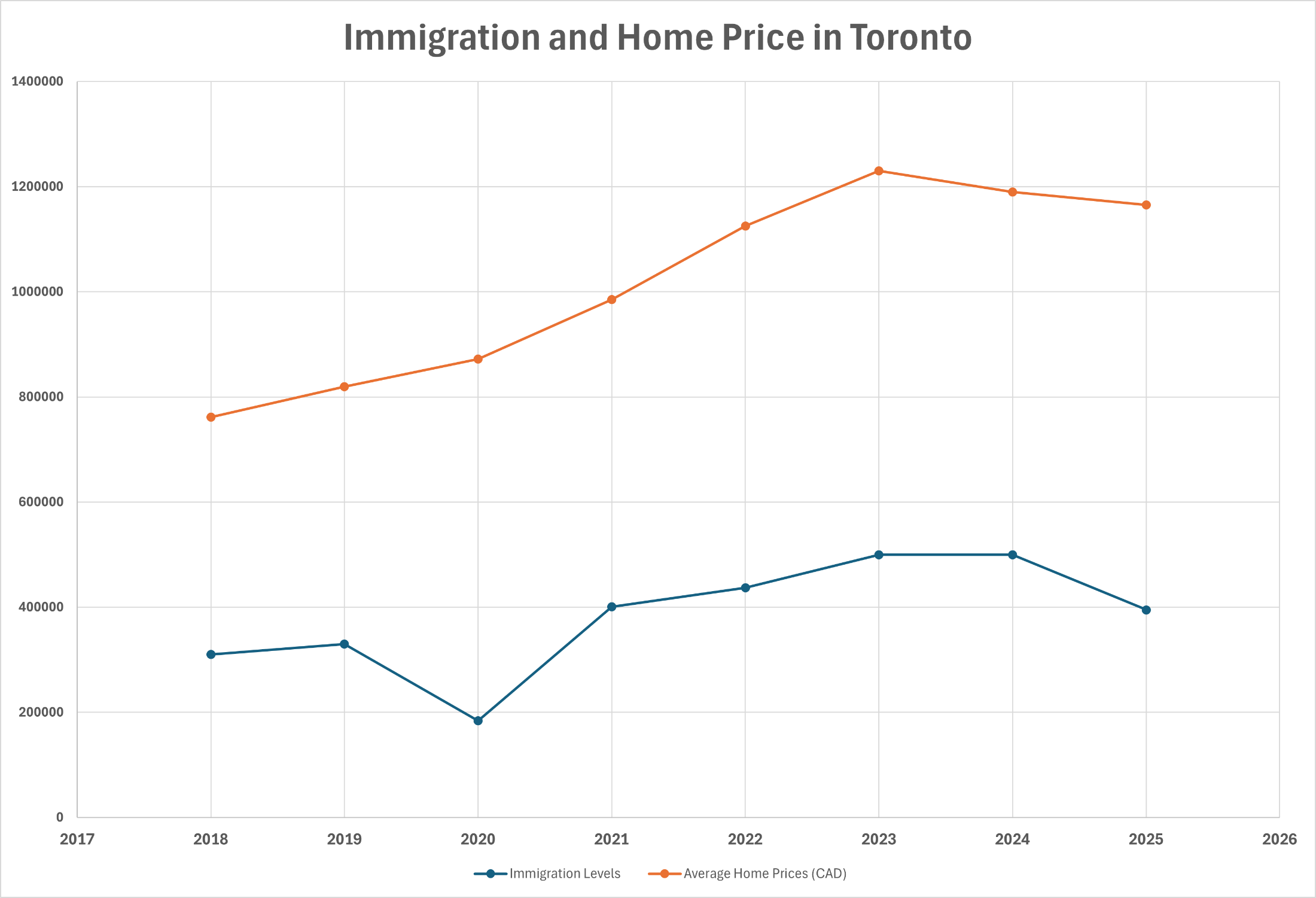
Canada has long been a top destination for immigrants, with its welcoming policies, strong economy, and high quality of life. Among all Canadian cities, Toronto remains the most sought-after destination for newcomers. With immigration driving population growth, its impact on the housing market—both ownership and rental—cannot be overlooked.

The Role of Immigration in Toronto’s Housing Market

Toronto receives a significant portion of Canada’s new immigrants each year. The city’s diverse economy, job opportunities, and established immigrant communities make it a prime choice for newcomers. However, this influx has substantial effects on the housing market, increasing demand in both the rental and ownership sectors.

1. Increased Demand for Housing

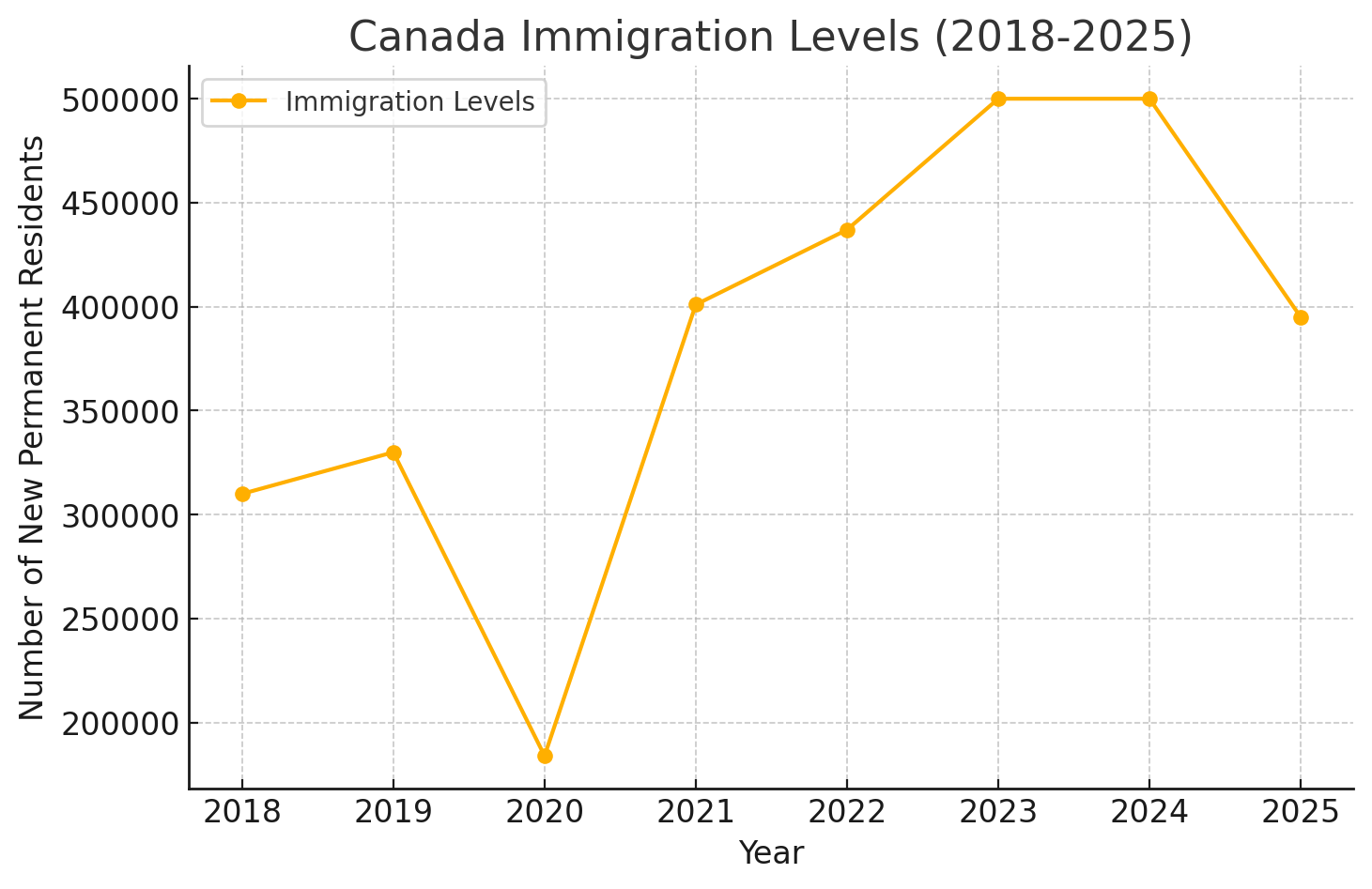
Immigration has historically been one of the main contributors to Toronto’s population growth. However, in response to public concerns about housing affordability, the Canadian government recently revised its immigration targets. The previous goal of 500,000 new permanent residents annually has been reduced to 395,000 for 2025, with further adjustments planned. While this may slightly ease the demand on housing, the effects will take time to be felt.

2. Rental Market Pressures

Many new immigrants rent before they buy a home, as they build credit history, secure stable jobs, and familiarize themselves with different neighborhoods. This increases competition in the rental market, often driving up rental prices. Although the reduction in immigration targets may slow rental demand, Toronto’s vacancy rates remain low, and average rents continue to rise due to limited housing supply.

3. Homeownership Challenges

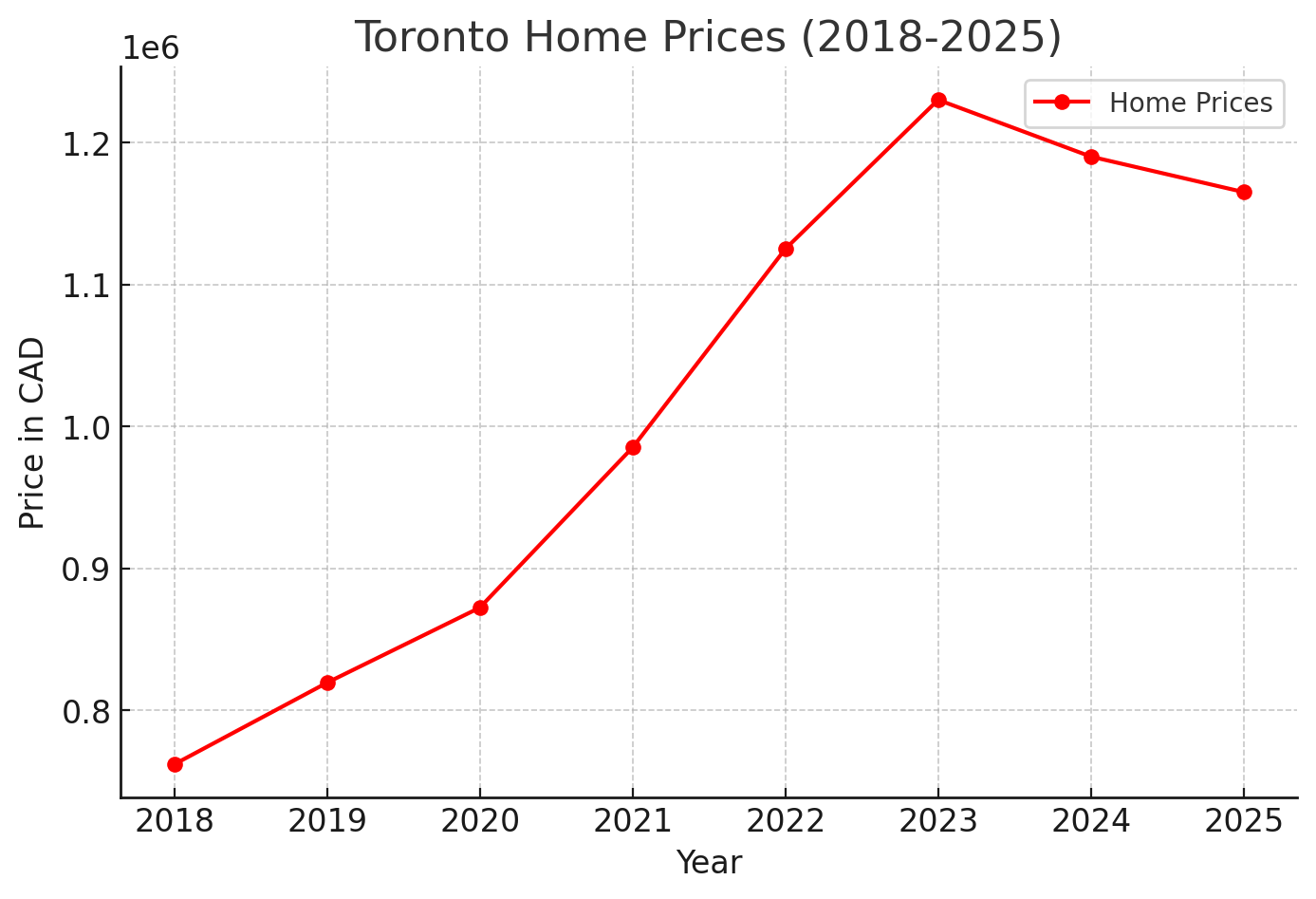
For immigrants looking to buy a home, affordability is a major concern. Toronto’s housing prices have skyrocketed over the years, making it difficult for newcomers to enter the market. Factors such as mortgage qualification, high down payments, and bidding wars add to the challenge. Government programs like the First-Time Home Buyer Incentive and CMHC’s flexible mortgage options aim to assist newcomers, but affordability remains a significant issue.

Government Policies & Their Impact

Several policies influence how immigration affects Toronto’s housing market:

  • Immigration Policies: The recent reduction in immigration targets reflects the government’s response to public concerns over housing affordability and infrastructure strain. Additionally, there are efforts to distribute newcomers more evenly across the country to ease pressure on cities like Toronto and Vancouver.

  • Housing Supply Initiatives: The Ontario and federal governments have introduced measures such as increasing housing starts, rezoning to allow for more density, and streamlining development approvals. These measures aim to boost supply but take time to have an impact.

  • Foreign Buyer Tax & Speculation Measures: Policies like the Non-Resident Speculation Tax (NRST) have been implemented to curb foreign investment and speculation, making more housing available for actual residents.

  • Reduction in Temporary Residents: In addition to adjusting permanent immigration targets, the government has announced a reduction in temporary residents, including international students and foreign workers, to alleviate pressure on the housing market.

Impact of Immigration on Canada's GDP

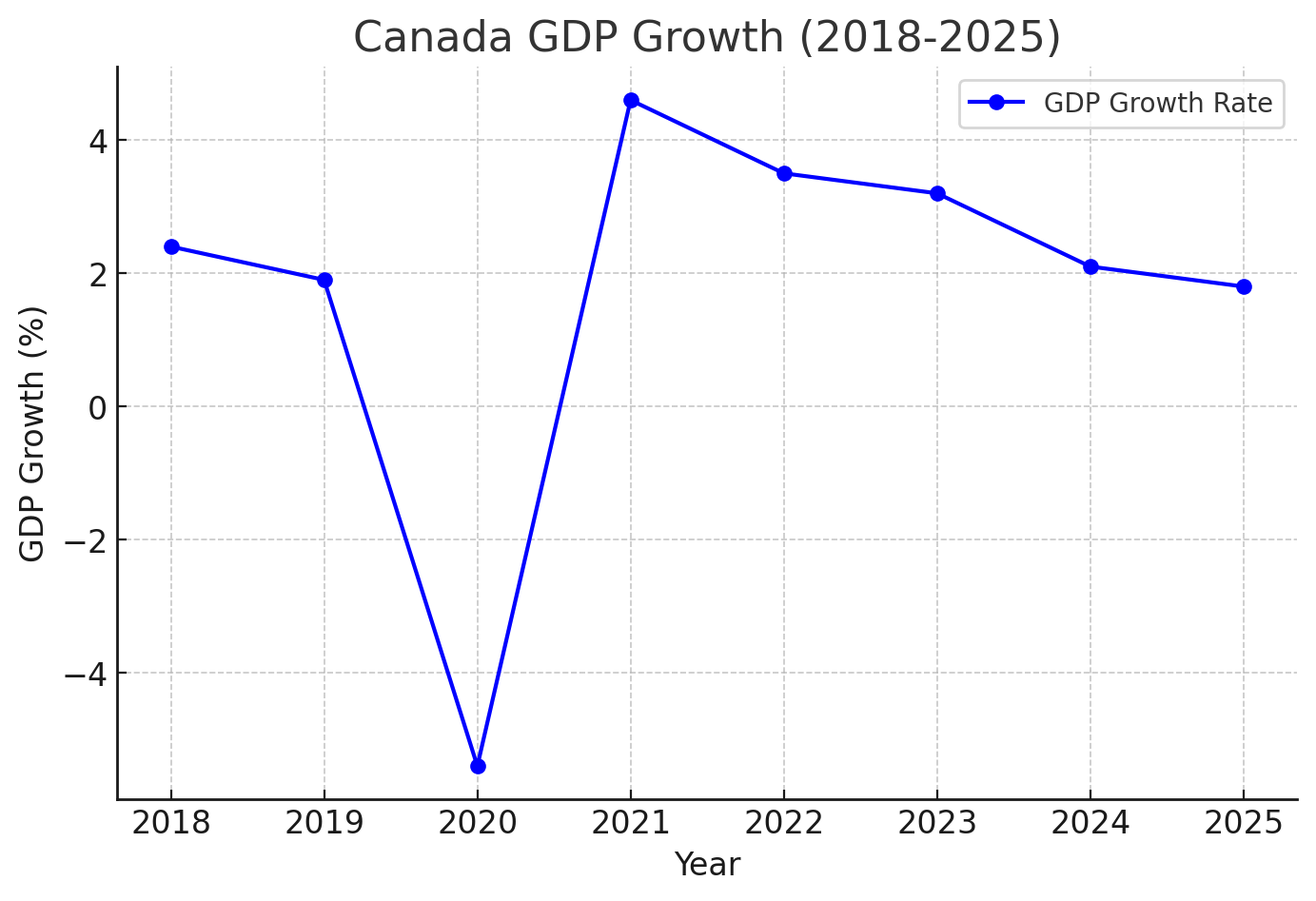
Immigration plays a crucial role in Canada's economic growth, contributing significantly to GDP expansion. Newcomers help fill labor shortages, drive innovation, and increase consumer demand. Historically, periods of high immigration have been correlated with higher GDP growth rates.

1. Labor Market Contributions

Immigrants account for a large share of the labor force, particularly in industries such as technology, healthcare, construction, and finance. Their contributions help maintain economic stability and productivity.

2. Consumer Spending & Business Growth

Newcomers increase demand for goods and services, fueling growth in retail, real estate, and other sectors. Many immigrants also start businesses, further boosting economic activity.

3. Long-Term Economic Impact

While there are short-term challenges in housing and infrastructure, long-term benefits of immigration include sustained population growth, increased tax revenues, and stronger economic competitiveness on a global scale.

Future Outlook

The relationship between immigration and housing in Toronto will continue to be a hot topic. With recent immigration target adjustments, there may be some easing of housing demand. However, given Toronto’s limited housing supply and ongoing affordability challenges, prices and rents are likely to remain high.

For real estate professionals, investors, and homebuyers, understanding these trends is crucial for making informed decisions. Immigration will remain a driving force in Toronto’s housing market, making it essential to stay updated on policies and market conditions.

Final Thoughts

Toronto’s housing market is undeniably shaped by immigration. While the influx of newcomers brings economic benefits and cultural diversity, it also adds pressure on an already tight housing market. The recent government policies to curb immigration and temporary resident numbers aim to address affordability concerns, but their long-term effects remain to be seen.

Addressing these challenges requires a multi-faceted approach, including increased housing supply, better affordability measures, and strategic planning to ensure sustainable growth.

Whether you are an investor, first-time homebuyer, or a renter, staying informed about these trends can help you navigate the market effectively. If you’re looking for guidance on real estate opportunities in the Toronto area, working with an experienced real estate professional can make all the difference.

Read

The Impact of Taxation on Happiness and Lifestyle

Introduction

Taxation is a fundamental pillar of any economy, influencing economic growth, income distribution, and access to public services. But how does taxation impact the happiness and overall lifestyle of a country's citizens? Research suggests that the structure of tax policies, particularly income tax progressivity and sales tax levels, plays a crucial role in shaping societal well-being.

For the last couple of weeks I was discussing the fact that the happiest people in the world are those who live in countries with the highest progressive taxation systems, while the media here in Canada are telling people otherwise. So, I asked ChatGPT to help me show the actual numbers that may or may not support my theory, and here is the results.

The Link Between Taxes and Happiness

Studies analyzing various countries have shown a significant correlation between tax progressivity and life satisfaction. Nations with higher tax-to-GDP ratios often report higher happiness levels, mainly due to better-funded public services such as healthcare, education, and infrastructure.

One of the most compelling studies, which analyzed 54 nations, found that citizens in countries with progressive tax systems tend to be more satisfied with life. The primary reason? These tax revenues fund essential social services that enhance quality of life.

The Nordic Model: A Case Study

The Nordic countries—Denmark, Finland, Norway, and Sweden—demonstrate a successful implementation of progressive taxation, balancing high tax rates with strong social welfare programs. Despite a heavy tax burden, these nations consistently rank at the top of the UN's World Happiness Report. The following table illustrates the tax-to-GDP ratio and happiness rankings of these countries:

CountryTax-to-GDP Ratio (%)Happiness Rank (2023)
Denmark45.92
Finland44.11
Sweden44.14
Norway39.86

Source: World Happiness Report 2023 & OECD Data

Sales Tax and Economic Inequality

While progressive income taxes tend to improve happiness, high reliance on regressive taxes, such as sales tax, can negatively impact lower-income individuals. Since sales taxes apply equally regardless of income level, they disproportionately affect those with lower earnings, reducing their disposable income and overall financial security.

The following table compares sales tax rates in various countries and their impact on income equality:

CountrySales Tax (VAT) Rate (%)Gini Index (Income Inequality)
Sweden2529.2
Germany1931.9
USAVaries (Avg. 7%)41.5
Canada5-15 (Varies by province)33.3

Source: World Bank & OECD Data

Tax Cuts vs. Economic Growth

Some argue that lower taxes stimulate economic growth, increasing overall wealth and happiness. However, historical data presents a mixed picture. For example, substantial U.S. tax cuts in the 1980s did not lead to accelerated economic growth but instead contributed to greater income inequality. A well-balanced tax structure appears to be more beneficial than drastic tax reductions.

Conclusion

Tax policies play a crucial role in determining a nation's overall happiness. Countries with progressive taxation tend to have better-funded public services, reducing economic disparities and improving life satisfaction. In contrast, tax systems that rely heavily on sales tax can contribute to financial stress, particularly among lower-income populations.

A balanced approach, ensuring fair taxation while maintaining economic incentives, is essential for fostering a happy and prosperous society.

Read

Housing: A Top Ballot Box Issue for Ontario Voters – Survey Insights

With Ontario’s real estate market facing ongoing challenges, housing has become a major concern for voters. A recent survey highlights that affordability, availability, and policy decisions on housing are at the forefront of residents’ minds as they head to the polls.

In this blog, we break down key insights from the survey, analyze the current housing landscape, and explore what this means for buyers, sellers, and investors.

The Growing Concern Over Housing Affordability

According to the survey, a significant percentage of Ontarians believe housing affordability should be a priority for policymakers. With rising home prices and interest rates, many potential buyers feel locked out of the market.

Survey Results: Housing as a Voting Issue

🔹 Key Takeaway: A vast majority of voters (82%) believe affordability is the most pressing issue, while over 70% are also concerned about housing availability.

Home Prices & Market Trends

Ontario's housing market has seen fluctuating prices, with affordability remaining a challenge for first-time buyers. Below is a historical comparison of average home prices:

Ontario Average Home Prices (Last 5 Years)

📉 Price Trends: Home prices peaked in 2022 but saw a dip in 2023 due to rising interest rates. As of 2024, prices are slowly recovering.

Rental Market Pressures

The rental market in Ontario has also experienced a surge in demand, leading to higher rental costs.

Ontario Average Rent for a One-Bedroom Apartment (2020-2024)

📊 Key Takeaways:

  • Toronto & Mississauga: Rent continues to rise, with Toronto surpassing $2,500/month in 2024.

  • Mid-Sized Cities (Ottawa, Hamilton, Kitchener): More affordable but experiencing similar rental hikes.

  • Overall: Ontario’s rental market is becoming increasingly expensive, pushing more people toward homeownership despite affordability challenges.

🏠 Rising Rent Prices:

  • In Toronto, the average rent for a one-bedroom unit has surpassed $2,500/month.

  • The GTA as a whole is experiencing rental price growth due to low supply and high demand.

Government Policies & Housing Supply

With housing becoming a major political issue, various policy measures have been proposed:

🔹 Speeding up housing approvals to increase supply.
🔹 Incentives for developers to build affordable units.
🔹 Increased rent control measures to protect tenants.

These policies aim to address both affordability and supply constraints, but their effectiveness remains to be seen.

What This Means for Buyers, Sellers & Investors

🔹 Buyers:

  • Be prepared for continued competition, especially in desirable areas.

  • Stay updated on government incentives for first-time buyers.

🔹 Sellers:

  • Market demand remains strong, but pricing strategically is key.

  • Work with an experienced REALTOR® to maximize property value.

🔹 Investors:

  • Rental demand remains high, making investment properties a solid choice.

  • Look for pre-construction opportunities in growth areas.

Get Expert Advice on Ontario Real Estate

Navigating today’s housing market requires expertise. Whether you're looking to buy, sell, or invest, our team can help you make informed decisions.

Read

Co-Ownership: The Smarter Way to Buy a Home Sooner

Struggling to Save for a Down Payment? There’s Another Way!

For many buyers, the dream of owning a home feels out of reach. With rising home prices and increasing living costs, saving for a 20% down payment can take years if not decades. But what if there was a smarter, faster way to buy without waiting and without stretching your finances too thin?

Co-ownership is the solution.

This innovative approach allows buyers to enter the market with less money upfront while also reducing their monthly housing costs. Whether you’re a first-time buyer, a growing family, or a newcomer to Canada, this program can help you secure a home without the traditional financial burden.

🏡 What Is Co-Ownership?

Co-ownership is a strategic partnership that helps buyers purchase a home with a smaller down payment. Instead of relying solely on personal savings, buyers share the financial responsibility with a co-investor, making homeownership more accessible and affordable.

Here’s how it works:

✔️ You contribute a portion of the down payment
✔️ A co-investor contributes the rest to help you reach the required amount
✔️ You own and live in the home just like a traditional homeowner
✔️ When you decide to sell, you and the co-investor share the profits based on the initial investment

It’s NOT renting. It’s NOT a loan. It’s a smarter way to own a home.

💰 Why Buyers Love Co-Ownership

🔹 Buy with Less Savings: No need to wait years to save 20%, get into the market sooner.
🔹 Lower Your Monthly Costs: Reduce your mortgage payments and free up cash for other expenses.
🔹 Start Building Equity Now: Instead of paying rent, start investing in a property that grows in value.
🔹 More Buying Power: Afford a better home in a great location, instead of settling for less. 🔹 Flexible Exit Options: Sell when you're ready and benefit from the appreciation.

🔎 Who Can Benefit from Co-Ownership?

✅ First-Time Buyers: Struggling with affordability? This program helps you enter the market faster.
✅ Growing Families: Need more space but worried about higher costs? Co-ownership can make upgrading easier.
✅ Newcomers to Canada: No local credit history? This option can help you secure a home. |
✅ Young Professionals: Want to stop renting but don’t have enough saved yet? Co-ownership gets you there sooner.

📊 Example: How Co-Ownership Makes Home Buying Easier

Imagine you’re looking to buy a $800,000 home but only have $40,000 saved (5% down).

🔹 With a traditional mortgage, you’d need at least $160,000 (20%), which could take years to save.
🔹 With co-ownership, a co-investor can contribute the rest of the down payment, helping you qualify for a mortgage right away.
🔹 Your monthly payments are lower, making homeownership more affordable from day one.

📈 Increase your purchasing power with a full 20% down payment, allowing you to:

🔹Purchase up to $1.67M with only 5% down payment
🔹Purchase up to $2.5M with only 10% down payment
🔹Enjoy no loan payments
🔹Maintain the freedom to sell at any time
Terms and conditions apply, subject to approved credit.
No waiting. No excessive financial strain. Just homeownership sooner and smarter.

📞 Let’s Make Homeownership Happen for You!

Home prices aren’t slowing down, and waiting could mean paying more in the future. With co-ownership, you don’t have to wait, you can start building equity today.

💬 Want to learn more? Contact Me Today!
Join our mailing list for periodic updates: Click Here

🚀 Your dream home is closer than you think! Let’s make it happen together.

Read

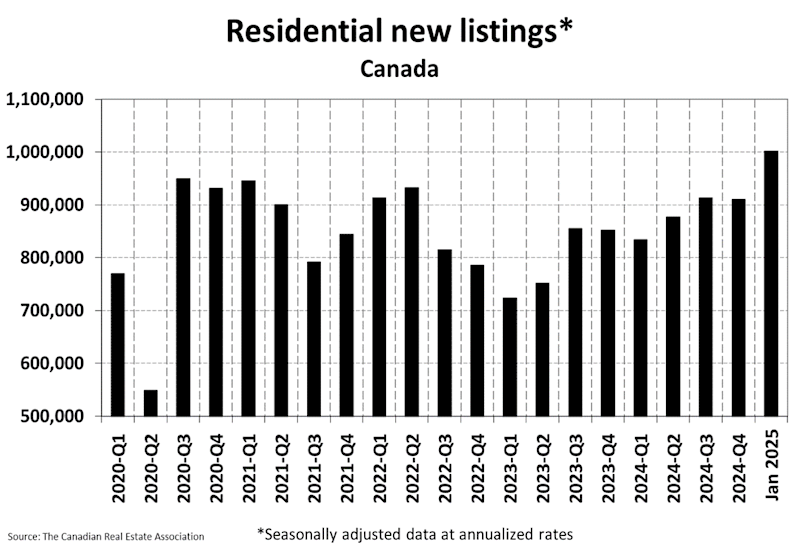
Canada’s Real Estate Market Sees Surge in Listings Amid Economic Uncertainty

The Canadian housing market saw a significant increase in new listings in January 2025, offering more choices for homebuyers. However, this positive trend is being met with uncertainty due to potential U.S. tariffs on Canadian goods, which could impact construction costs and home affordability.

Let’s dive into the key market trends and what they mean for buyers, sellers, and real estate professionals.

1. Surge in New Listings: A Buyer’s Market?

January saw a double-digit increase in new property listings compared to the previous month. More listings generally mean a balanced market, giving buyers better negotiating power.

Here’s a look at the trend in new listings over the past few months:

New Property Listings in Canada (Oct 2024 - Jan 2025)

Output image

The chart above shows a significant increase in new listings in January 2025, which suggests a potential shift toward a buyer’s market.


2. U.S. Tariff Uncertainty and Its Impact on Housing Costs

While more listings are good news, the Canadian real estate market faces a new challenge—potential U.S. tariffs. The U.S. administration has proposed tariffs of up to 25% on Canadian goods, which could have a direct impact on:

  • Construction Costs: Higher lumber and material costs may lead to increased home prices.

  • Builder Activity: Developers may slow down projects due to uncertainty.

  • Home Affordability: Rising costs could offset the benefits of more listings.

Here's a visual of the potential impact on construction costs.

Projected Increase in Construction Costs Due to Tariffs

Output image

The chart above highlights the projected cost increases in lumber, steel, and concrete, which could raise overall construction expenses by 12% or more. This means new home builds may become more expensive, affecting both buyers and developers.


3. Bank of Canada’s Response: Interest Rate Cuts

In response to economic uncertainty, the Bank of Canada has lowered interest rates to 3%, aiming to stimulate borrowing and economic activity. This move is meant to:

Encourage home buying by reducing mortgage rates
Offset rising costs from tariffs
Support economic growth amid trade uncertainties

Interest Rate Trends (2024 - 2025)

Output image

The chart above shows a steady decline in interest rates, with a significant drop to 3% in January 2025. Lower rates can make mortgages more affordable, but inflationary pressures from tariffs could complicate things.


What This Means for Buyers and Sellers

📌 For Buyers:

  • More listings mean better selection and potential price stabilization.

  • Lower interest rates make mortgages more affordable.

  • However, if construction costs rise, new home prices could increase.

📌 For Sellers:

  • More listings mean higher competition, so pricing strategically is key.

  • If tariffs slow down new construction, existing homes may hold value better.

  • Buyers are still active, but affordability concerns could impact demand.


Final Thoughts

The Canadian real estate market is experiencing both opportunities and risks in early 2025. While more listings and lower interest rates create a favorable environment for buyers, potential U.S. tariffs could disrupt market stability. Staying informed and working with experienced real estate professionals will be crucial in navigating these changing conditions.

📢 Are you looking to buy or sell?
Let’s chat! I can help you make the right real estate moves in this evolving market. 🚀

Read

Foch: Canada’s housing market braces for impact as rising supply meets trade war fears

Saint John, New Brunswick (Canva) 

Something has shifted in Canada’s housing market. This shouldn’t come as a surprise, given something has certainly shifted at a global geopolitically level. You might even call it a “tarrifying” headwind for Canada’s real estate market. 

For years, supply was tight, and homebuyers outnumbered sellers in Canada’s real estate market. But as 2025 begins, the landscape looks strikingly different. New listings are pouring into the market at an extraordinary pace, while sales are faltering under the weight of mounting economic uncertainty. 

As is tradition, when facing an unknown future, Canada’s real estate market has decided to hit the “pause button.” It is not uncommon to see the market take a breath when we’re facing a historic election, a pandemic or a changing economy. Today’s trade war is no different.

Compounding the turbulence, President Trump’s proposed tariffs on Canadian exports loom over key industries, raising concerns about potential job losses, wage stagnation, and the broader impact on housing demand. Though the Canadian-specific targeting has been temporarily postponed, Trump’s global target on steel and aluminum has Canada written all over it.

A historic surge in listings, a slowdown in sales

For buyers willing to stomach the risk, this could be the window of opportunity they’ve been waiting for—more choices and lower interest rates make financing more attractive. But for sellers, it’s a wake-up call. A market that once favoured them is now shifting toward balance—or even softness in some areas. Yet, the full impact of these shifting dynamics remains uncertain, as much depends on the outcome of the postponed tariffs and their potential ripple effects across the economy.

CREA’s January market data gives us a clearer picture of what’s ahead. Let’s break it down.

Unprecedented inventory growth

One of the biggest surprises of early 2025 has been the flood of new listings. Figures for January reveal that new supply jumped 11 per cent compared to December 2024—the largest seasonally adjusted increase since the late 1980s (excluding pandemic-era fluctuations).

What does this mean? It’s a clear sign that more homeowners are choosing to sell, possibly in anticipation of weaker market conditions. In high-priced regions like British Columbia and Ontario, where supply had been tightening in 2024, this sudden increase in listings is cooling price pressures and shifting negotiating power back toward buyers.

Sales take a hit amid economic jitters

While inventory rose, sales did not follow suit. Instead, national home sales fell 3.3 per cent month-over-month, with the most dramatic drop occurring in the last week of January. The timing suggests that buyers pulled back due to growing concerns over Trump’s tariff policies, which many fear could destabilize Canada’s economy.

However, it’s not all bad news. Compared to January 2024, actual sales were up 2.9 per cent, meaning demand is still present—just hesitant. Buyers aren’t disappearing, but they are waiting to see where the economy lands before making big moves.

Prices hold their ground—for now

Despite rising inventory and weaker sales, home prices have remained surprisingly stable:

  • The MLS Home Price Index (HPI) barely changed month-over-month (-0.08 per cent) and year-over-year (+0.07 per cent).

  • The national average home price hit $670,064, up 1.1 per cent from January 2024.

But not all regions are experiencing the same trends:

  • British Columbia and Ontario: A surge in supply is creating a softer pricing environment, making these regions more favourable for buyers.

  • Alberta and Saskatchewan: With inventories at near 20-year lows, prices continue to rise despite economic uncertainty.

  • Quebec and Atlantic Canada: These markets are expected to see both price and sales growth in 2025, making them the country’s most balanced housing sectors.

The big unknown

A game-changer for the Canadian economy

Just as Canada’s housing market was poised for recovery, a new storm appeared on the horizon: Trump’s tariff policy for Canada.

The U.S. government has proposed a 25 per cent tariff on all Canadian non-energy exports and a 10 per cent tariff on Canadian energy exports, though implementation has been postponed by 30 days. If implemented, this policy shift could disrupt key industries, hamper trade and increase the risk of an economic downturn.

Some cities will feel the effects more than others. New research from the Canadian Chamber of Commerce’s Business Data Lab has identified the regions most vulnerable to these tariffs. The most exposed markets are:

  • Saint John: Due to its heavy dependence on crude oil exports from the Irving Oil Refinery.

  • Calgary: A major energy hub exporting crude oil, natural gas, and beef.

  • Southwestern Ontario (Windsor, Kitchener-Cambridge-Waterloo, Brantford, Guelph): These cities are deeply tied to the auto and manufacturing industries, which rely heavily on cross-border trade with the U.S.

  • Hamilton, Ontario: As Canada’s steel capital, Hamilton’s economy is at risk if tariffs disrupt steel exports.

  • Quebec’s aluminum and forestry hubs (Saguenay, Trois-Rivieres, Drummondville): Key exporters of aluminum and forestry products.

If these industries slow down, it could impact jobs, wages, and housing demand in these cities. Simply put, these tariffs could mean fewer buyers in affected regions, leading to longer selling times and price stagnation or declines.

The table below, from the same research, provides a detailed ranking of Canadian cities most vulnerable to the proposed U.S. tariffs.

What’s next?

The spring rebound is coming—but will it be enough?

Despite economic concerns, CREA still expects a strong spring market, driven by lower borrowing costs (mortgage rates are falling, drawing more buyers into the market) and pent-up demand (many buyers have been waiting for prices to stabilize before re-entering).

According to CREA, an estimated 532,704 homes will sell in 2025, an 8.6 per cent increase from 2024. Prices are expected to rise 4.7 per cent this year, reaching $722,221 by year-end.

Not every market will recover equally

  • British Columbia & Ontario: Sales should rebound, but higher inventory will keep prices in check.

  • Alberta & Saskatchewan: With sales already near record highs in 2024 and inventory at 20-year lows, prices in these provinces are expected to climb faster than sales.

  • Quebec & Atlantic Canada: Predicted to see both price and sales growth.

What Realtors need to consider

For buyers

  • More listings, more choices – Buyers finally have leverage in many regions.

  • Lock in rates now – Mortgage rates are dropping, and delaying could cost more in the long run.

  • Watch the economy – If tariffs cause widespread job losses, it could create a buyer’s market later in the year.

For sellers

  • More competition means smarter pricing – Overpricing will lead to stagnation, especially in high-inventory regions.

  • Consider selling before a potential slowdown – If economic fears grow, waiting could mean a tougher market.

  • Regional differences matter – Some markets (like Alberta) still favour sellers, while others (Ontario) are shifting toward buyers.

Final thoughts: A market on the edge

The Canadian housing market in 2025 is no longer a one-way street. Buyers and sellers must adapt to new realities, from shifting supply-demand dynamics to the potential fallout of a major trade war.

For some, this year will bring opportunity; for others, waiting may be the preferred choice.

How the market unfolds will depend on a delicate balance of forces—interest rates, inventory levels, and the broader economic impact of U.S. trade policies. While the housing sector has shown resilience before, this time, the uncertainty runs deeper, and its effects may take longer to play out.

Read

The threat of U.S. tariffs looms over Canada’s housing market

The Canadian housing market finds itself at a critical juncture in 2025, as the threat of U.S. tariffs adds uncertainty to an already delicate economic environment. 

According to RBC Economics, “the significant risk that tariffs pose to Canada’s economy casts a potentially dark shadow over the housing market.” With consumer confidence playing a pivotal role, potential economic turbulence could unsettle both buyers and sellers.

Robert Hogue, assistant chief economist at RBC, likened the housing outlook to “putting a price on a home before an earthquake—it’s hard to know what shape the structure will be in at the end of the day.” While the U.S. administration paused the implementation of blanket tariffs earlier this month, Hogue suggests the introduction of targeted measures, such as a 25 per cent tariff on Canadian steel and aluminum imports means that trade tensions aren’t going away anytime soon.

Lower interest rates 

Aside from looming economic risks, some bright spots are emerging for Canada’s housing market. RBC predicts a recovery in 2025, fueled largely by declining interest rates. Lower borrowing costs are expected to unlock pent-up demand and reduce ownership expenses, bringing much-needed momentum into the market.


Buyers will also benefit from an increasing inventory of homes for sale. “These dynamics were set in motion in the second half of 2024 and have longer to run in the year ahead as we expect interest rates to fall further,” Hogue notes. Mortgage insurance rule changes, introduced in December, are also expected to bring more first-time homebuyers to the market.

Affordability, immigration cuts and tariff risks

Perhaps unsurprisingly, affordability challenges remain a hurdle. While lower rates provide some relief, RBC warns that “strained affordability—despite easing somewhat—will continue to limit buyers’ capacity or willingness to bid up prices aggressively.”

Compounding uncertainty is a sharp slowdown in immigration, as the federal government scales back annual targets. Population growth, a key driver of housing demand, is projected to decline substantially, and will likely “temper upward price pressure.”

The potential for U.S. tariffs adds another layer of complexity. Sectors heavily reliant on exports, such as manufacturing and natural resources, could face significant job losses, disproportionately affecting specific regions. In such a scenario, market confidence could take a hit. 

However, RBC suggests that “ if a severe downturn prompts the Bank of Canada to implement deeper interest rate cuts, it could stimulate housing demand by making borrowing more affordable. The interplay between these forces—economic risk versus monetary stimulus—will be a key factor to watch in 2025.”

A return to normalcy for sales and prices

Barring a major economic shock, RBC forecasts a 12 per cent increase in national home resales in 2025, reaching 551,000 units—marking a return to “more normal levels of activity—about 7 per cent above the average during the five years preceding the pandemic.”

Property values, however, are expected to see minimal growth, with the average home price projected to rise 1.4 per cent this year. This modest price appreciation reflects a balanced market, with demand and supply largely offsetting each other.

RBC’s regional market outlook

British Columbia
Resales are expected to rebound 16.5 per cent, but affordability issues will limit price gains to 0.9 per cent.

Alberta
Strong momentum continues, with resales forecasted to rise 4.8 per cent and prices climbing 4.1 per cent.

Saskatchewan
Solid momentum persists, with resales projected to climb 6.7 per cent to 14,400 units, while prices are expected to rise 2.9 per cent to $370,200.

Manitoba
The market continues its recovery, with resales forecasted to grow 8.9 per cent to 17,200 units and prices appreciating 3.1 per cent.

Ontario
A bumpy recovery path is anticipated, with resales up 12.9 per cent, while prices are projected to increase by a muted 0.9 per cent.

Quebec
A strong rebound is underway, with resales forecasted to rise 17.3 per cent, following a 19.1 per cent surge in 2024. Prices are expected to increase 3.9 per cent, making Quebec one of the stronger performers among provincial markets.

Atlantic Canada
A broad-based rebound in activity is expected, with resales forecasted to grow 10.5 per cent in New Brunswick, 11.7 per cent in Nova Scotia, 5 per cent in Prince Edward Island, and 3.5 per cent in Newfoundland and Labrador. Price appreciation is projected to range from 1.5 per cent in PEI to 4.1 per cent in Newfoundland and Labrador.

Toronto’s embattled condo market

Toronto’s condo market, as we’ve heard, faces near-term challenges or “price softness,” as Hogue describes it. A surge in new completions, coupled with waning investor demand, could temporarily weigh on prices in highly saturated areas. Hogue predicts that “lower interest rates may eventually provide support, but the influx of units could create headwinds before broader market conditions stabilize.”

The mortgage renewal payment shock

Hogue expects a lingering concern for many homeowners in 2025 will be the financial strain associated with mortgage renewals. Borrowers who locked in ultra-low rates during 2020-2021 are likely to face significant payment increases at renewal, even as interest rates decline.

“This could force some owners to sell, adding to inventory and tempering price growth,” the economist explains. “However, Canada’s stringent mortgage stress test rules should help prevent a surge in distressed sales, keeping market imbalances generally in check.”

Read

Will the Fed Raise Interest Rates Again? What It Means for the Canadian Real Estate Market

The U.S. Federal Reserve’s stance on interest rates has once again become a critical topic for economists, investors, and homebuyers alike. A recent report from the Financial Post highlights that a hotter-than-expected U.S. inflation rate is raising concerns about the Federal Reserve’s next moves, potentially delaying anticipated rate cuts or, in a more extreme scenario, even leading to further hikes.

For Canadians, particularly those involved in the real estate market, the implications of U.S. monetary policy extend far beyond American borders. The Bank of Canada often aligns its interest rate decisions with economic trends in the U.S., meaning that any shift in the Fed’s approach could significantly impact mortgage rates, home prices, and overall market activity here at home.

Why Are Interest Rates So Important?

Interest rates are a fundamental driver of real estate activity because they determine the cost of borrowing. Higher rates mean higher mortgage payments, reducing affordability for buyers and often cooling housing demand. On the flip side, lower rates make borrowing more attractive, stimulating home purchases and driving property values upward.

Over the past two years, both the Federal Reserve and the Bank of Canada aggressively raised interest rates to combat inflation. While the Bank of Canada recently held its benchmark rate steady at 5%, many market participants were expecting cuts as early as mid-2024. However, new data out of the U.S. suggests that inflation remains stubbornly high, raising concerns that rates might stay elevated for longer than anticipated.

Some analysts are now even speculating about the possibility of another rate hike in the U.S., which could pressure the Bank of Canada to reconsider its strategy.

How Could This Affect the Canadian Real Estate Market?

If the Fed holds rates higher for longer, or even raises them again, the Bank of Canada may need to follow suit to maintain currency stability and manage inflation. This could have several direct and indirect effects on the Canadian housing market:

1. Higher-for-Longer Mortgage Rates

Many buyers, especially first-time homebuyers, have been waiting for interest rates to come down to improve affordability. However, if rate cuts are delayed or reversed, mortgage rates will likely stay elevated, keeping monthly payments high and potentially pricing some buyers out of the market.

For example, a homebuyer looking to secure a $700,000 mortgage at a 5.5% interest rate today would pay significantly more per month compared to someone who secured the same loan at 2.5% in 2021. Prolonged high rates could discourage new buyers from entering the market, leading to slower sales activity.

2. Continued Pressure on Home Prices

Although Canadian home prices have shown some signs of stabilization, prolonged high interest rates could weigh on demand, keeping price growth subdued or even triggering price declines in certain markets. Sellers looking to offload properties may need to adjust their expectations and be more flexible with pricing to attract buyers.

Luxury properties and investment-driven markets such as pre-construction condos, may be particularly sensitive to borrowing costs, as these segments often rely on leveraged investments.

3. Investment Uncertainty

For real estate investors, higher borrowing costs could impact profitability. Those who rely on financing to purchase rental properties will face higher mortgage payments, potentially reducing cash flow from rental income. This may lead to some investors postponing purchases or shifting strategies toward cash-heavy deals.

However, uncertainty also creates opportunities. Investors with strong capital positions may find favorable deals, especially if prices soften and some sellers need to offload properties quickly.

4. Stronger Canadian Dollar Could Impact Foreign Buyers

If the Bank of Canada keeps its rates in line with the U.S. Federal Reserve, the Canadian dollar could strengthen against the U.S. dollar. While a stronger loonie may benefit importers, it could make Canadian real estate less attractive for foreign buyers, who often take advantage of currency fluctuations when investing in markets like Toronto and Vancouver.

What Should Buyers, Sellers, and Investors Do Now?

With uncertainty surrounding interest rates, it’s crucial to have a well-thought-out strategy for navigating the real estate market.

For Buyers:

- Be realistic about affordability: If you’re waiting for rate cuts, be aware that they may take longer than expected. Consider locking in a competitive fixed-rate mortgage if you find the right property.

- Consider alternative financing options: Work with mortgage brokers to explore rate buy-downs, extended amortization periods, or hybrid mortgage structures.

- Focus on long-term value: Rather than timing the market, focus on properties with strong fundamentals in desirable locations.

For Sellers:

- Price strategically: Overpricing in a high-interest rate environment can lead to prolonged market exposure and potential price reductions. Work with a knowledgeable real estate professional to set a competitive asking price.

- Highlight affordability incentives: Offering buyer incentives, such as covering closing costs or helping with mortgage rate buy-downs, can attract more interest.

- Be patient but proactive: The market may take longer to absorb listings, so flexibility with negotiations can be key.

For Investors:

- Look for distressed sales: Higher borrowing costs may force some sellers to offload properties at a discount. Keep an eye on motivated sellers and off-market opportunities.

- Prioritize cash flow: In a higher-rate environment, focus on rental properties that generate strong cash flow rather than relying on appreciation.

- Diversify your portfolio: Consider different asset classes, such as commercial properties or multi-family units, which may offer better returns than single-family homes in certain areas.

Final Thoughts

While the U.S. inflation report has cast doubt on the timing of rate cuts, real estate remains a long-term investment. Markets are cyclical, and interest rates will eventually decline, but when and by how much remains uncertain.

For buyers, sellers, and investors in the Greater Toronto Area and beyond, the key to success lies in staying informed, being flexible, and working with experienced real estate professionals who understand the evolving market conditions.

Need guidance on your next real estate move? Contact Ali Bolourchi and his expert team today!

☎️ CALL US 416-886-2000

🌐 Visit us at GTALuxuryHomes.ca

Read
This website may only be used by consumers that have a bona fide interest in the purchase, sale, or lease of real estate of the type being offered via the website. The data relating to real estate on this website comes in part from the MLS® Reciprocity program of the PropTx MLS®. The data is deemed reliable but is not guaranteed to be accurate.