


Meta title: Home Staging ROI Toronto: 18 Days vs 31 Days (2026) Meta description: Staged Toronto listings averaged 18 days on market in Q1 2026 vs 31 unstaged. Here is the real cost, the defensible premium, and the order that works. Primary keyword: home staging ROI Toronto Reading time: about 6 minutes
The number that matters
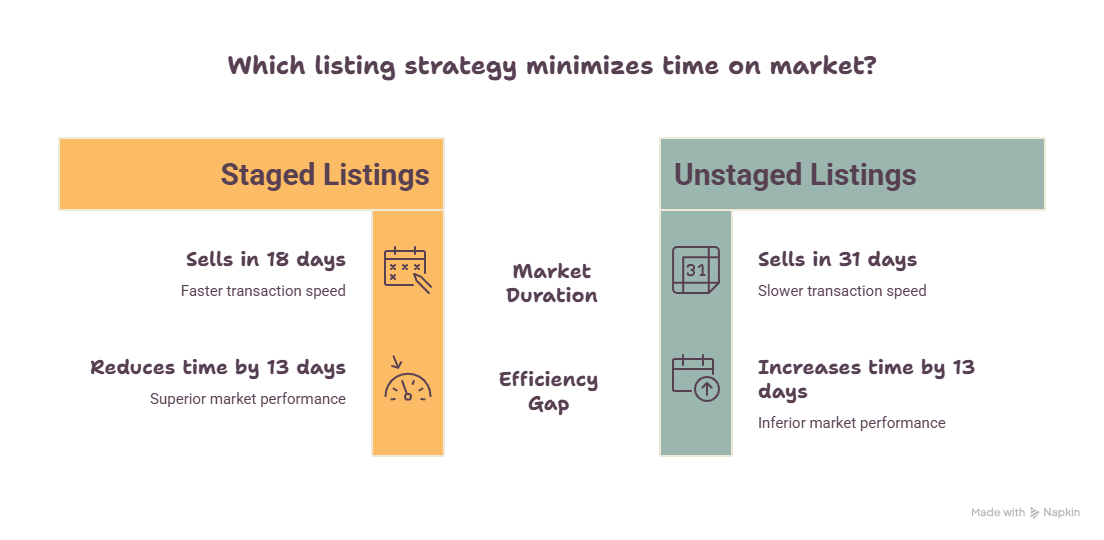
In Q1 2026, staged listings in Toronto averaged roughly 18 days on market. Comparable unstaged homes in the same submarkets averaged roughly 31 days.
That is a 13-day gap. Thirteen extra days of mortgage, tax, insurance, and utilities. Thirteen extra days of keeping the house showing-ready. And, more expensively, thirteen extra days for a listing to accumulate the one thing no seller wants: a days-on-market number that buyers read as weakness.
That last part is the real cost, and almost nobody prices it.
What staging actually costs in Toronto
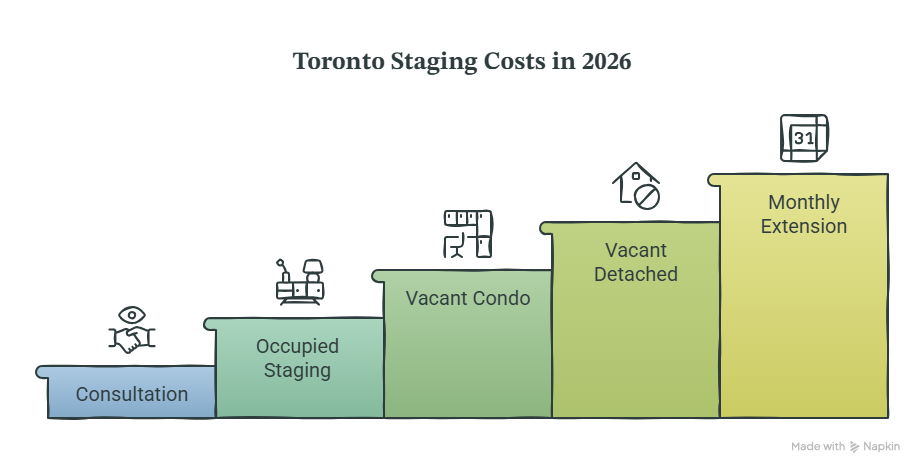
Before we talk about return, let us be honest about the number on the invoice. This is where most "staging pays for itself" content goes vague. Here are the real 2026 Toronto ranges.
The line item sellers forget: the extension fee. A typical 2,200 square foot vacant detached might run $5,500 for the first 60 days, with a $700 per month extension after that. If your listing sits, the staging bill keeps growing alongside your carrying costs. Which is precisely why the days-on-market number in the first section is not a vanity metric.
Now the part everyone gets wrong: the ROI claim
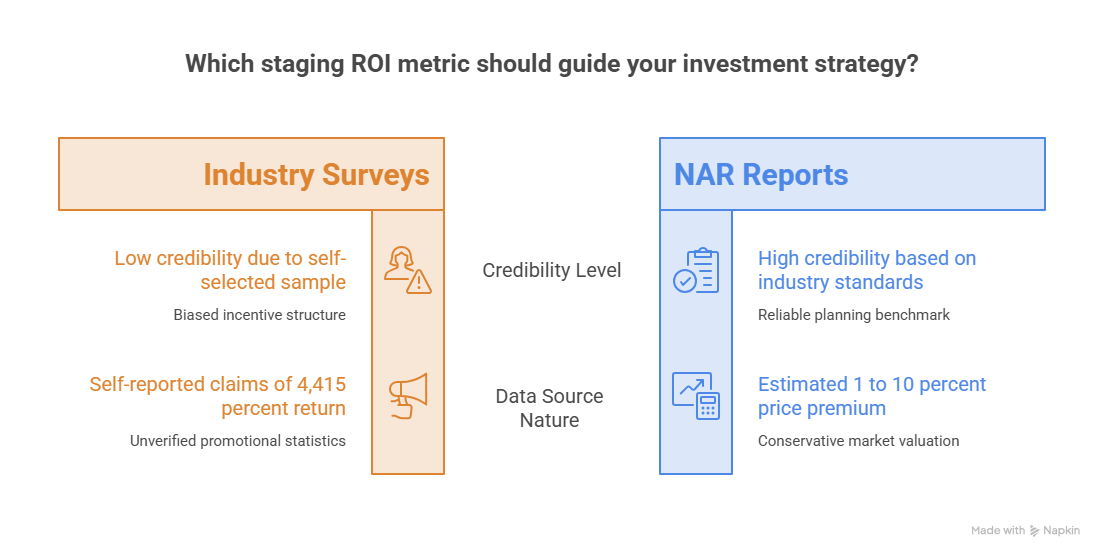
Search "home staging ROI" and you will be told staging returns $23.34 for every $1 invested, or that it delivers a 4,415% return.
Ignore both.
Those figures come from industry surveys where staging companies self-report their own results. It is not fraud, but it is not evidence either. It is a marketing number, and any seller making a five-figure decision deserves better than that.
The defensible benchmark is far more modest and far more useful:
Use the 1% to 10% band. On a $1.2M home, that is $12,000 to $120,000. Against a $5,500 staging bill, even the bottom of that range clears the cost more than twice over. You do not need the inflated number for the math to work. That is the point.
A worked example on a $1.2M Toronto home
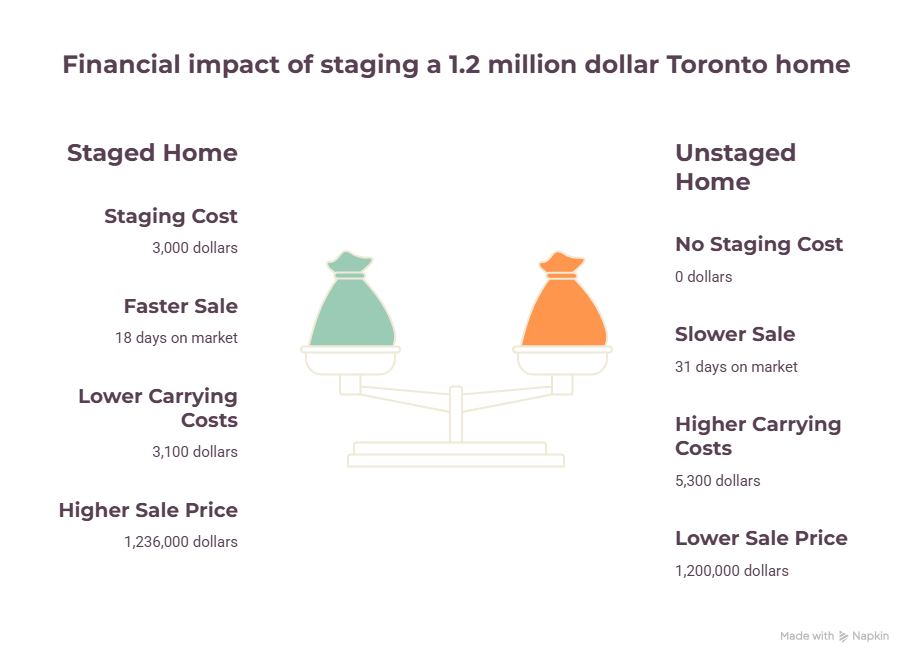
Let us put actual numbers on it. Assume a $1.2M detached, occupied, staged for $3,000, carrying costs of roughly $5,200 per month (mortgage, property tax, insurance, utilities).
Two things to notice.
First, the premium is doing most of the work, not the carrying-cost saving. The 13 fewer days saves you about $2,200. The 3% premium is worth $36,000. Speed is nice. Price is the prize.
Second, I used a 3% premium, which sits near the bottom of the defensible 1% to 10% band. I did that on purpose. If the case only works at the top of the range, it is not a case, it is a hope.
The order matters more than the budget
Here is the single most expensive mistake I see sellers make, and it costs nothing to fix.
They book the photographer first.
Photographs of a cluttered room are not a marketing asset. They are permanent evidence of a cluttered room, and they will follow the listing across every portal for as long as it is live.
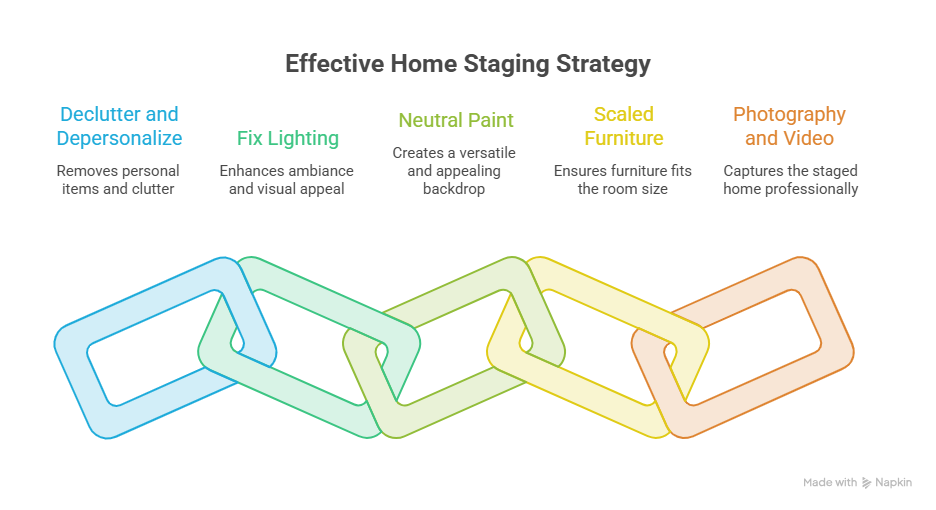
The sequence that actually produces the result:
Steps 1 and 2 cost almost nothing and deliver a disproportionate share of the outcome. If your budget is genuinely tight, do those two properly and skip the rest. That is a defensible plan. Booking the photographer on a cluttered house is not.
The honest summary
Staging is bought for time on market first, and for price premium second. Both are real.
The credible premium is 1% to 10%, not 4,000%. Plan on the low end and be pleased if you beat it.
Toronto staged listings averaged 18 days in Q1 2026 against 31 for unstaged comparables.
The sequence beats the budget. Declutter, light, paint, furnish, then photograph. Never the reverse.
Watch the extension fee. A listing that sits does not just cost you carrying costs. It keeps billing you for the staging too.
Before you spend a dollar
Every home is different, and some do not need staging at all. A well-proportioned, well-lit, recently renovated home with restrained furniture may only need a consultation and a weekend of decluttering.
The way to find out is to walk the house with someone who is not selling you furniture.
I will walk your home before you spend anything and tell you honestly which of the five steps you actually need. Some sellers walk away with a $200 plan. Some walk away with a $6,000 one. Both are the right answer for that house.
Sources
Kelly Allan Design, does home staging increase sale price, Toronto 2026 data: https://www.kellyallandesign.com/blog/does-home-staging-increase-sale-price-toronto/
Kelly Allan Design, home staging cost Toronto 2026 guide: https://www.kellyallandesign.com/blog/how-much-does-home-staging-cost-toronto/
StyleBite Staging, vacant home staging in Toronto, costs and ROI 2026: https://stylebitestaging.com/toronto-vacant-home-staging/
Real Estate Staging Association and NAR benchmarks, as summarized in the above
Figures are current as of July 2026 and reflect Toronto and GTA submarkets. Individual results vary by property, price band, and condition. This article is educational and is not financial advice.

Comments:
Post Your Comment: