


For many, the family home eventually shifts from a sanctuary of memories into a logistical and financial burden. This is what we call the "Retirement Pivot", a moment where you must decide if your current home is a platform for future adventures or a museum of your past.
1. The Retirement Pivot: Designing Your Future

The temptation is often to "wait and see," but the data suggests a different path. Strategic early downsizing allows you to seamlessly integrate into a new life chapter while you have the energy to design your routines. Waiting even five years can disrupt established social circles, making a later move feel like an exile rather than an upgrade. In Ontario, where over 50,000 people are currently waiting for Long-Term Care (LTC) spaces, taking control of your housing today is the ultimate gift of independence to your future self. This transition isn't just about square footage; it is about reclaiming your lifestyle and ensuring your home supports, rather than hinders, your independence.
2. Unlocking Your Next Chapter: The Case for Downsizing
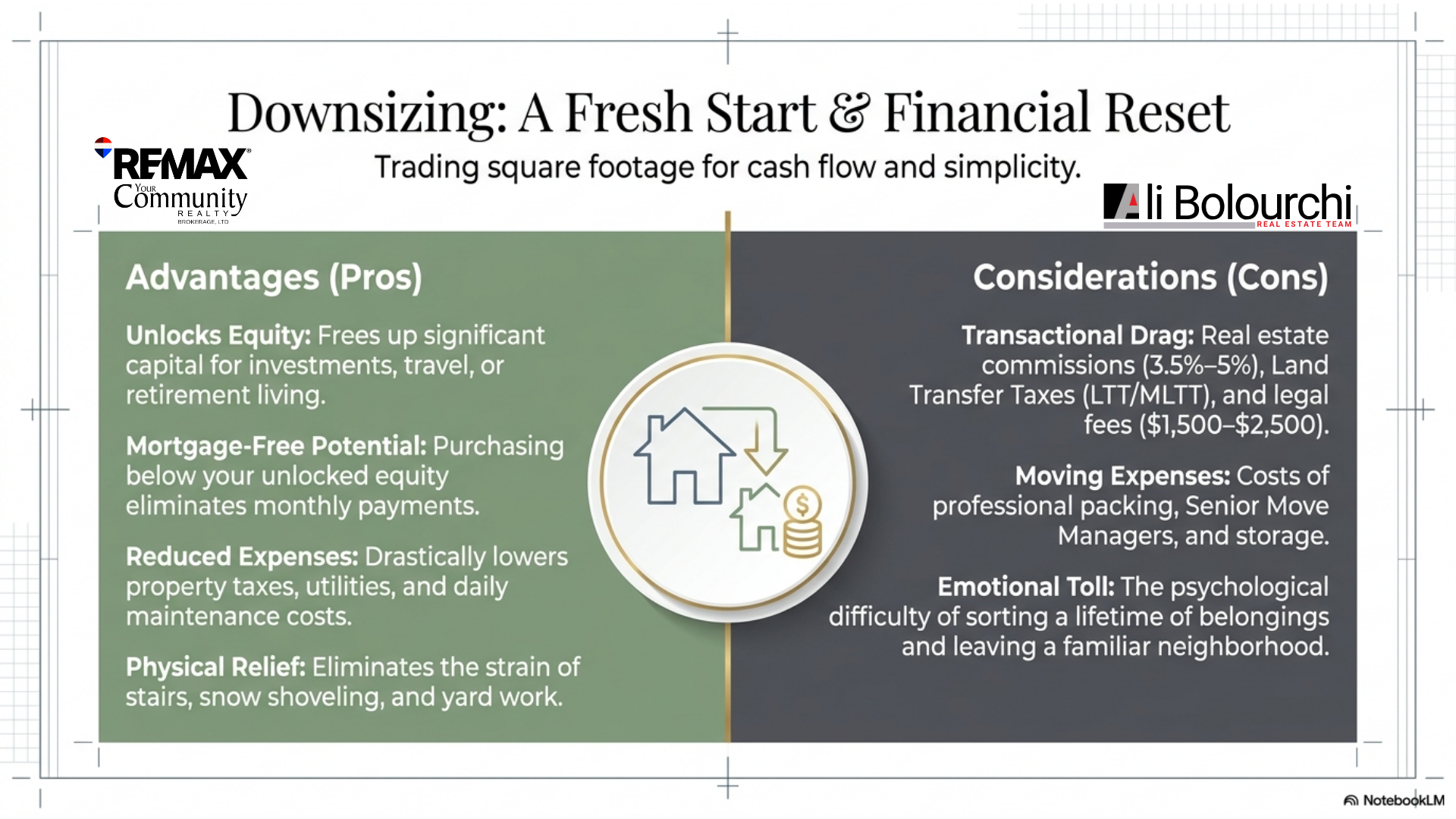
Downsizing is an act of reclaiming your time and peace of mind.
Financial Liberation: Selling a larger home allows you to potentially become mortgage-free and significantly increase your monthly cash flow. This freed-up capital can be invested or used to fund travel, hobbies, or family support.
Physical & Mental Relief: Moving removes the burden of outdoor chores like lawn care and internal hazards like high-maintenance layouts, allowing you to move from "square footage" to "practicality".
The Proactive Social Shift: Moving early lets you build new communities on your own terms. Proximity to hubs like Ontario’s "Seniors Satellites" offers incredible value; for example, in London, memberships are as low as $11.45/year, providing access to programs like "Ageless Grace".
Note: Downsizing involves considerations like "transactional drag"—real estate commissions (typically 3.5%–5%), Land Transfer Taxes, and legal fees ($1,500–$2,500)—plus the emotional challenge of parting with long-held possessions.
3. The Architecture of Aging in Place: Reverse Mortgages

If your emotional roots run too deep to leave, "Aging in Place" is a viable path, provided you navigate the financial landscape with precision.
How it Works: A reverse mortgage allows homeowners (typically age 55+) to access up to 55% of their home's market value as tax-free cash without making monthly payments. The loan principal and interest are not repaid until you sell, move out permanently, or pass away.
Important Considerations: Interest compounds over the life of the loan, which can rapidly erode equity and significantly diminish the financial inheritance left to heirs. You remain fully responsible for property taxes, homeowners insurance, and ongoing physical maintenance.
Provincial Support: Leverage programs like the Ontario Senior Homeowners’ Property Tax Grant (up to $500 annually for eligible seniors) and the Ontario Energy and Property Tax Credit to manage ongoing costs.
4. Evaluation Framework: The Decision Matrix
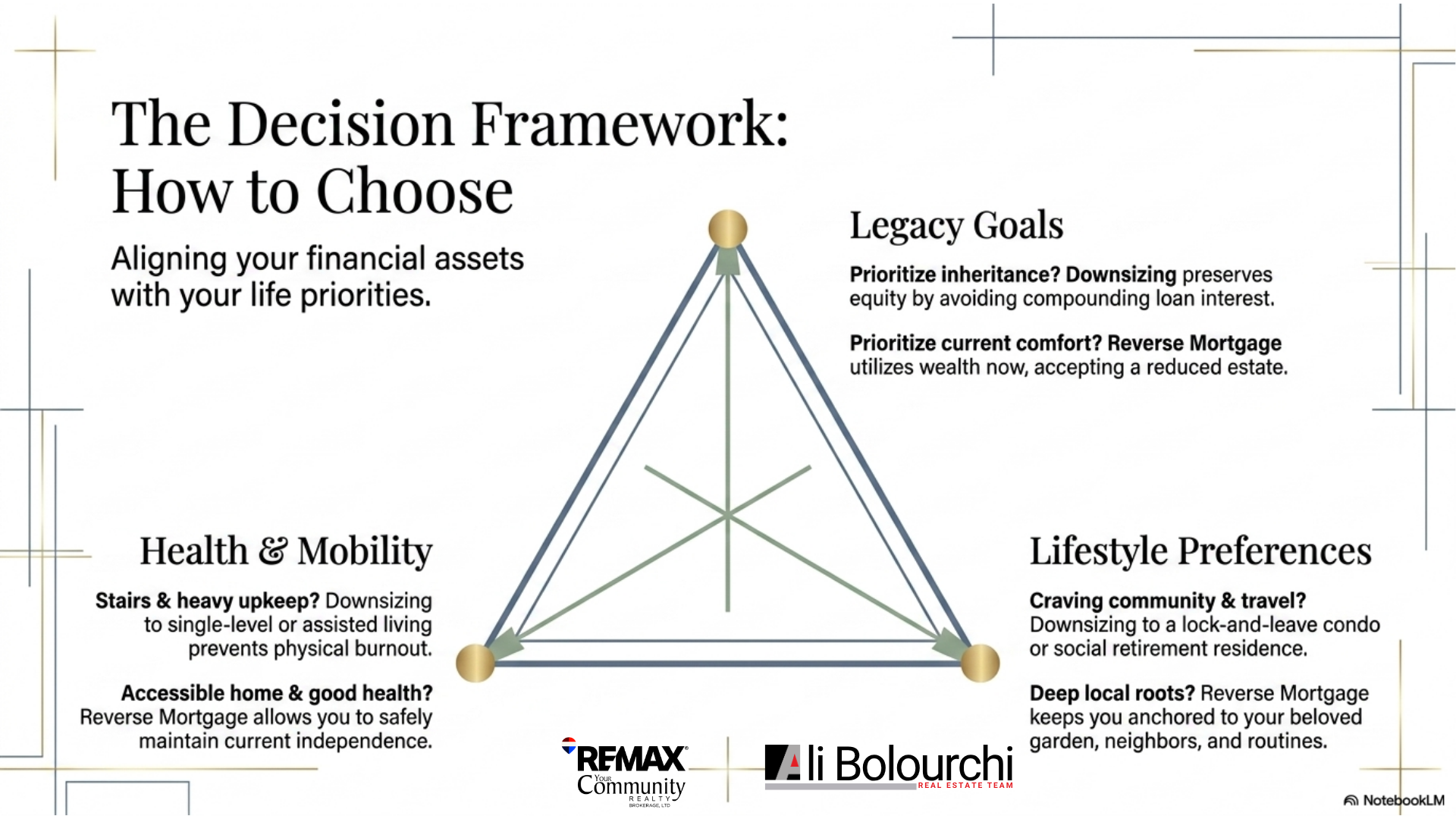
5. Practical Guide: Evaluating Your Next Home

If you choose to move, look beyond the surface and evaluate the "care capacity" of your next residence:
Physical Features: Prioritize single-level layouts, wide doorways, and walk-in showers to ensure future-proofing.
Care Standards: Ask about staff-to-resident ratios and the facility’s ability to manage complex medical needs—the average resident now enters care with nearly six health conditions and 11 medications.
Regulatory Standing: Ensure the home is in good standing on the Retirement Homes Regulatory Authority (RHRA) public register and demand transparency regarding care vs. accommodation costs.
6. The Strategic Downsizing Checklist
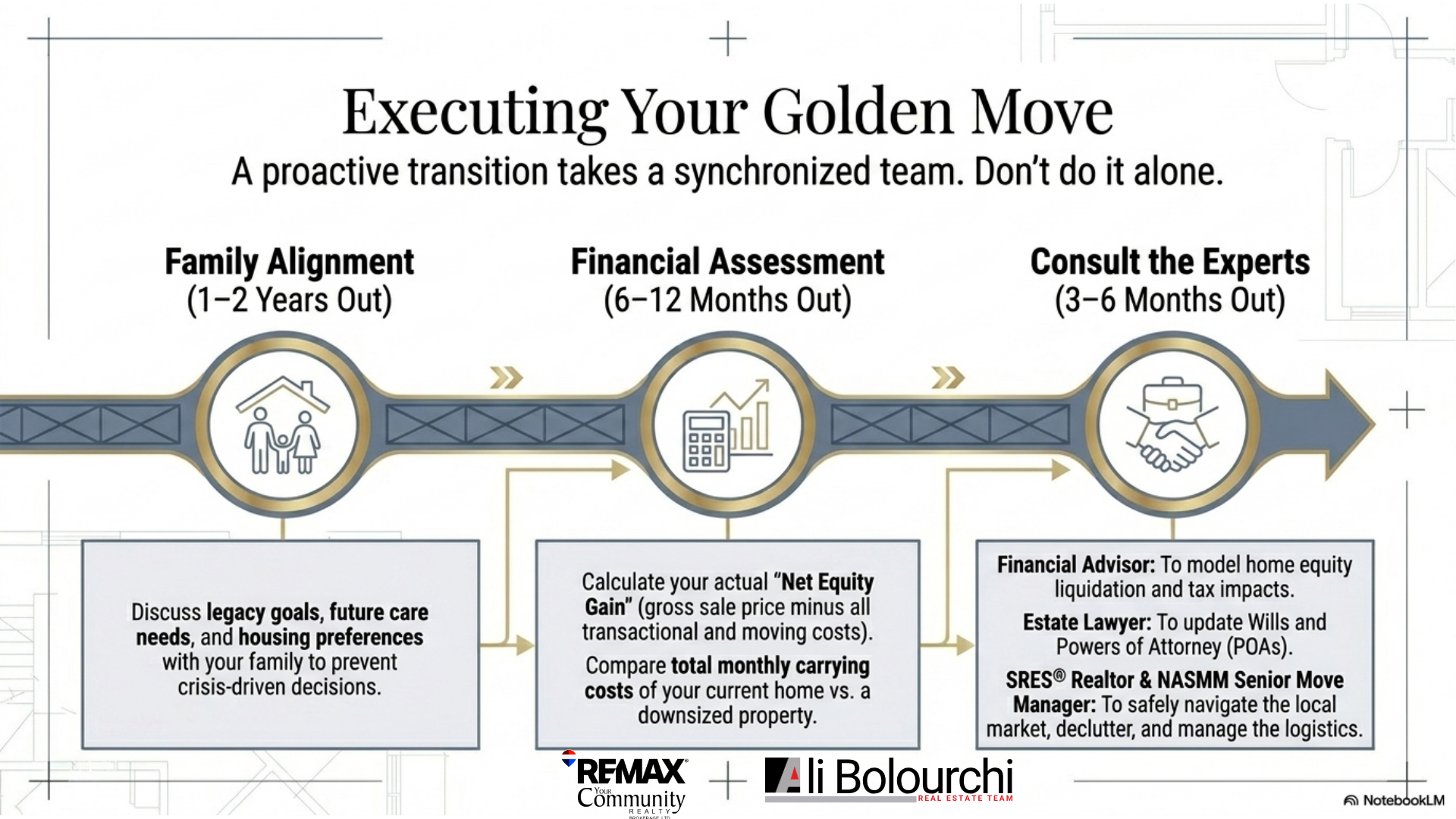
A seamless transition requires technical precision.
Family Alignment (1–2 Years Out): Discuss legacy goals and future care needs early to prevent crisis-driven decisions.
Financial Assessment (6–12 Months Out): Calculate your "Net Equity Gain" (gross sale price minus all transactional and moving costs) and consult a financial advisor to model tax impacts.
The "Plus 1" Rule: When selling, remember the CRA allows both your old and new properties to be treated as eligible for the Principal Residence Exemption in the year you move, ensuring you aren't penalized for the overlap.
Consult the Experts (3–6 Months Out): Work with an estate lawyer to update Wills/POAs and an SRES® Realtor or Senior Move Manager to handle logistics, decluttering, and emotional support.
Conclusion
Retirement is the most significant design project of your life. Whether you stay in your home or unlock your equity for a fresh start, the decision must be made holistically. Consult with your family and a financial advisor to ensure your legacy goals align with your care preferences, and remember: your home should be the foundation for your future, not a burden that holds you back.
