RSS

The 2026 Outlook: Finding Your Sanctuary in a Shifting Market

The GTA housing market has finally found its breath. After years of relentless movement, 2026 brings a "sober equilibrium"—a rare moment where the noise fades, and the signal becomes clear. With interest rates holding steady and a new era of "build wealth steady" replacing the frantic "get rich quick" mindset, the power has shifted back to the diligent buyer and the patient renter.

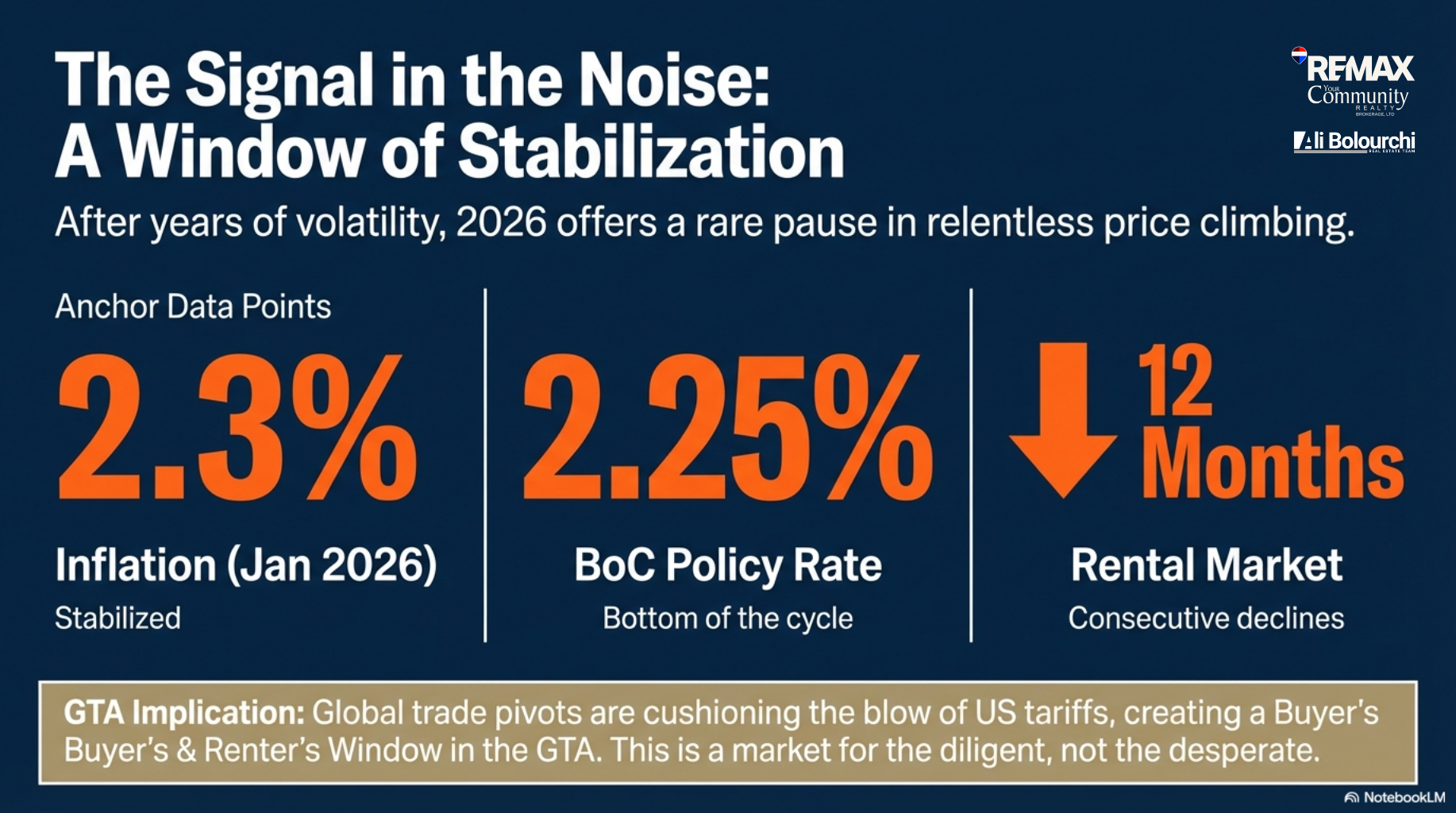
The Signal in the Noise: A Window of Stabilization

We are currently living through a rare pause in the relentless price climbs of the last decade. The "Macro-to-Micro" effect is real: global trade pivots are acting as a cushion against economic shocks, creating a unique window for those looking to secure their next home. This is not a market for the desperate; it is a market for the prepared.
The Trade Squeeze and the Canadian Shield

Our economy is currently navigating a "Trade Squeeze". While US tariffs have caused some pressure, Canada has built a "Shield" through new partnerships—including a $70B investment from the UAE and lowered tariffs on electric vehicles. This global balancing act keeps "hot money" away from Ontario, cooling the speculative fever and allowing for a more calm, authentic market temperature.

A Tale of Two Inflations

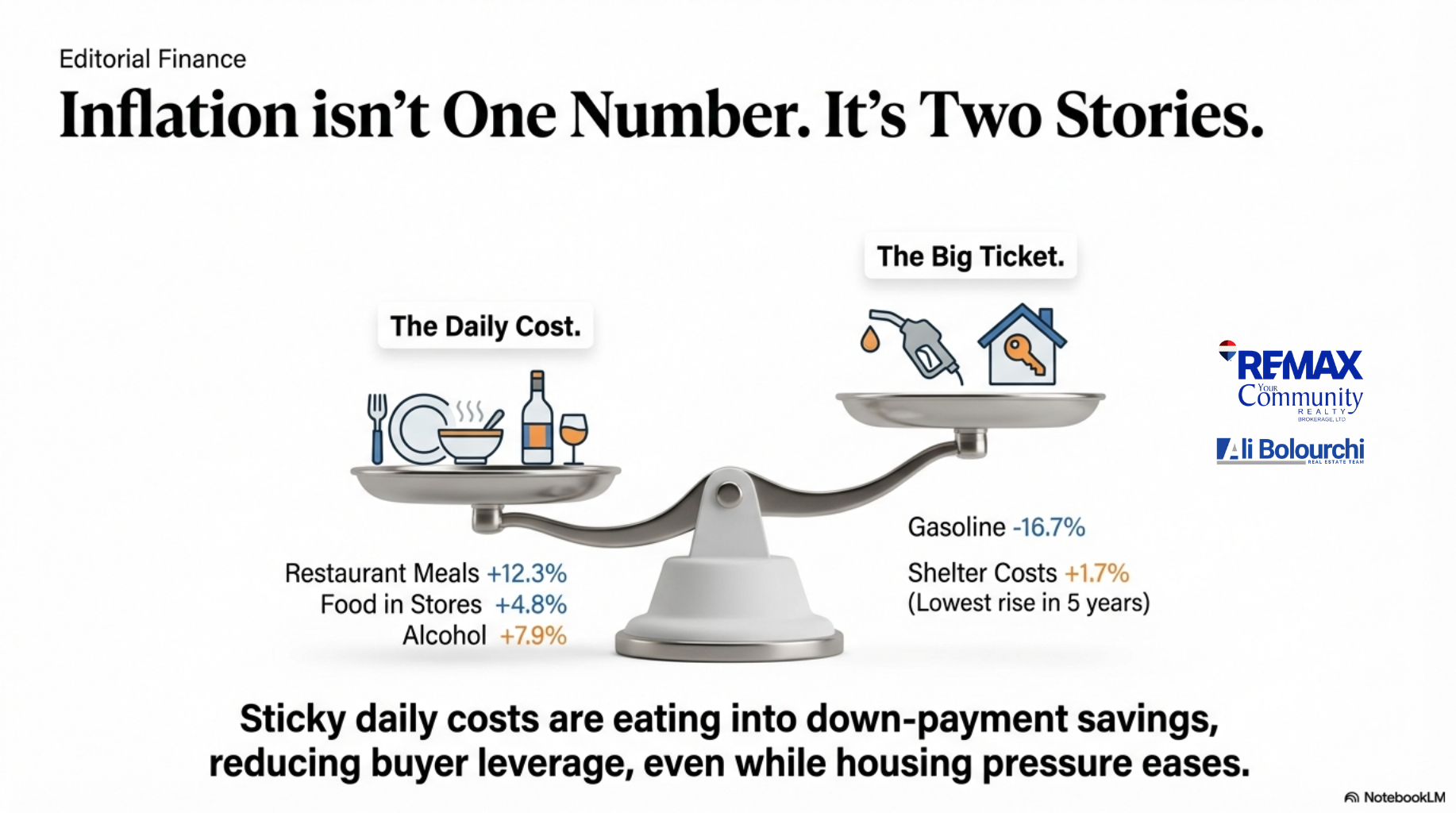
When you look at the data, you see two very different stories. "The Big Ticket" items are finally easing, with gasoline prices dropping significantly and shelter costs seeing their lowest rise in five years. However, "The Daily Cost" of living remains sticky. These high grocery and restaurant prices are quietly eating into down-payment savings, making it even more important to be strategic with your mortgage and rental choices.
The Central Bank: A Season of Certainty

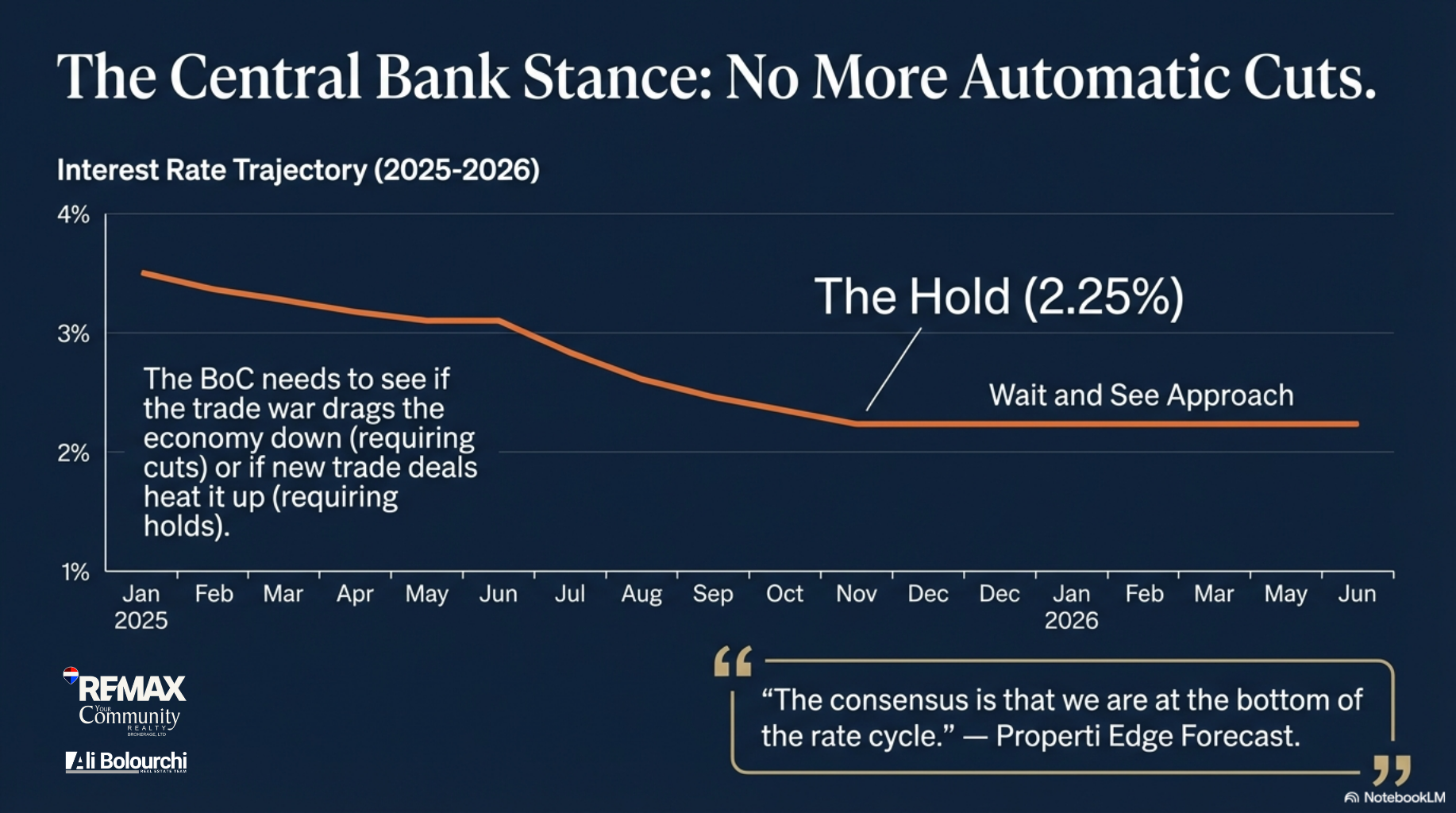
The Bank of Canada has moved away from automatic rate cuts and into a "Wait and See" approach. The policy rate has found a stable floor at 2.25%, which experts agree is the bottom of this cycle. For the first time in years, you can plan your future with a sense of predictability rather than fear of the next rate hike.
The Mortgage Matrix: Your Strategic Bridge

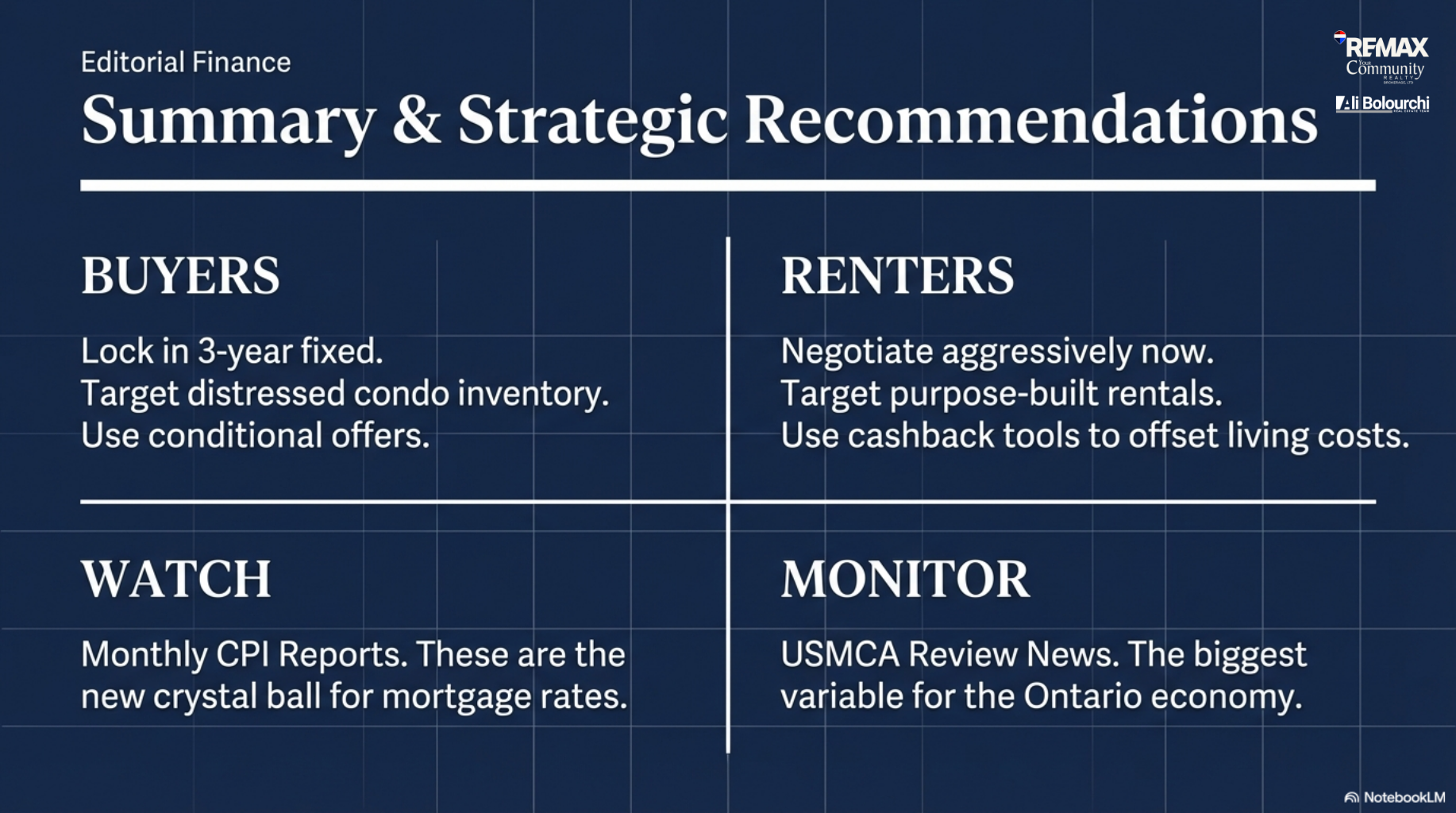
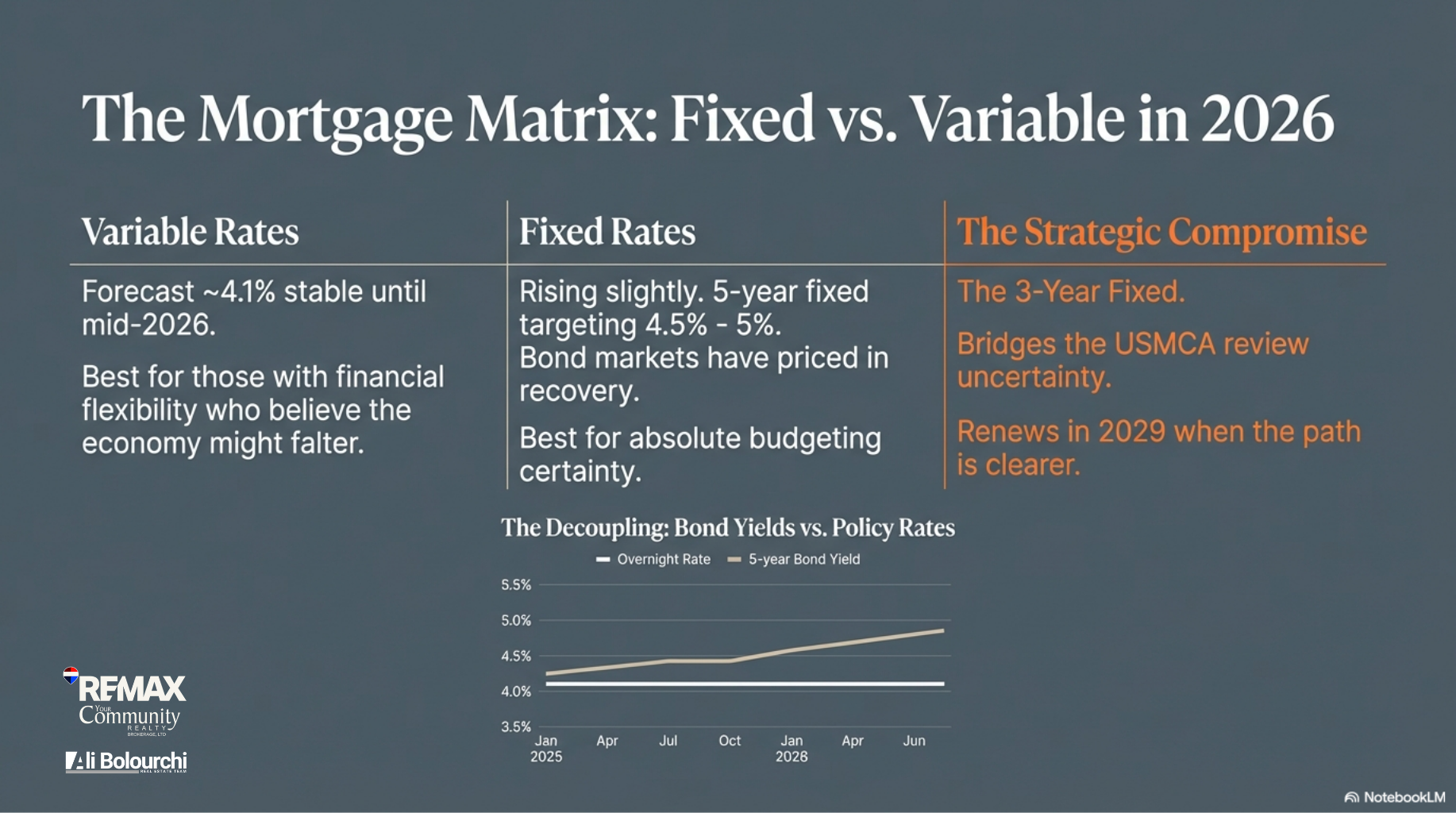
In 2026, choosing a mortgage is about more than just a number; it is about creating a bridge to your future. While variable rates offer flexibility, many are choosing the 3-Year Fixed mortgage. This strategy provides absolute certainty through the upcoming 2026 trade reviews and allows you to renew in 2029 when the global path is much clearer.
The Rental Correction: From Stress to Success

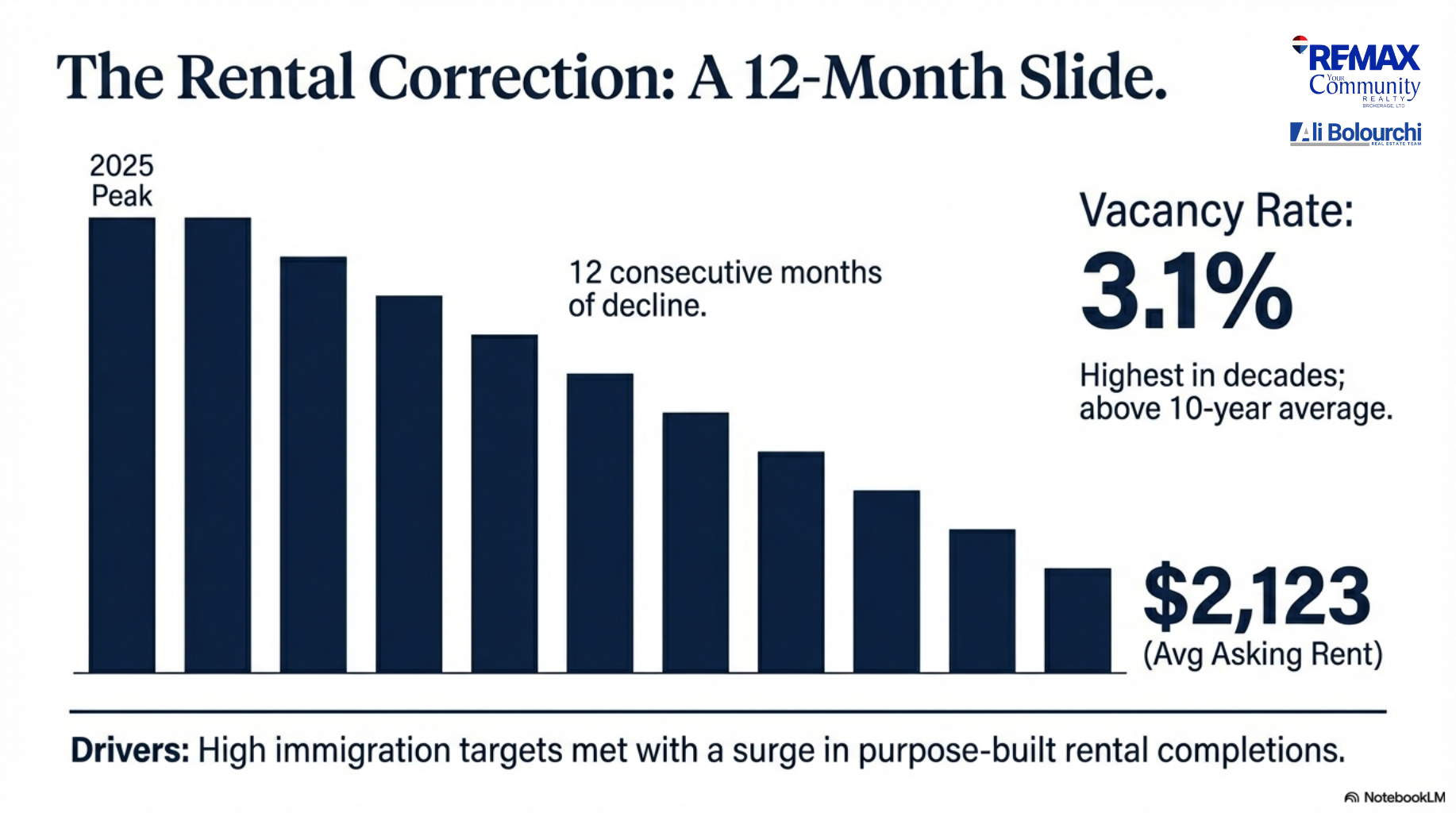
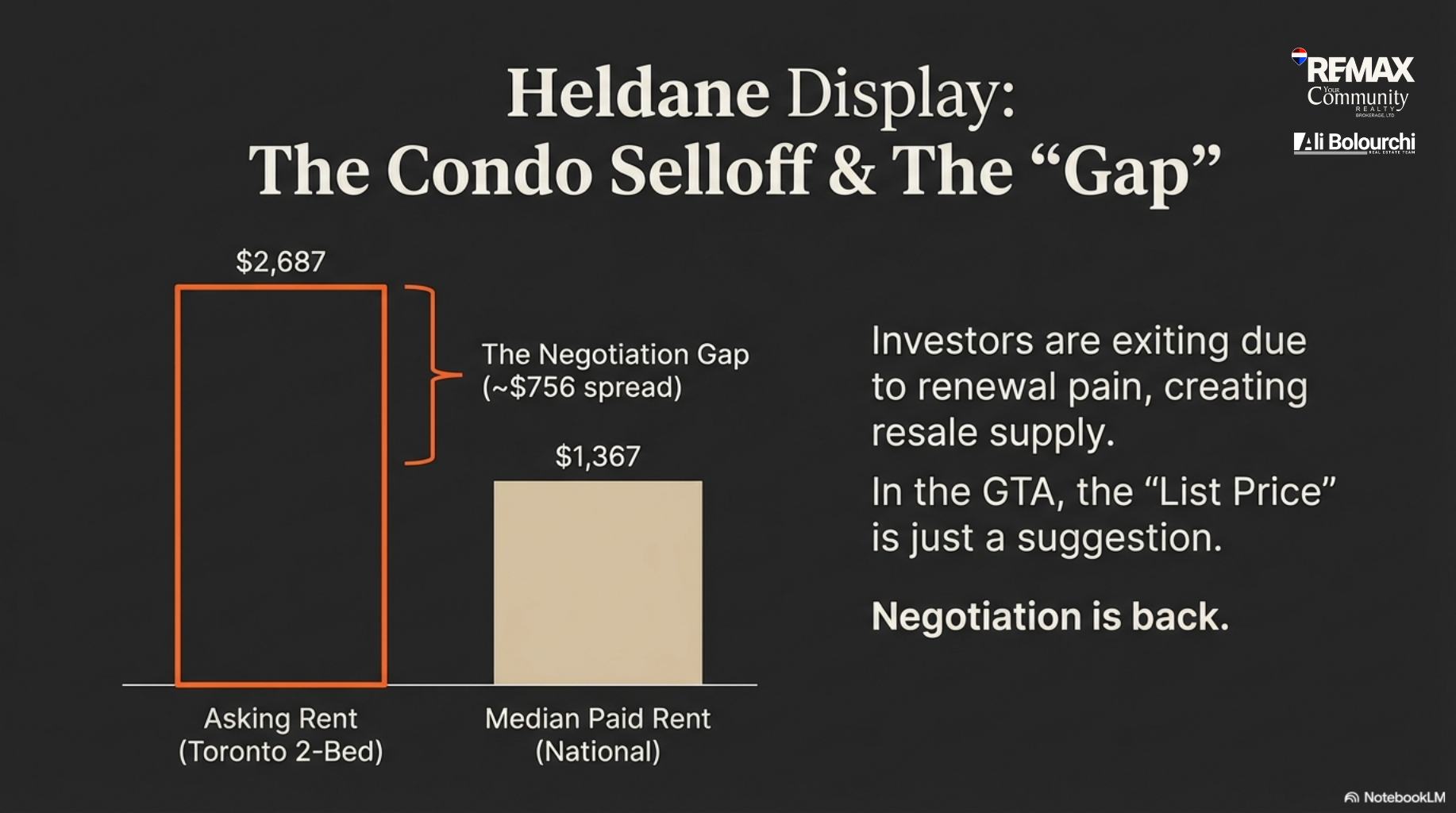
The power dynamic has officially flipped in the rental market. We are seeing a 12-month slide in prices, with vacancy rates hitting 3.1%—the highest in decades. This has created a massive "Negotiation Gap". With more supply available, you are no longer just "lucky to find a place"—you are a client who deserves a space that fits your lifestyle.
Finding Value in the Ring

As the "softening premium" of the Downtown Core continues, savvy buyers are looking toward "The Value Ring". Areas like Mississauga, Vaughan, and Scarborough are offering 15-25% savings, allowing you to find a larger sanctuary without sacrificing connectivity.

The Horizon: A New Normal

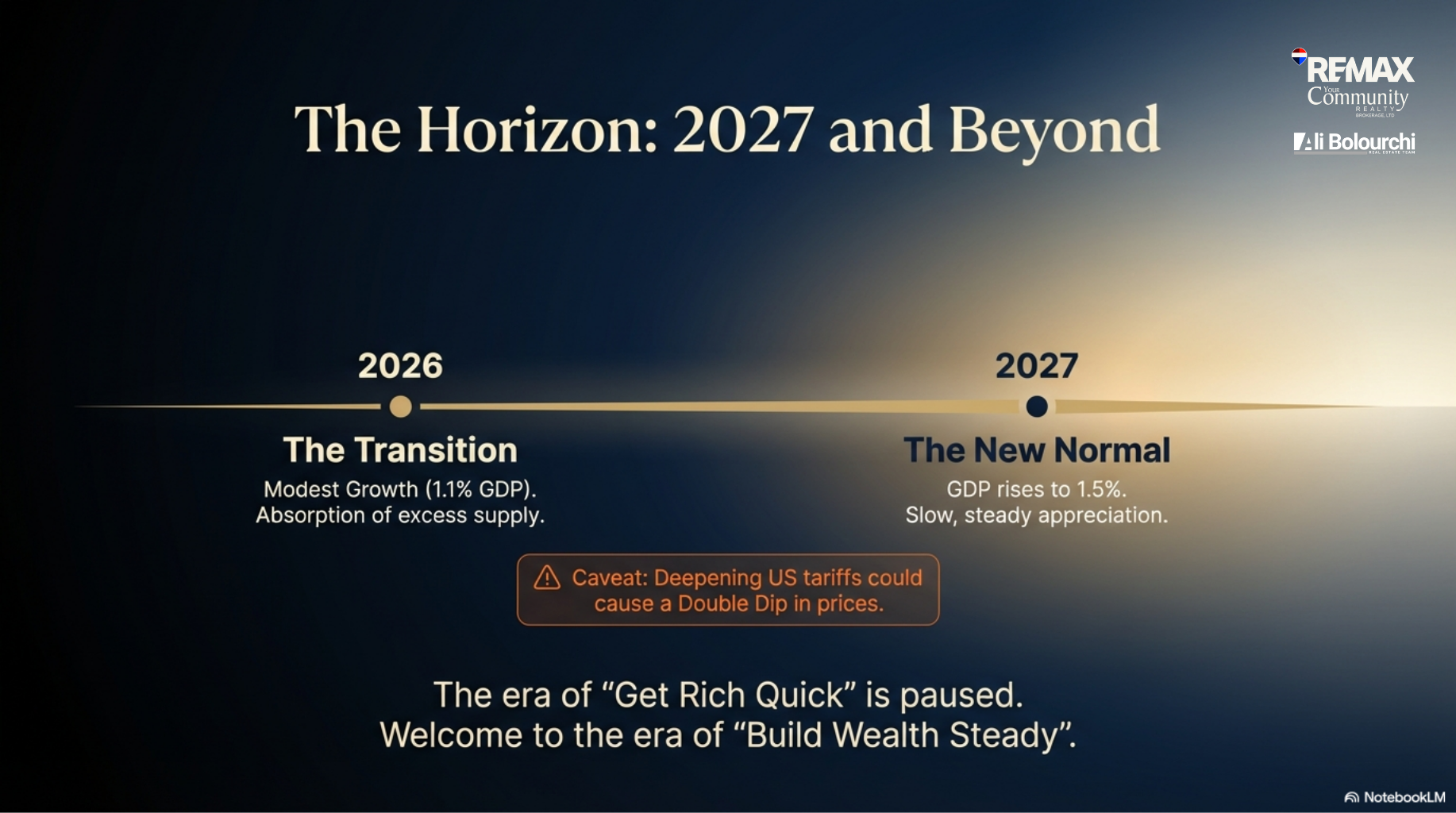
The era of the "quick flip" is paused. As we look toward 2027 and beyond, we expect a transition into a "New Normal" defined by slow, steady appreciation and modest growth. The 2026 CUSMA review remains the biggest variable, but it also acts as a "cap" that keeps the market from returning to a frantic state.

Your Strategic Path Forward

This is a market for the prepared.

  • Buyers: Target investor-owned units where sellers are motivated by renewal pain.

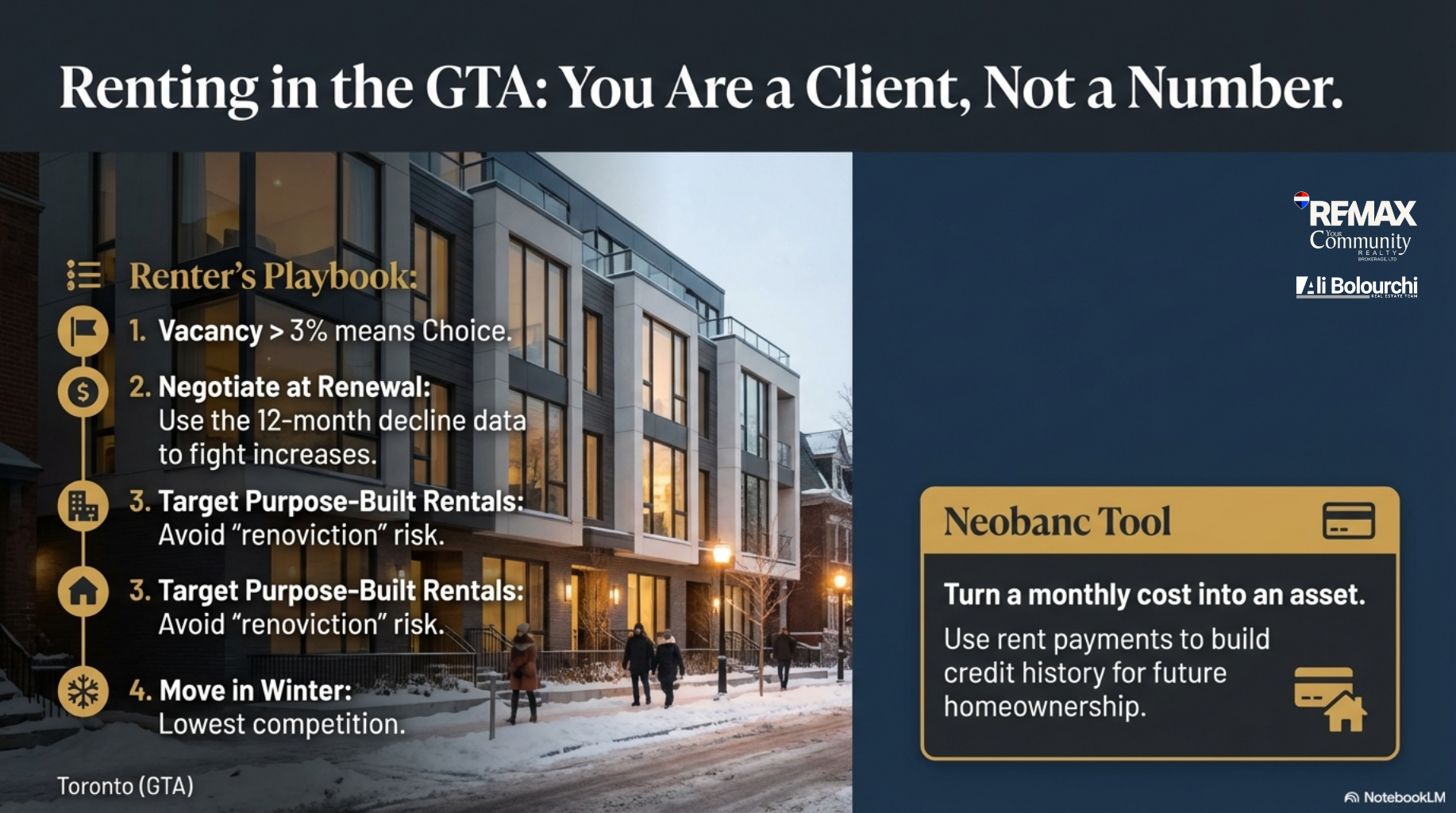
  • Renters: Negotiate aggressively and use tools to build your credit through your rent payments.

  • Everyone: Keep a close eye on monthly inflation reports—they are your new crystal ball.

Download Your 2026 Diligent Buyer’s Roadmap

To help you navigate these trade winds, I have curated a strategic checklist for the modern buyer. This document covers everything from finding the "Value Ring" to leveraging the current "Negotiation Gap."

Click Here to Download: 2026_Diligent_Buyer_Checklist

Read

Market Watch January 2026: GTA Average Price Dips Below $1M as the Market Resets

Welcome to 2026! The Greater Toronto Area (GTA) housing market kicked off the new year with a noticeable chill, bringing both challenges for sellers and incredible opportunities for buyers.

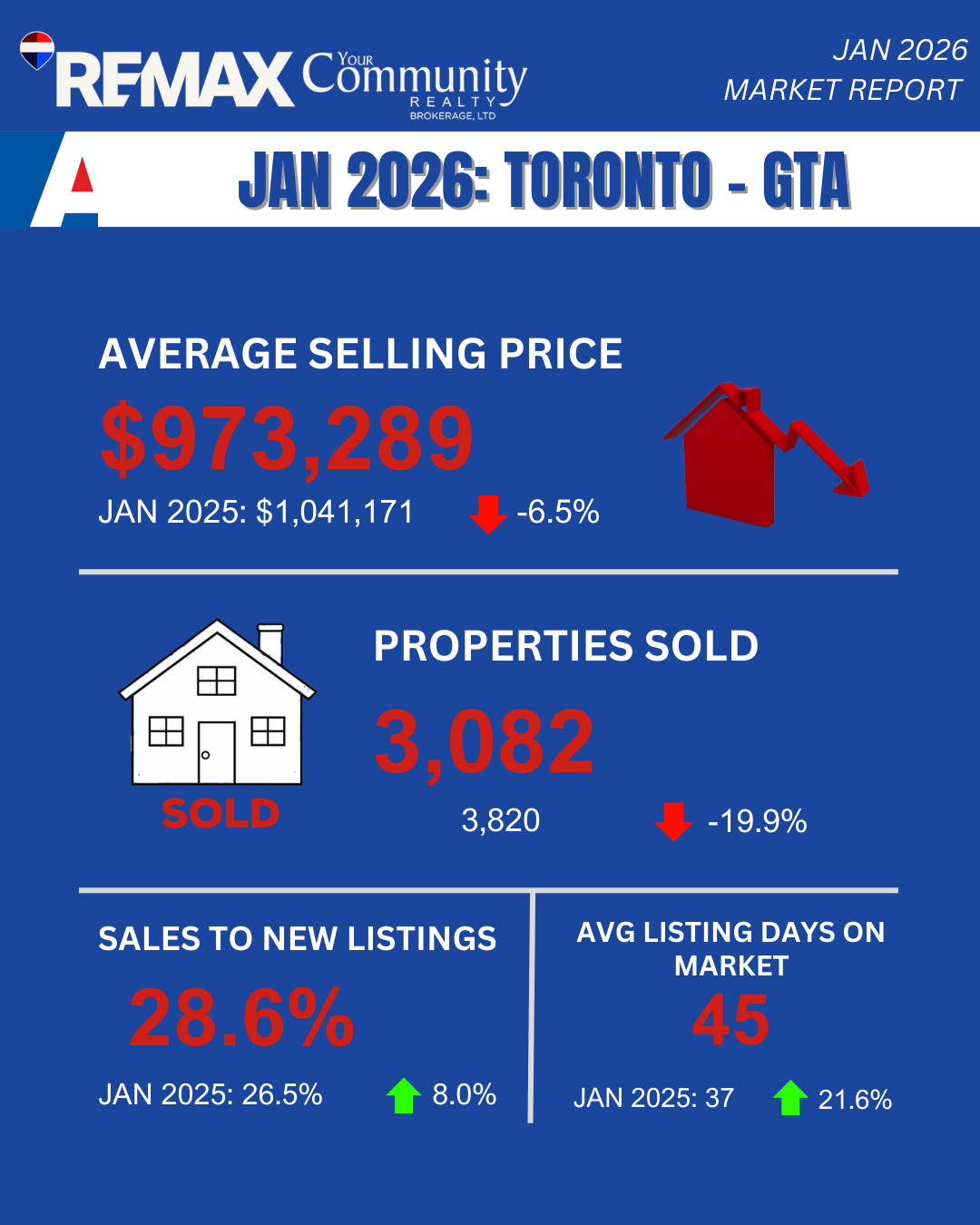
According to the latest TRREB data, there were 3,082 home sales reported in January—a significant 19.3% drop compared to January 2025. But the real headline? The average selling price across the GTA has dipped below the $1 million mark, landing at $973,289 (down 6.5% year-over-year).

While new listings entering the market also decreased by 13.3% , month-over-month trends show prices and the MLS® HPI composite are continuing to trend lower. We are firmly in a market where pricing strategy is everything.

Here is a deep dive into how the 416 (City of Toronto) and 905 (Suburban GTA) markets performed by property type in January 2026.


🏡 Detached Homes

The detached market remains the gold standard for GTA living, but buyers are finding much more breathing room, especially outside the city core.

  • 416 (Toronto Core)

    • Average Price: $1,541,791.

    • Trend: Down 2.8% year-over-year. The city's detached market is holding its value better than the suburbs, though prices are still softening.

  • 905 (GTA Suburbs)

    • Average Price: $1,205,859.

    • Trend: Down 8.8% year-over-year.

Insight: The suburban premium has officially cooled. For families looking to upsize, the 905 region is offering substantial discounts compared to last year, making this a prime window to negotiate a forever home.


🏘️ Semi-Detached Homes

Semi-detached homes saw some of the most dramatic differences between the city and the suburbs this month.

  • 416 (Toronto Core)

    • Average Price: $1,146,188.

    • Trend: Down just 0.9% year-over-year. City semis remain incredibly resilient and highly sought-after.

  • 905 (GTA Suburbs)

    • Average Price: $840,356.

    • Trend: Down a massive 14.5% year-over-year.

Insight: If you are a first-time buyer or investor, suburban semis are flashing a massive "buy" signal. With average prices dropping to the mid-$800s in the 905, this segment represents some of the best value in the current market.


🏙️ Townhouses

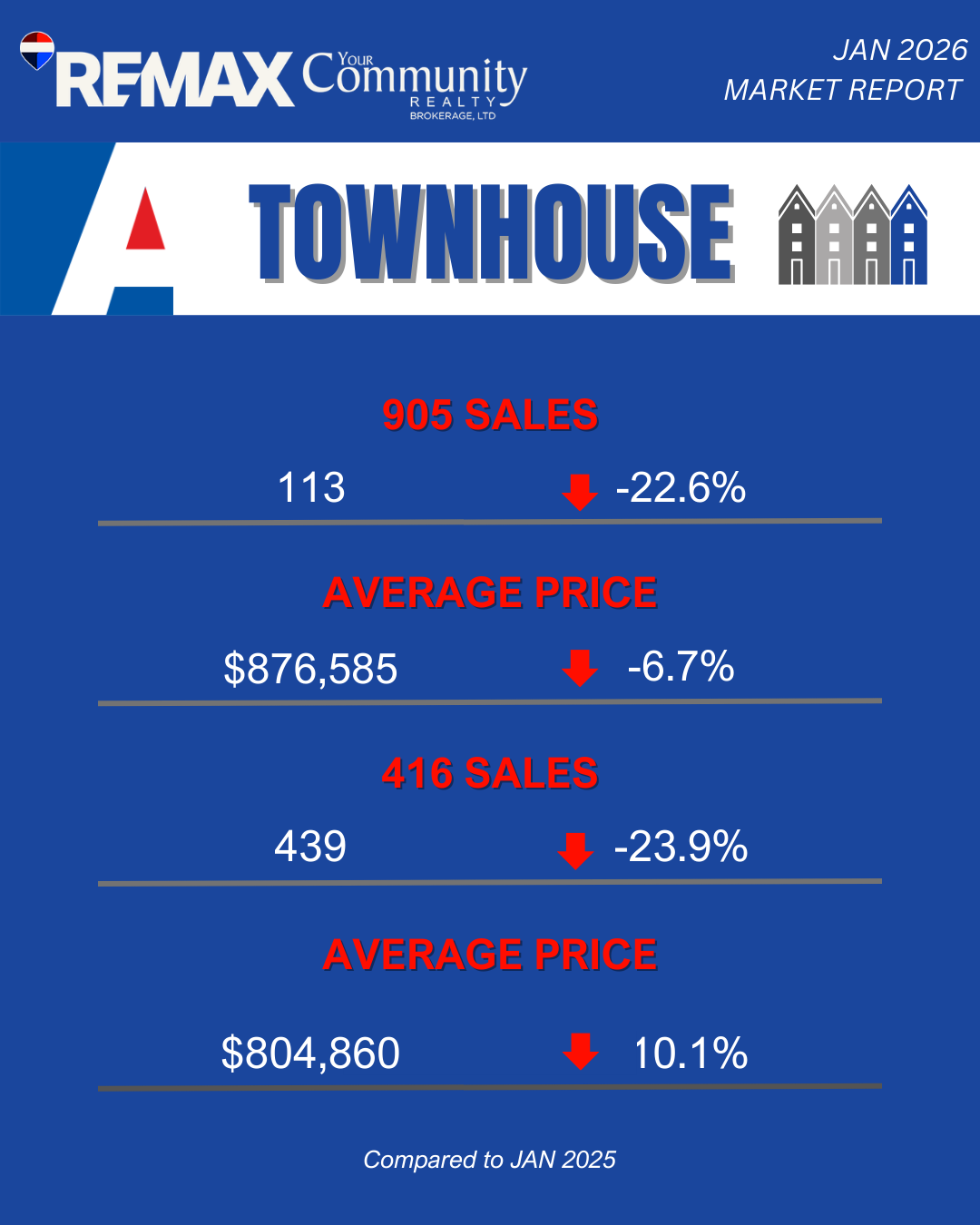
Townhomes, often the "missing middle" of housing, saw a fairly even price correction across the board as affordability constraints continue to dictate buyer behavior.

  • 416 (Toronto Core)

    • Average Price: $876,585.

    • Trend: Down 6.7% year-over-year.

  • 905 (GTA Suburbs)

    • Average Price: $804,860.

    • Trend: Down 10.1% year-over-year.

Insight: The price gap between a city townhouse and a suburban townhouse has narrowed to roughly $70,000. Buyers who were previously pushed to the suburbs might find they can afford to stay in the 416 right now.


🏢 Condo Apartments

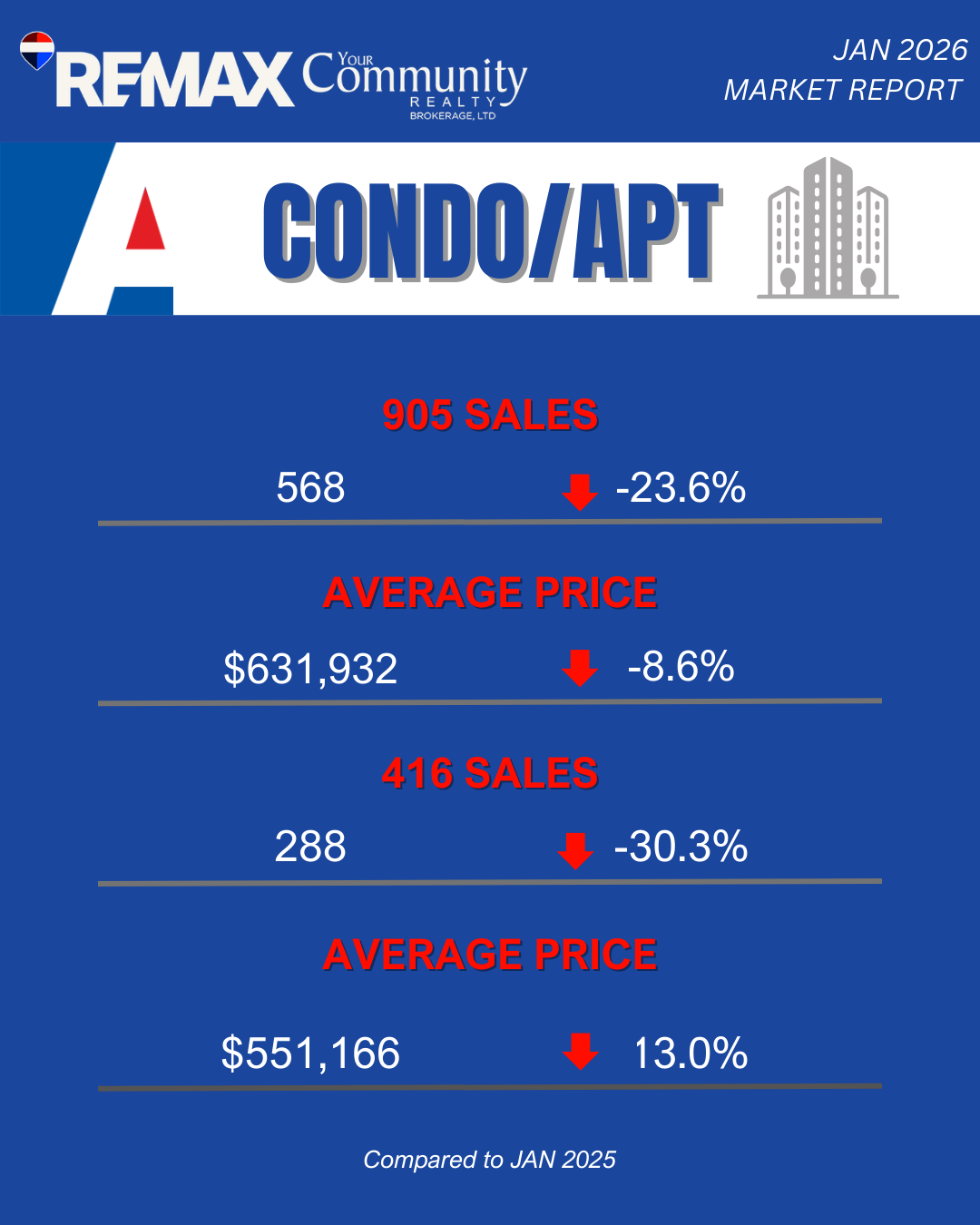
The condo sector continues to face headwinds. As inventory sits, sellers are being forced to aggressively adjust their expectations to get deals done.

  • 416 (Toronto Core)

    • Average Price: $631,932.

    • Trend: Down 8.6% year-over-year.

  • 905 (GTA Suburbs)

    • Average Price: $551,166.

    • Trend: Down 13.0% year-over-year.

Insight: Condo buyers currently have the luxury of choice and time. With 905 condos hovering near the $550k mark, the barrier to entry for homeownership is the lowest it has been in quite a while. Sellers in this space must ensure their units show perfectly and are priced competitively from day one.


Final Thoughts & Recommendations

The January 2026 data confirms what we've been feeling on the ground: we are in a challenging, price-sensitive market.

For Sellers: You cannot look in the rearview mirror to price your home. With both sales and prices trending downward, you must price ahead of the market, not chase it down. Properly priced, well-presented homes are still selling, but buyers are refusing to overpay.

For Buyers: This is your moment. With less competition and prices pulling back, you have excellent negotiating power. Whether you are looking for a heavily discounted suburban semi or a starter condo, the opportunities are there if you are ready to act.

Want a personalized pricing strategy for your property?

Let’s chat and position your home ahead of the market, not behind it.

Read

The Economics of Peace: Why Your Next Move Could Be Your Most Profitable Life Decision

By Ali | The Visionary Curator

What is the "Economics of Peace"?

A Strategic Definition for the Modern Homeowner

The Economics of Peace is a strategic real estate philosophy that prioritizes monthly liquidity and mental clarity over asset accumulation. In the current Southern Ontario market climate—specifically regarding the 2025-2026 mortgage renewal cycle—it involves liquidating "heavy" equity to eliminate debt. The goal is to transition from being "House Rich and Life Poor" to a state of financial fluidity, where your home serves your life, rather than your life serving your mortgage.


The Silent Weight of the 2026 Horizon

There is a specific kind of quiet that fills a home when the owner is worried about money. It’s a heaviness that settles in the hallways and creates a fog in the living room.

As we navigate the reality of 2026, many homeowners in the Greater Toronto Area are feeling this weight. We are seeing the effects of the mortgage renewal cycle that economists predicted years ago. If you purchased or refinanced during the historic lows, the new rates aren't just numbers on a page—they are a fundamental shift in your daily reality.

We need to normalize this conversation.

There is no virtue in suffering to keep a specific address. There is no award for enduring sleepless nights just to maintain a certain square footage. If your sanctuary has become a source of stress, the energy of the home has shifted. It is no longer a retreat; it is an obligation.

Curating vs. Accumulating: The Art of "Editing" Your Life

In my work as a curator of lifestyles, I often look to the art world. A master curator does not judge a collection by how much is in the room, but by the clarity of the pieces that remain.

Often, we view selling a family home as a "step back" or "downsizing." I invite you to view it differently. I invite you to view it as editing.

When you edit a room, you remove the clutter to let the light in. When you edit your real estate portfolio, you release the square footage you no longer need—the rooms you pay to heat, cool, clean, and insure—to reclaim something far more valuable: Your freedom.

This is not about loss. It is about refinement. It is about trading physical space for mental space.

The Mathematics of Serenity

Let’s put on our analytical hats for a moment and look at the logic. The numbers must make sense for the heart to feel at peace.

In this market, the "ROI" (Return on Investment) is usually calculated in dollars. But for the homeowner facing a steep renewal, the true ROI is Quality of Life.

Consider this equation:

  • The Current Path: You hold the asset. You endure the payment shock (which statistics show could be a 15-20% increase for many fixed-rate holders). Your monthly cash flow tightens. You say "no" to travel, "no" to dinners out, "no" to ease. You are building equity, but you are spending your peace to get it.

  • The "Economics of Peace" Path: You sell strategically. You unlock the equity trapped in the drywall and timber. You eliminate the debt. You move to a "Right-sized" space—perhaps a boutique condo near the water or a refined townhome.

Suddenly, the flow returns. Your bank account breathes. Your mornings are no longer started with anxiety. That is a profit that doesn't show up on a spreadsheet, but it is the most valuable profit you will ever make.

Your Narrative is Yours to Write

Societal pressure tells us that "bigger is better" and that the goal is always to climb the property ladder. But a ladder that leads to anxiety is not worth climbing.

You are the author of this narrative. You have the power to change the setting of your story to one that supports your well-being.

The market in Southern Ontario is shifting, and there are buyers currently looking for exactly the type of home you own. By selling now, you aren't "giving up." You are making a sophisticated, proactive choice to preserve your wealth and, more importantly, your wellness.

A Confidential Invitation

I understand that this is a sensitive topic. Real estate is deeply personal, and financial shifts are often private matters.

I am not just a salesperson; I am a guide. I offer a Confidential Strategy Session—think of it as a coffee chat, not a listing presentation. We will sit down, look at the reality of the market, and explore your options with zero pressure.

Let’s find your clarity.

Click Here to Request a Private Home Evaluation & Strategy Session


Frequently Asked Questions regarding 2026 Renewals

1. Is it better to refinance my current mortgage or sell? Refinancing allows you to keep your home, but it often extends your amortization period (meaning you pay interest for longer) or significantly increases your monthly payments at current rates. Selling triggers a "clean slate." The choice depends on your Monthly Liquidity Ratio: if keeping the home requires you to use credit cards for daily living, the asset has become a liability.

2. Will I pay a penalty if I sell before my mortgage term is up? This is a critical calculation. If you have a variable rate mortgage, the penalty is typically just three months' interest. If you have a fixed rate, you may face an "Interest Rate Differential" (IRD) penalty, which can be higher. However, when we run the numbers, the profit from selling often far outweighs the penalty—especially if it saves you thousands in monthly payments over the next 5 years.

3. What are the actual costs of "Rightsizing"? Transparency is key. When selling in Ontario, you should budget for Real Estate Commissions (to market and protect your asset), Legal Fees (approx. $1,500 - $2,000), and Mortgage Discharge fees ($300-$500). When buying your smaller sanctuary, remember Land Transfer Taxes. In our strategy session, I provide a Net Sheet that calculates every penny so there are no surprises.

4. Should I wait for interest rates to drop further before selling? Market timing is a dangerous game. While rates may fluctuate, the inventory of homes for sale is expected to rise as more owners face the 2026 renewal wall. Selling before the market becomes saturated with inventory often yields a higher sale price, which negates the benefit of waiting for a slightly lower rate on your next purchase.

Read
This website may only be used by consumers that have a bona fide interest in the purchase, sale, or lease of real estate of the type being offered via the website. The data relating to real estate on this website comes in part from the MLS® Reciprocity program of the PropTx MLS®. The data is deemed reliable but is not guaranteed to be accurate.