RSS

The $80,000 Phantom: Why Canada's Promised Secondary Suite Loan Vanished — And the 90% Refinance Plan That Quietly Replaced It

A Strategic Guide for GTA Homeowners Who Refuse to Be Left Behind


You Did Everything Right. So Why Are You Still Stuck?

You've watched your home appreciate for years. You've heard the headlines about Canada's housing crisis and "gentle densification." You've stood in your basement, or your backyard, and you've seen it — the second income suite, the in-law apartment, the laneway home — already finished in your mind.

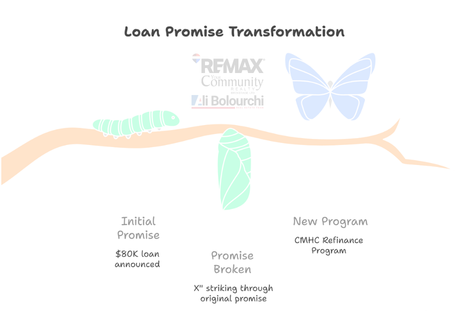
Then in 2024, the federal government handed you what looked like the final piece: the Canada Secondary Suite Loan Program. Up to $80,000. Just 2% interest. A 15-year term. You started pricing contractors. You called your accountant. You opened a folder labelled "Suite Project."

And then... silence.

No application portal. No instructions. No phone number that worked. By the time the 2025 federal budget was tabled, the program had been quietly cancelled — buried in a footnote, never having helped a single Canadian homeowner.

If that sounds familiar, here's what you need to know: You are not behind. You were misled by a program that never existed. And the real opportunity — the one that's actually moving GTA homeowners forward right now — was hiding behind it the entire time.


The Real Villain in Your Story

Most homeowners assume the villain is the market. Or interest rates. Or contractor prices.

It's not.

The villain is misinformation — the kind that keeps capable, financially healthy people frozen in research mode while their equity sits idle and their adult children sleep in childhood bedrooms.

The good news? The program that absorbed it — the CMHC Refinance Program — is, by nearly every measurable standard, more powerful than what was originally promised. You just have to know how to use it.

That's where this guide comes in.


Meet Your Plan: The CMHC Refinance Program

Here's what most homeowners don't realize. The CMHC Refinance Program doesn't just lend you money to build a suite. It lets you refinance against your home's future value — the value it will have after the suite is built.

Read that again.

You're not borrowing against what your home is worth today. You're borrowing against what it will be worth once the project is done — up to 90% of the post-construction value, capped at $2 million.

That single mechanic changes everything.

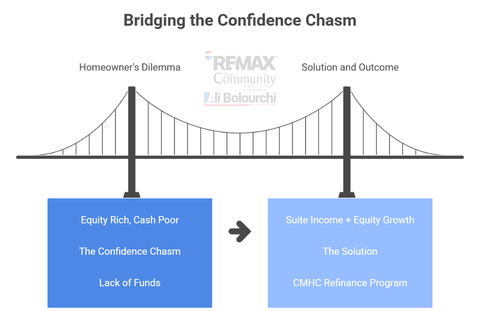
This is the bridge most Toronto homeowners didn't know existed.


The Three Authority Signals: How Lenders Read You

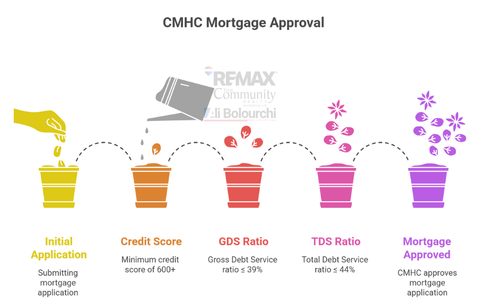
Cialdini taught us that authority cuts both ways. The bank wants to know you are credible too. Under CMHC's framework, that credibility is measured by three numbers — and if you know them in advance, you can fix what needs fixing before you apply.

You also need to be a Canadian citizen, permanent resident, or non-permanent resident with valid work authorization — and you (or a spouse, common-law partner, parent, or child) must actually live in the home.

This is not a program for absentee investors. This is a program for people building a future on land they already stand on.


CMHC vs. Cash-Out Refinance: The Comparison Most Lenders Won't Make For You

Here's where most homeowners get quietly steered the wrong way. A traditional cash-out refinance is easier for a lender to process — so it's often the first option suggested. But for a secondary suite project, it's almost always the worse option.

CMHC vs. Cash-Out — The Honest Comparison

FeatureCMHC RefinanceConventional Cash-Out
Equity You Can AccessUp to 90% of post-construction valueUp to 80% of as-is value
Amortization30 years25 years
Interest RateOften lower (CMHC-insured)Standard market rate
Best ForBuilding a secondary suiteGeneral cash needs

For a Toronto property where post-construction valuation can rise meaningfully — say, a Scarborough bungalow with a finished basement suite, or an East York semi with a laneway home — that 10% gap between 80% and 90% can be the difference between "someday" and "this year."


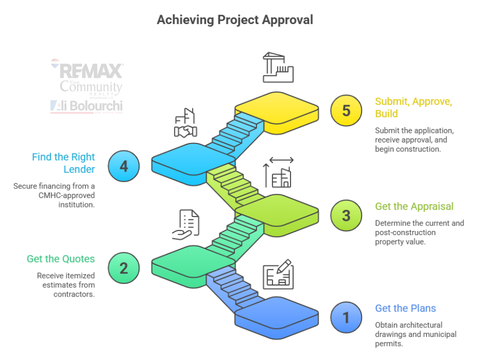
The 5-Step Plan: From Idea to Approval

This is where most articles end. This is where the real work begins. Here is the plan, in the order it actually happens.

A few things worth absorbing:

  • CMHC must approve the financing before construction starts. This is non-negotiable. Build first and you forfeit the program entirely.

  • Funds advance in stages. Not all at once. As each phase of the build is completed, the next tranche releases. This protects everyone — including you.

  • Not every lender is approved. Many mortgage brokers don't even mention this program because they don't have the relationships to execute it. The right professional makes this fast. The wrong one stalls you for months.


What Your Suite Must Be (and What It Cannot Be)

The suite has to qualify as a true secondary residence. That means:

  • A separate kitchen. Not a kitchenette. Not a microwave on a counter.

  • A separate bathroom. Full, functional, private.

  • A distinct living space. Suitable for full-time, year-round occupancy.

  • A private entrance. Independent access, separate from the main home.

  • Compliant with local bylaws and Ontario building code. Every line.

  • Rented for a minimum of 90 consecutive days if you choose to rent it. No short-term rentals. No Airbnb. No exceptions.

If your plan was to build a suite and rent it on Airbnb, this program is not for you. If your plan was to build something a parent, a child, or a long-term tenant could call home — this program was practically written for you.


The Cost of Waiting (And Why Smart Owners Are Moving Now)

Brian Tracy taught a principle that I think about often: the law of correspondence. What's happening on the inside — the hesitation, the second-guessing, the "I'll look into it next quarter" — almost always matches what shows up on the outside: equity sitting idle, family arrangements unsolved, opportunities passing.

Here is the honest math of waiting in 2026:

  • Construction costs in the GTA are still climbing, roughly 4–6% annually. The suite that costs $180K today is closer to $190K next year.

  • Mortgage rates remain volatile. The window for a favourable refinance is not permanent.

  • Municipal permitting timelines have lengthened, particularly for laneway and garden suites in Toronto. The earlier you start the paper trail, the earlier you finish.

  • Rental demand in the GTA continues to compress vacancy rates. Every month your suite isn't built is a month of foregone income.

The homeowners who started planning in late 2025 are pouring foundations now. The ones who waited for "more clarity" are still researching.


The Truth About Going It Alone

You can absolutely manage this process yourself. Many homeowners do. But understand what that means: you'll need to identify a CMHC-approved lender, coordinate two appraisals, manage permit timelines, vet contractors, structure the financing, and ensure every document aligns with CMHC's specific requirements — all while still working your full-time job and running your household.

Or, you can work with a Toronto real estate professional who has done this dozens of times — who knows which lenders move quickly, which contractors specialize in secondary suites, which neighbourhoods are seeing the strongest post-construction valuations, and which permit pathways are currently the fastest.

The choice isn't between "expensive" and "cheap." The choice is between months of confusion and a clear path forward.


Your Next Move

You came to this article looking for clarity on a federal program that no longer exists. You're leaving with something better: a working knowledge of the program that does, the framework to qualify, and the plan to execute.

But information alone doesn't build a suite. Action does.


🔑 Book Your 2026 Secondary Suite Strategy Session

A private, no-obligation 30-minute consultation where we will:

✅ Review your specific GTA property and its post-construction potential
✅ Identify the right financing path (CMHC, HELOC, or hybrid) for your numbers
✅ Connect you with a CMHC-approved lender who actually knows this program
✅ Map out a realistic 90-day action plan you can start this week

Spaces are limited to 6 consultations per month so I can give each property the deep attention it deserves.

[ → BOOK MY SECONDARY SUITE STRATEGY SESSION ]

Disclaimer: This article is for informational purposes only and does not constitute financial, legal, or tax advice. Program details are based on publicly available information from the Canada Mortgage and Housing Corporation as of 2026. Always consult with a qualified mortgage professional, financial planner, or accountant before making refinancing decisions. Source reference: blog.remax.ca, "Financing for Secondary Suites in Canada," March 2026.

Read

The Bank of Canada Holds at 2.25%: What Every GTA Seller, Buyer, and Investor Needs to Know Today

April 29, 2026 | Ali Bolourchi — The Visionary Curator


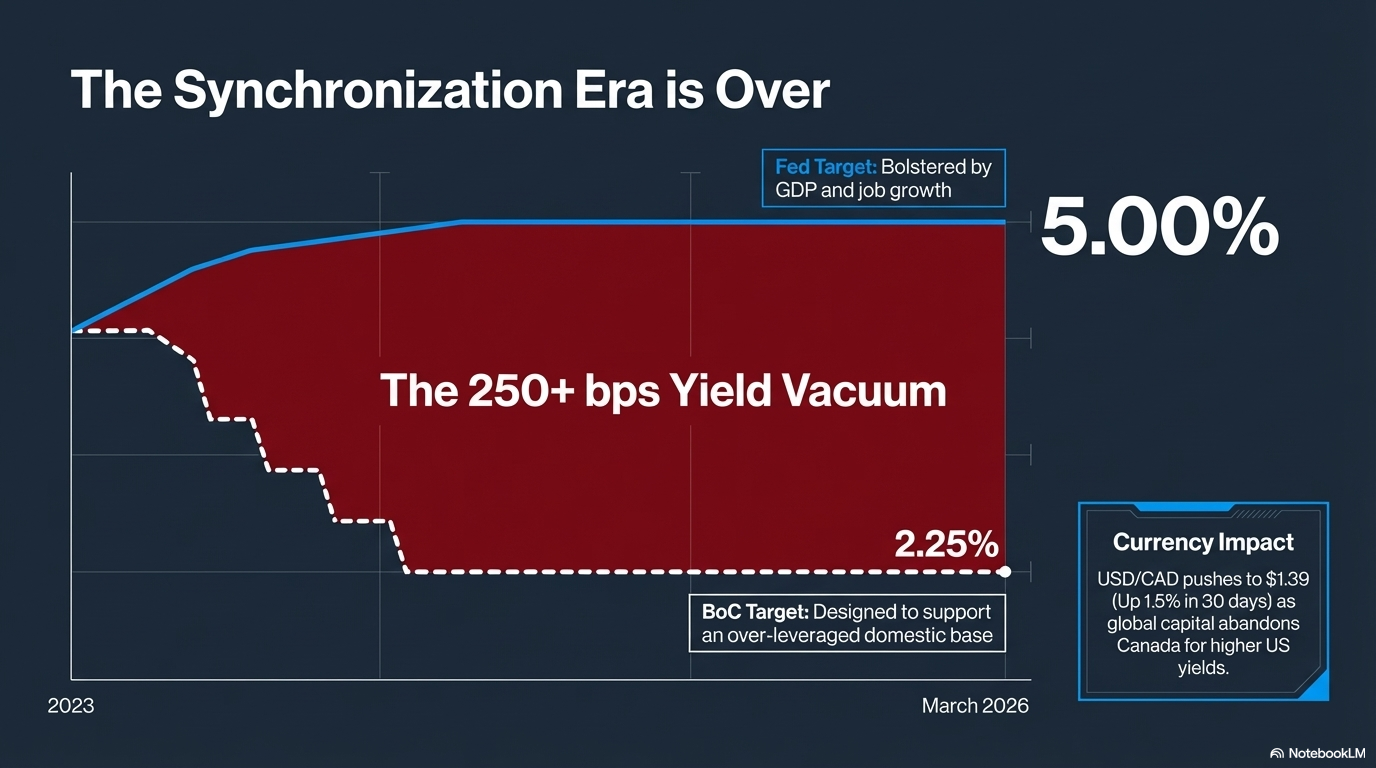
Today the Bank of Canada did exactly what most economists expected: nothing. The overnight rate stays at 2.25%, held for the third consecutive time in 2026. But beneath that quiet headline, a much bigger story is unfolding in the Canadian housing market. One that will reshape who can afford what, who decides to sell, and who finally pulls the trigger on a purchase.

If you own property in the GTA, are thinking of listing, or have a mortgage coming up for renewal, this decision matters — more than the headline suggests.


Why the Bank Held — And Why It's More Complicated Than It Looks

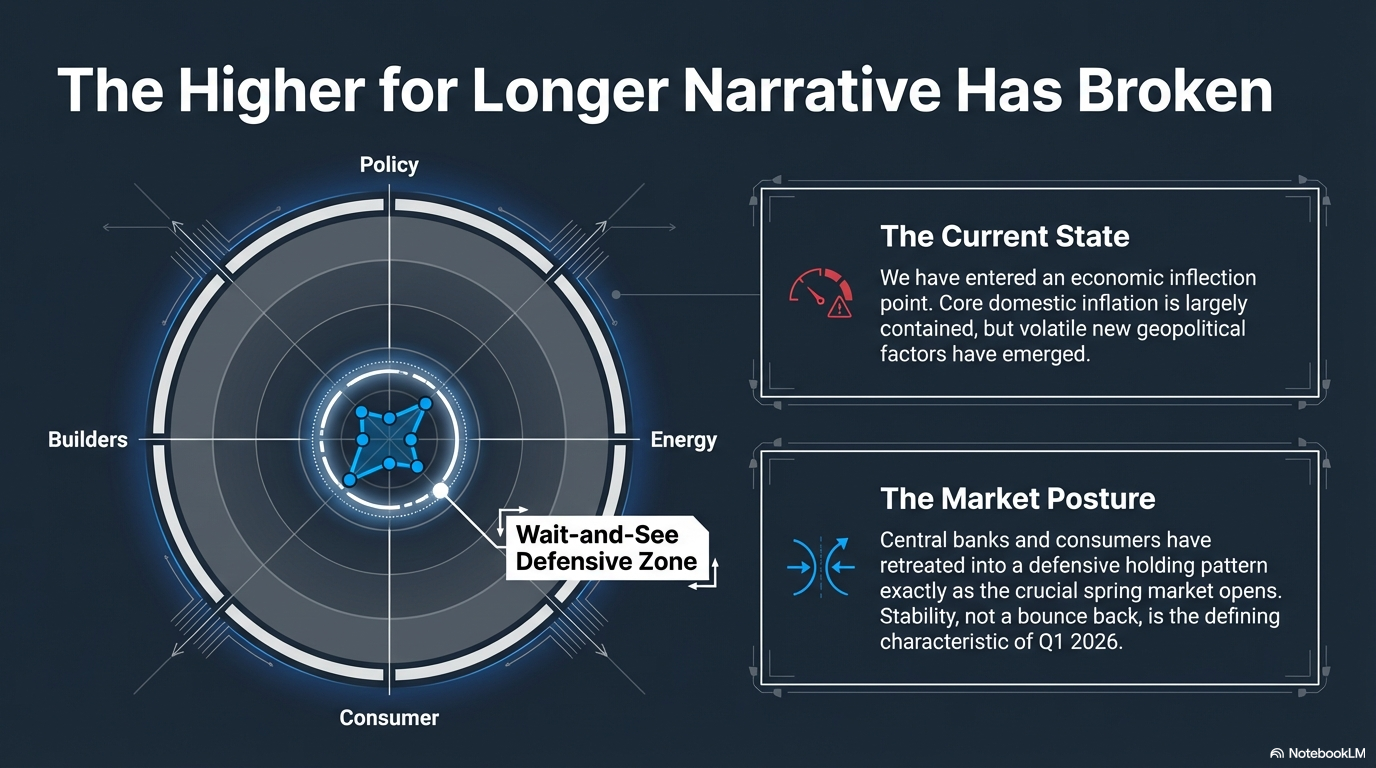
The Bank of Canada isn't holding rates because the economy is in great shape. It's holding because it's caught between two competing forces pulling in opposite directions:

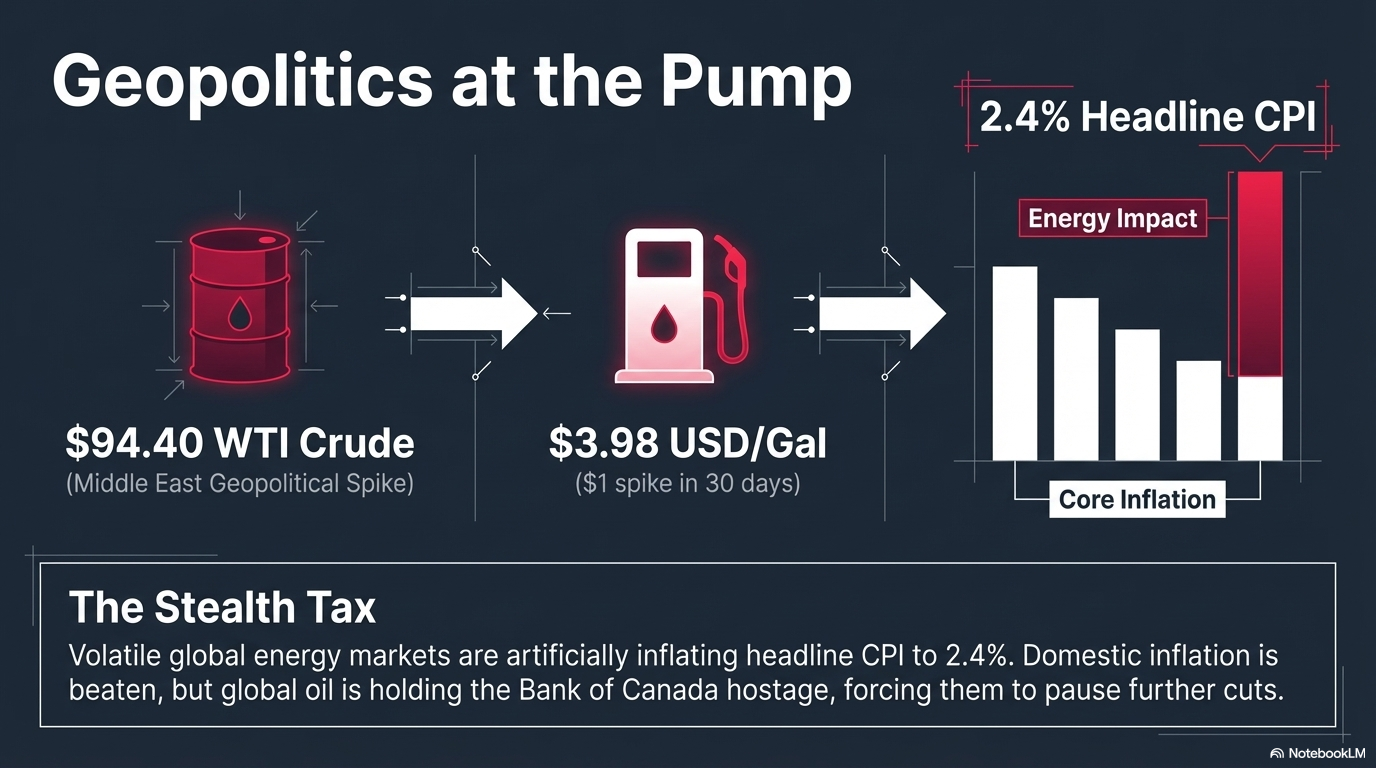
Inflation came in at 2.4% in March — up sharply from 1.8% in February — and the Bank is already warning it could climb to around 3% in April. Much of that pressure is coming from energy costs tied to the ongoing conflict in the Middle East, which has disrupted supply chains and pushed oil prices higher. At the same time, U.S. tariff uncertainty is weighing on Canadian exports and business investment, acting as a brake on growth. GDP is forecast at just 1.2% for 2026 — cautious, not confident.

Cut rates, and you risk feeding inflation further. Hike rates, and you risk choking an already fragile recovery. So the Bank sits still — and watches.

A Reuters poll of 41 economists found 100% expected today's hold, and 80% believe rates won't move for the rest of 2026. But a minority are pricing in two quarter-point hikes — possibly in September and December — if inflation proves stickier than the Bank expects.

The Renewal Wave: The Real Story Behind Today's Decision

Here's what makes this particular rate hold so consequential: approximately 60% of all outstanding Canadian mortgages are renewing in 2025 or 2026. In 2026 alone, roughly 1.2 million fixed-rate mortgages — representing over $300 billion in debt — are hitting renewal.

These are homeowners who locked in when the overnight rate was near zero and 5-year fixed rates sat between 1.5% and 2.5%. They are now renewing into a world where the best available 5-year fixed rate is 4.04% through a broker, or 4.29% at a major bank. The lowest 5-year variable is around 3.35%.

The financial impact, what analysts are calling "payment shock", breaks down roughly like this: the majority of 5-year fixed renewers will see monthly payments rise by an average of 20%. For a $750,000 mortgage, that's an additional $400–$600 every single month. The hardest-hit 10% of borrowers will see payments jump by more than 40%. The silver lining belongs to variable-rate holders, who may actually see a modest 5–7% decrease.


What This Means for GTA Sellers

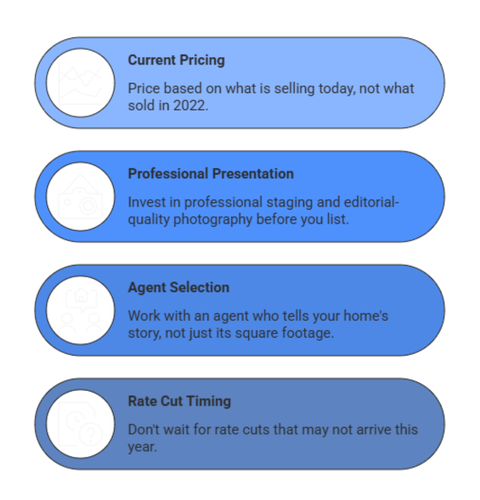
The rate hold is a quiet opportunity — but only for sellers who treat it that way.

Stable rates give buyers a clearer picture of what they can afford. The "what if rates spike again?" anxiety fades, and fence-sitters begin to move. That's good for sellers. What's less good: inventory has been building steadily in the GTA through early 2026, giving buyers more choices and more leverage than they've had in years.

In this environment, the homes that sell — and sell well — are not the ones that are simply listed. They are the ones that are curated, priced with precision, and presented as a lifestyle rather than a property. The renewal wave is also quietly adding supply: homeowners who can't absorb a $500/month payment increase at renewal are starting to list. Your competition is growing.

The sellers who will win in this market are those who come in prepared and presented. Not those who "test the water" with an aspirational price and hope the market comes to meet them.

The seller's checklist right now:


What This Means for GTA Buyers

Today's hold is quietly good news for buyers — even if it doesn't feel that way yet.

Rate stability means your pre-approval holds its value. You can model your payments with confidence. And the inventory that has accumulated in the GTA gives you something that was almost impossible to find two years ago: genuine choice and real negotiating power.

Variable rates deserve serious consideration right now. At 3.35% for a 5-year variable, buyers comfortable with some flexibility are accessing meaningfully lower payments than fixed-rate options — and if the Bank holds through the year as most economists expect, that advantage compounds.

The window is real, but it's not guaranteed to stay open. If inflation persists and the Bank does move in the fall, the affordability equation shifts again. Buyers who act in Q2 and Q3 2026 are buying into relative clarity. Buyers who wait for the "perfect" rate may find the window has closed.

This is the market where you negotiate conditions, price, and closing terms. Use it.


What This Means for GTA Investors

Investors need to run the numbers — honestly — before making any move.

The renewal math is brutal for properties financed at pandemic-era rates. A rental that cash-flowed at 2% needs to be stress-tested at 4%+. If it doesn't work on paper today, holding and hoping isn't a strategy.

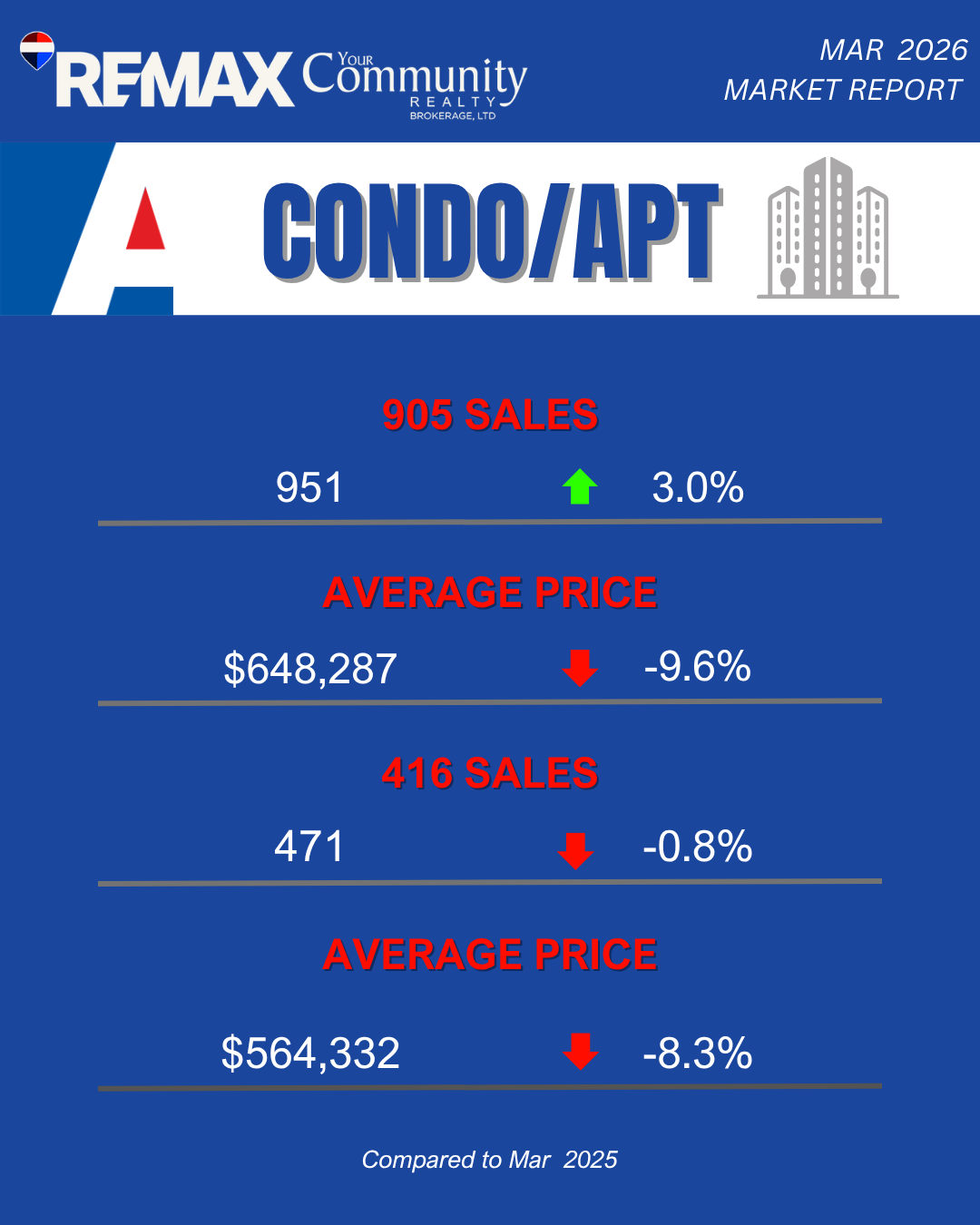
The condo market in the GTA deserves particular scrutiny. TD Economics has flagged it as facing continued headwinds — oversupply, softening rents in some pockets, and price stagnation. If your exit strategy was "sell into a rising market," it's time to reassess whether that market exists right now for condos.

Where genuine opportunity lies: the renewal wave is creating motivated sellers — homeowners who need to transact, not those who simply want to. Freehold properties in established GTA neighbourhoods continue to hold value better than the condo segment. Investors with dry powder and patience are entering the best buying environment in years.

The long-term case for GTA real estate — population growth, immigration, chronic undersupply — hasn't changed. But short-term decisions need to be made on current data, not long-term faith.


The Bottom Line

The Bank of Canada's decision to hold at 2.25% is not a green light or a red flag. It's a pause — a moment of unusual clarity in an otherwise volatile economic picture.

For the GTA real estate market, the real story isn't the rate decision itself. It's what's happening beneath it: a massive renewal wave is quietly forcing decisions, adding inventory, shifting buyer calculus, and creating opportunities for those who are paying attention.

The sellers who read this market correctly will price with discipline and present with intention. The buyers who read it correctly will act with confidence rather than waiting for a rate that may never arrive. The investors who read it correctly will make decisions rooted in today's numbers — not yesterday's optimism.

If you want to understand exactly what today's announcement means for your specific situation — whether you're listing, buying, or stress-testing a portfolio — I'm here.

Ali Bolourchi | The Visionary Curator | info@ali.realtor

Sources: Bank of Canada, TD Economics, CMHC, BNN Bloomberg, Nesto, RBC, Reuters

Read

The Ontario Investor's Guide to Rent-to-Own:

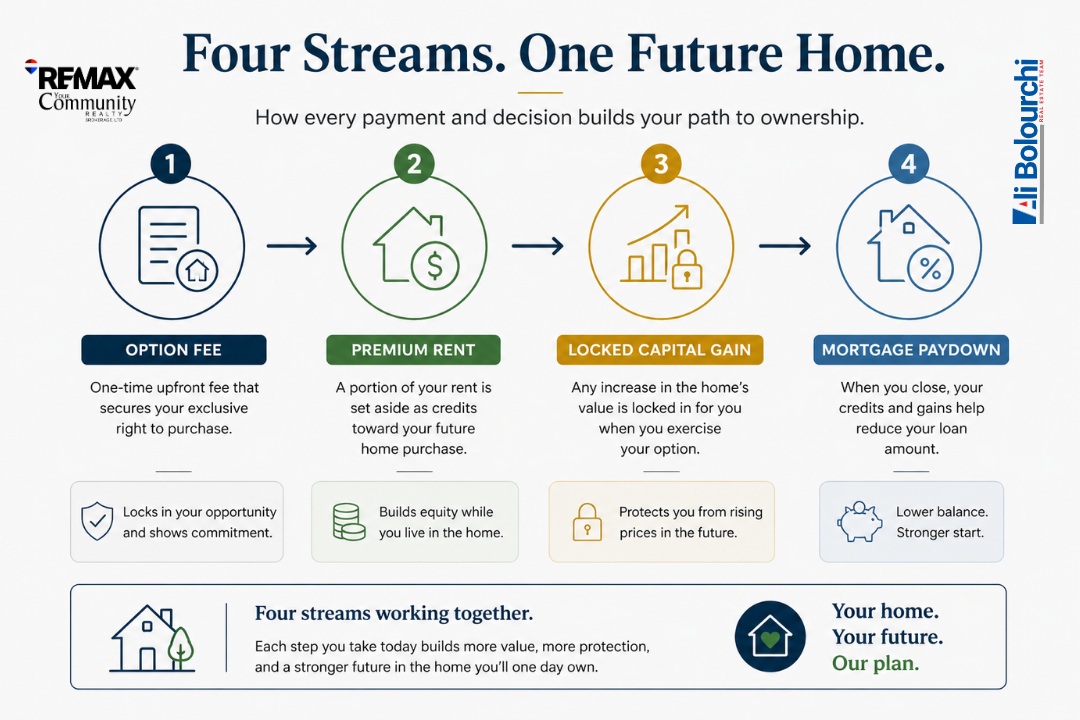
Four Revenue Streams from One Property in 2026

By Ali Bolourchi, RE/MAX Your Community Realty Brokerage
Published April 2026 · 12-minute read · For accredited and general real estate investors

Traditional Ontario landlording is being squeezed from both sides: carrying costs up 24–29% since 2022, rents up only 12–15%, and RTA eviction timelines stretching 12–18 months. Rent-to-Own offers a fundamentally different investor model — one where your property generates option income, premium rent, a locked capital gain, and motivated tenant care, all at the same time.

This guide explains exactly how Ontario investors profit from Rent-to-Own (RTO), with three fully worked scenarios across Hamilton, Kitchener-Waterloo, and Barrie — all based on current 2026 market data — plus the legal documents, risk framework, and tenant selection criteria you need to structure deals that actually close.

Important: Every RTO transaction is unique and subject to Ontario's Mortgages Act, Residential Tenancies Act, and REBBA. All scenarios are illustrative. Always retain independent legal and financial advice before entering any RTO agreement.

Why Traditional Ontario Landlording Is Under Pressure in 2026

The numbers tell a stark story for Ontario's traditional buy-and-hold landlords. Toronto's gross rental yield sits at approximately 5.8% — but after deducting maintenance, property management, insurance, and taxes, net yields collapse to the 3–4% range. With 5-year fixed mortgage rates still hovering near 5–5.5%, many landlords are cash-flow negative from day one.

Challenge

Traditional Landlord

RTO Investor

Monthly cash flow

Often −$300 to −$800

Near-neutral to positive (premium rent)

Upfront capital return

None — equity only

Option Fee (3–5%) collected day one

Tenant motivation

Renters — may not invest in home

Tenant-Buyers — treating it as their own

Maintenance burden

Full landlord responsibility

Shared — tenant-buyer has skin in the game

RTA eviction risk

Full exposure — 12–18 months

Lower risk — motivated buyers rarely default

Exit timeline

Uncertain — market dependent

Defined — option expiry is the exit date

Profit if market rises

Appreciation only at sale

Locked gain + option fee + premium rent

Profit if tenant leaves

Re-tenanting costs, vacancy

Keep option fee, re-let or re-RTO property

Ontario's active listings stood 35.5% above the five-year average as of March 2026, and secondary markets like Hamilton (−8.6% YoY), Kitchener (−5.0% YoY), and Barrie are firmly in buyer's market territory. That combination — motivated sellers, corrected prices, and a large pool of renters who want to own but cannot yet qualify — creates ideal conditions for the RTO investor model.

The Investor's Four Revenue Streams from a Single RTO Property

Stream 1 — The Option Fee (Day-One Return)

The tenant-buyer pays you a non-refundable Option Fee — typically 3–5% of the agreed purchase price — on the day they sign. This money is yours immediately. If the tenant exercises the option and buys, it is credited toward their down payment (reducing your final proceeds by that amount). If they walk away, you keep the entire fee with no obligation to refund it. On a $669,900 RTO price, a 3% option fee = $20,100 in your account on Day 1.

In practice: $20,100 on a $669,900 RTO deal — collected before the tenant moves in

Stream 2 — Premium Monthly Rent (Cash Flow)

RTO tenants pay above-market rent because they are buying time and locking in a future purchase price. A portion of the premium is credited back to them monthly (building their down payment), while the remainder is pure income to you. In a Hamilton RTO at $2,800/month versus market rent of $2,200: $300/month goes back to the tenant as a credit, and $300/month is your pure premium income — $10,800 over three years — on top of the base rent.

In practice: $300–$450/month pure premium income above the rent credit obligation

Stream 3 — The Locked-In Capital Gain

You set the RTO sale price today at a premium above your purchase price — locking in your future capital gain before the market recovers. Buying in a corrected secondary market and setting an RTO price 6–8% above your purchase cost crystalizes a profit that is agreed to in writing, regardless of what the market does between now and the option exercise date. This is the inverse of traditional landlording, where your exit price is unknown.

In practice: 6–8% premium above purchase price = $40,000–$60,000 locked gain (depending on market)

Stream 4 — Mortgage Paydown by the Tenant's Rent

Every month that the tenant pays rent, a portion of your mortgage is paid down by their payments. Over a 3-year (36-month) RTO term, a $500,000 mortgage at 5.5% will see approximately $25,000–$28,000 in principal reduction — equity that is yours whether the tenant buys or not. Combined with the other three streams, the RTO structure extracts maximum value from a holding period that traditional landlords treat as a waiting game.

In practice: ~$25,000–$28,000 in principal reduction over a 3-year term on a $500K mortgage

Three Fully Worked Investor Scenarios — 2026 Secondary Markets

The following scenarios use current market data (ali.realtor, OREA, Zumper, April 2026). All figures are illustrative and for educational purposes only. Actual returns depend on financing terms, market conditions, and individual negotiation.

SCENARIO A · HAMILTON, ONTARIO

Hamilton 3-Bedroom Townhouse — Entry-Level Investor Play

Hamilton is Ontario's deepest-corrected secondary market in 2026, with townhouse prices down 11.1% YoY to $607,500. Investors who buy now and lock in RTO sale prices at a 6–8% premium are capturing today's discount while selling at tomorrow's normalized value. GO Transit connects Hamilton to Union Station in under 70 minutes, sustaining strong tenant-buyer demand from GTA professionals.

Deal Structure at a Glance

Parameter

Value

Notes

Investor purchase price

$629,900

Today's corrected market value

Down payment (25%)

$157,475

Investor's cash-in

Mortgage

$472,425

5.5%, 25-yr amortization

Monthly carrying cost

~$3,350/mo

Mortgage + tax + insurance

RTO locked sale price

$669,900

6.3% above purchase

Option Fee (3% of RTO price)

$20,100

Non-refundable, collected Day 1

Market rent (3-bed Hamilton)

~$2,200/mo

Current average

Monthly RTO rent charged

$2,800/mo

$600 above market

Monthly rent credit to tenant

$300/mo

Applied to their down payment

Investor's pure rent premium

$300/mo

$600 − $300 credit

RTO term

3 Years

36 months

If Tenant-Buyer Exercises the Option (Best Case)

Revenue / Cost Component

Amount

How Calculated

Locked capital gain

+$40,000

$669,900 − $629,900

Pure rent premium (36 months)

+$10,800

36 × $300/mo

Less: monthly cash flow deficit

−$19,800

36 × −$550/mo shortfall

Mortgage principal paid down

+$26,500

Approx. over 3 years

Net investor profit (before tax)

+$57,500

All streams combined

Return on $157,475 invested

36.5%

~10.9% annualized

If Tenant-Buyer Walks Away (Fallback Case)

Revenue / Cost Component

Amount

Notes

Option Fee kept (non-refundable)

+$20,100

Yours regardless

Less: monthly cash flow deficit

−$19,800

36 × −$550/mo

Mortgage principal paid down

+$26,500

Equity retained in asset

Net position (before tax)

+$26,800

Plus any market appreciation

Plus: property still held

Re-RTO ready

New option fee cycle begins

Investor note: Hamilton represents the lowest risk-adjusted entry due to the deepest correction and strong GO Transit fundamentals.

SCENARIO B · KITCHENER-WATERLOO, ONTARIO

Kitchener-Waterloo 3-Bedroom Semi-Detached — Tech Sector Stability Play

The Waterloo Region's employment base — Google, Shopify, BlackBerry, two universities — creates a deep pool of well-employed renters who are 12–24 months from mortgage qualification. Home prices corrected 5.0% YoY to $733,258 but fundamentals remain strong. This is the ideal tenant-buyer profile: stable income, improving credit, committed to staying in the region long-term.

Deal Structure at a Glance

Parameter

Value

Notes

Investor purchase price

$699,900

Today's corrected market

Down payment (25%)

$174,975

Investor's cash-in

Mortgage

$524,925

5.5%, 25-yr amortization

Monthly carrying cost

~$3,600/mo

Mortgage + tax + insurance

RTO locked sale price

$749,900

7.1% above purchase

Option Fee (3% of RTO price)

$22,500

Non-refundable, collected Day 1

Market rent (3-bed KW semi)

~$2,400/mo

Current average

Monthly RTO rent charged

$3,000/mo

$600 above market

Monthly rent credit to tenant

$400/mo

Applied to their down payment

Investor's pure rent premium

$200/mo

$600 − $400 credit

RTO term

3 Years

36 months

If Tenant-Buyer Exercises the Option (Best Case)

Revenue / Cost Component

Amount

How Calculated

Locked capital gain

+$50,000

$749,900 − $699,900

Pure rent premium (36 months)

+$7,200

36 × $200/mo

Less: monthly cash flow deficit

−$21,600

36 × −$600/mo shortfall

Mortgage principal paid down

+$29,000

Approx. over 3 years

Net investor profit (before tax)

+$64,600

All streams combined

Return on $174,975 invested

36.9%

~11.0% annualized

If Tenant-Buyer Walks Away (Fallback Case)

Revenue / Cost Component

Amount

Notes

Option Fee kept (non-refundable)

+$22,500

Yours regardless

Less: monthly cash flow deficit

−$21,600

36 × −$600/mo

Mortgage principal paid down

+$29,000

Equity retained

Net position (before tax)

+$29,900

Plus any market appreciation

Plus: property still held

Re-RTO ready

Strong re-let demand in KW

Investor note: The Waterloo Region's institutional employment base means tenant-buyers here have the strongest mortgage qualification trajectory of the three scenarios.

SCENARIO C · BARRIE, ONTARIO

Barrie 3-Bedroom Detached Home — RE/MAX 2026 Top Growth Market Play

RE/MAX's 2026 Canadian Housing Outlook projects Barrie home sales to increase 10% — the largest forecasted jump of any Ontario market. GO Train service from Barrie to Union Station enables hybrid commuting, and the city's growing tech and healthcare employment base supports premium RTO rent. Investors who buy now and lock in an RTO sale price have the widest margin for appreciation upside of the three markets.

Deal Structure at a Glance

Parameter

Value

Notes

Investor purchase price

$749,900

Detached in Barrie, Apr 2026

Down payment (25%)

$187,475

Investor's cash-in

Mortgage

$562,425

5.5%, 25-yr amortization

Monthly carrying cost

~$3,750/mo

Mortgage + tax + insurance

RTO locked sale price

$809,900

8.0% above purchase

Option Fee (3% of RTO price)

$24,300

Non-refundable, collected Day 1

Market rent (3-bed Barrie det.)

~$2,200/mo

Current Barrie average

Monthly RTO rent charged

$3,250/mo

$1,050 above market

Monthly rent credit to tenant

$550/mo

Applied to their down payment

Investor's pure rent premium

$500/mo

$1,050 − $550 credit

RTO term

3 Years

36 months

If Tenant-Buyer Exercises the Option (Best Case)

Revenue / Cost Component

Amount

How Calculated

Locked capital gain

+$60,000

$809,900 − $749,900

Pure rent premium (36 months)

+$18,000

36 × $500/mo

Less: monthly cash flow deficit

−$18,000

36 × −$500/mo shortfall

Mortgage principal paid down

+$31,000

Approx. over 3 years

Net investor profit (before tax)

+$91,000

All streams combined

Return on $187,475 invested

48.5%

~14.0% annualized

If Tenant-Buyer Walks Away (Fallback Case)

Revenue / Cost Component

Amount

Notes

Option Fee kept (non-refundable)

+$24,300

Yours regardless

Less: monthly cash flow deficit

−$18,000

36 × −$500/mo

Mortgage principal paid down

+$31,000

Equity retained

Net position (before tax)

+$37,300

Plus projected Barrie appreciation

Plus: property still held

Re-RTO ready

RE/MAX projects +10% Barrie sales

Investor note: Barrie carries the highest upside but also the highest risk — it depends on the 10% sales growth projection materializing. Best for investors with a 5–7 year horizon who can absorb a re-let if the tenant walks.

Three Markets, Side by Side — Investor Return Comparison

Metric

Hamilton

Kitchener-Waterloo

Barrie

Investor Purchase Price

$629,900

$699,900

$749,900

RTO Locked Sale Price

$669,900

$749,900

$809,900

Option Fee (Day 1)

$20,100

$22,500

$24,300

Monthly RTO Rent

$2,800

$3,000

$3,250

Monthly Pure Premium

$300

$200

$500

Monthly Cash Flow

−$550

−$600

−$500

If Exercised: Net Profit

+$57,500

+$64,600

+$91,000

If Exercised: 3-yr Return

36.5%

36.9%

48.5%

If Exercised: Annualized

~10.9%

~11.0%

~14.0%

If Walked: Net Position

+$26,800

+$29,900

+$37,300

Best For

Value/safety

Tech buyers

Growth upside

Risk Level

Lower

Lower-Medium

Medium-Higher

All return figures are before income tax, capital gains tax, and transaction costs (legal fees, land transfer tax at purchase, etc.). Consult a qualified accountant and lawyer before making investment decisions.

Five Risks Every RTO Investor Must Manage

Risk 1: Tenant-Buyer Cannot Qualify for a Mortgage at Term End

This is the most common failure point. The tenant walks because they never fixed their credit or income. Mitigation: Before signing any RTO agreement, have the tenant-buyer assessed by a mortgage broker. Get a written outline of exactly what they need to qualify — credit score target, income documentation, down payment threshold — and build those milestones into the lease as check-in conditions.

Risk 2: Market Depreciation Makes the RTO Price Unacceptable to the Tenant

If the market falls significantly during the term, a tenant-buyer may walk because they can buy the same home cheaper elsewhere. You keep the option fee, but re-marketing takes time. Mitigation: Buy in markets with strong employment and GO Transit fundamentals. Avoid niche rural markets where re-letting is difficult.

Risk 3: Ontario's Mortgages Act May Classify Your RTO as a Mortgage

Certain RTO structures in Ontario can be deemed mortgages under the Mortgages Act, triggering disclosure obligations and potentially requiring a mortgage broker licence. Mitigation: This is non-negotiable — engage a qualified Ontario real estate lawyer before structuring any RTO deal. The legal cost ($1,500–$2,500) is minimal compared to the risk.

Risk 4: Ontario RTA Protections Apply During the Lease Phase

Your tenant-buyer is also a tenant, and Ontario's Residential Tenancies Act fully applies. If they stop paying rent, you cannot simply evict them — you go through the LTB, which averages 12–18 months. Mitigation: Screen rigorously. The option fee creates strong incentive to stay current. Also include clear lease terms with immediate notice for non-payment.

Risk 5: Market Appreciation Exceeds Your Locked RTO Price

If the market surges during the term, the tenant buys at the locked price and you leave appreciation money on the table. This is the "good problem" risk — you still profit as planned, you just miss additional upside. Mitigation: Set the RTO price at a meaningful premium (7–10%) above your purchase price to capture a reasonable share of expected appreciation.

How to Find and Screen Your Ideal Tenant-Buyer

The quality of your tenant-buyer determines almost everything. The ideal candidate is someone who genuinely wants to own their home, has a realistic path to mortgage qualification in 2–3 years, and has the financial discipline to maintain both the property and their savings plan.

The Ideal Tenant-Buyer Profile

·         Credit score: 640–720 today, targeting 720+ at option exercise

·         Employment: Stable T4 employment — ideally 2+ years with the same employer

·         Income: Household income sufficient to qualify at stress-test rates (typically $130K–$175K for these scenarios)

·         Self-employed: At least 1 year of clean NOA history, ideally 2 — improving year over year

·         Option Fee: Has 3–5% of the purchase price saved — this proves financial discipline

·         Motivation: Has specific reasons for not qualifying today — credit repair, new employment, immigration history — with a clear plan to resolve each

·         Mortgage broker: Willing to engage a mortgage broker before signing for a pre-assessment

Red Flags to Avoid

·         Cannot explain specifically why they don't qualify for a mortgage today

·        Unwilling to have their finances reviewed by a mortgage broker before signing

·         Option Fee comes from a loan or borrowed money rather than savings

·         History of multiple short-term rentals (6 months or less) — signals volatility

·         Vague about employment — self-employed with no NOA history

·         Asking for more than 5% rent credit — may indicate they cannot save independently

Where to Find Tenant-Buyers

Partner with the Ali Bolourchi Real Estate Team at ali.realtor — we actively market RTO listings to motivated buyers across The Golden Horseshoe, GTA, Hamilton, Kitchener-Waterloo, Barrie, Oshawa, Guelph, and London. Our network of mortgage brokers can pre-screen candidates before you commit to any agreement.

·         List the property on MLS as "Lease with Option to Purchase" or "Rent-to-Own"

·         Market through mortgage brokers who work with pre-qualification clients

·         Community boards, newcomer networks, and employer housing assistance programs

·         Social media campaigns targeting first-time buyers and self-employed professionals in your target city

The Investor's Legal Toolkit: OREA-Aligned Clauses

The following are educational clause drafts only. Every RTO investment agreement must be reviewed by a qualified Ontario real estate lawyer before signing. These clauses are adapted to protect investors while remaining compliant with Ontario's Residential Tenancies Act and Mortgages Act.

OPTION TO PURCHASE (Investor/Seller Version):

In consideration of the Option Fee of [AMOUNT IN WORDS] [$AMOUNT] Dollars paid by the Tenant/Buyer to the Landlord/Seller (the "Investor"), receipt of which is hereby acknowledged, the Investor hereby grants to the Tenant/Buyer the exclusive and irrevocable option to purchase the property municipally known as [PROPERTY ADDRESS], in the [City], Ontario (the "Property"), for the fixed purchase price of [PRICE IN WORDS] [$PRICE] Dollars (the "Option Price"). This option shall expire at 9:59 p.m. on the last day of the [TERM]-month lease term (the "Option Expiry Date"). Written notice of exercise must be delivered to the Investor no later than 9:59 p.m. on the Option Expiry Date. The Option Fee is NON-REFUNDABLE in all circumstances, including but not limited to the Tenant/Buyer's failure to obtain mortgage financing or failure to exercise this option within the stated time. Upon exercise, the parties shall execute a formal Agreement of Purchase and Sale incorporating standard OREA terms at the Option Price stated herein. The Investor makes no representations regarding the Property's market value at the time of exercise. The Tenant/Buyer acknowledges that independent legal advice has been recommended.

RENT CREDIT (Investor Protection Version):

The Parties agree that of the monthly rent of [TOTAL RENT IN WORDS] [$RENT] Dollars per month, the sum of [CREDIT IN WORDS] [$CREDIT] Dollars per month (the "Rent Credit") shall be accumulated by the Investor and applied solely toward the Option Price at closing, provided the Tenant/Buyer validly exercises the Option to Purchase within the time stated herein. Rent Credits shall: (a) not be paid to the Tenant/Buyer in cash under any circumstances; (b) not bear interest; (c) be forfeited in their entirety if the option is not exercised by the Option Expiry Date or if the Tenant/Buyer is in default under the Lease at the time of exercise; and (d) not reduce the Tenant/Buyer's monthly rent obligation during the term. The Tenant/Buyer acknowledges that Rent Credits do not constitute a security deposit or any form of refundable amount under the Ontario Residential Tenancies Act.

CONDITION — FINANCING (At Exercise of Option, Investor Version):

This Offer is conditional upon the Buyer arranging, at the Buyer's own expense, a new Charge/Mortgage for not less than [MORTGAGE IN WORDS] [$AMOUNT] Dollars, bearing interest at a rate of not more than [RATE]% per annum, calculated semi-annually not in advance, repayable in blended monthly payments, to run for a term of not less than Five [5] years from the date of completion. Unless the Buyer gives notice in writing to the Seller not later than 9:59 p.m. on the Tenth [10th] day following acceptance of this Offer that this condition is fulfilled, this Offer shall be null and void. In the event this condition is not fulfilled, the Option Fee and all accumulated Rent Credits shall be retained by the Seller as agreed liquidated damages, and shall not be refunded to the Buyer. This condition is included for the benefit of the Buyer and may be waived at the Buyer's sole option by notice in writing to the Seller within the time period stated herein.

Your First RTO Deal: A Step-by-Step Action Plan

Step 1  Engage Your REALTOR

Partner with the Ali Bolourchi Real Estate Team to identify corrected secondary market properties in Hamilton, Kitchener, Barrie, Oshawa, or Guelph that are positioned for RTO. We'll run the acquisition numbers and help you set the optimal RTO price and option fee.

Step 2  Engage an Ontario Real Estate Lawyer

Before any offer is made, retain a lawyer who understands both the RTA and Mortgages Act implications of RTO structures. Budget $1,500–$2,500 for the initial document review and $1,500–$2,500 at closing.

Step 3  Acquire the Property

Buy in a corrected secondary market at today's buyer-friendly prices. Negotiate hard — sellers are motivated, days-on-market are elevated, and your unconditional-ready financing position gives you leverage.

Step 4  Find and Screen Your Tenant-Buyer

Market the property as an RTO opportunity through your REALTOR, mortgage broker network, and targeted social media. Have every serious candidate pre-assessed by a mortgage broker before you proceed to documentation.

Step 5  Execute Both Agreements

Sign the Lease and the Option to Purchase simultaneously. Collect the Option Fee on signing. Have your lawyer register a notice of the option agreement on title. Begin the 36-month clock.

Step 6  Manage the Term

Check in quarterly with your tenant-buyer on their mortgage qualification progress. Connect them with your mortgage broker at the 18-month mark for a mid-term assessment. Motivated buyers who are on track become even more motivated — protecting your exit.

Step 7  Close or Reset

At term end, either close the sale and collect your locked capital gain, or retain the option fee, re-assess the property, and structure a new RTO agreement with a fresh tenant-buyer at updated market terms.

Ready to Build Your RTO Investment Portfolio?

The Ali Bolourchi Real Estate Team at RE/MAX Your Community Realty has the market expertise, investor network, and legal referral connections to help you structure profitable RTO deals across Ontario's best secondary markets. We've helped investors in Hamilton, Kitchener, Barrie, Oshawa, Guelph, and London identify corrected-market opportunities, negotiate RTO terms, and connect with qualified tenant-buyers — turning underperforming landlord situations into premium-yielding, defined-exit investment strategies.

Book your Investor RTO Strategy Session at ali.realtor

RE/MAX Your Community Realty Brokerage*

*Each office independently owned and operated
Important Disclaimer
All market data in this article is sourced from ali.realtor, OREA, nesto.ca, Zumper, RE/MAX Canada Housing Outlook 2026, Canadian Real Estate Magazine, and Canada.ca as of March–April 2026. All return calculations, deal scenarios, and clause language are for educational and illustrative purposes only. They do not constitute legal, financial, tax, or investment advice. Real estate investment involves significant risk, including the possible loss of invested capital. Ontario's Residential Tenancies Act, Mortgages Act, and Income Tax Act impose obligations that vary based on individual circumstances. You must retain independent legal counsel from a qualified Ontario real estate lawyer and consult a licensed financial advisor and accountant before entering any Rent-to-Own investment agreement. The Ali Bolourchi Real Estate Team at RE/MAX Your Community Realty Brokerage, Ltd is not a law firm and does not provide legal, tax, or investment advice.

Read

Rent-to-Own in Ontario's Secondary Markets: Your 2026 Roadmap to Homeownership

By Ali Bolourchi, Broker with RE/MAX Your Community Realty, Brokerage *
Published April 2026 · 10-minute read

Owning a home in Ontario feels further away than ever — unless you know where to look and how to structure the deal. Rent-to-Own (RTO) in the province's secondary markets is one of the most underused pathways to homeownership, and 2026's buyer-friendly conditions make it the best entry window in years.

With the average Ontario home price sitting at $811,868 as of March 2026 — and secondary markets like Hamilton, Kitchener-Waterloo, Barrie, Guelph, Oshawa, and London offering homes for $150,000–$300,000 less — the gap between renting and owning has never been easier to bridge with the right agreement.

This guide walks you through exactly how Rent-to-Own works, which Ontario secondary markets offer the best opportunities right now, and what realistic numbers look like — complete with market comparison tables, three real deal scenarios, and the legal clauses that protect you at every step.

Why Ontario's Secondary Markets Are the Smart Play in 2026

The GTA's average home price of $1,026,449 (Central Ontario, March 2026) remains stubbornly out of reach for most first-time buyers. But one hour away, a different picture emerges:

[ IMAGE: Map graphic — Ontario showing GTA vs. secondary market cities with price labels (Hamilton $721K, Kitchener $733K, Oshawa $690K, Barrie $699K, Guelph $735K, London $627K) ]

Ontario Secondary Market Snapshot — March/April 2026

Sources: WOWA.ca, OREA, nesto.ca, Zumper, Blue Anchor PM (April 2026)

City / Region

Avg Home Price

Avg Townhouse

Avg Monthly Rent

YoY Price Change

Market Condition

Hamilton

$721,075

$607,500

$2,115

8.6%

Buyer's Market

Kitchener-Waterloo

$733,258

$620,000

$1,895

5.0%

Buyer's Market

London

$627,112

$560,000

$1,700

2.5%

Balanced

Oshawa / Durham

$690,000

$635,000

$1,899

4.2%

Buyer's Market

Guelph

$735,000

$650,000

$2,145

3.8%

Balanced

Barrie / Simcoe

$699,000

$625,000

$2,050

4.5%

Buyer's Market

GTA (for comparison)

$1,026,449

$900,000+

$2,800+

6.9%

Buyer's Market

The data tells a clear story: secondary markets have corrected significantly from their 2022 peaks, inventory is elevated, and sellers are motivated. That combination — falling prices, longer days on market, and cautious sellers — is exactly when Rent-to-Own agreements are easiest to negotiate.

  • 35.5% above the five-year averageActive listings in Ontario are

  • $607,500 — nearly half the GTA townhouse priceHamilton townhouses average

  • $627,112 averageLondon is Ontario's most affordable major market at

  • GO Transit expansion and remote work have made secondary markets genuinely liveable for GTA commuters

How Rent-to-Own Works: A Plain-English Explainer

A Rent-to-Own agreement combines two legal documents into one homeownership pathway:

Step 1 The Lease Agreement

A standard residential lease governing your monthly rent, maintenance responsibilities, and the term (usually Two [2] to Three [3] years). Under Ontario's Residential Tenancies Act, your rights as a tenant are fully protected during this phase.

Step 2 The Option to Purchase

A separate contract — signed at the same time — giving you the exclusive, irrevocable right to buy the property at a price locked in TODAY, before a specific deadline. You pay an Option Fee upfront (typically 3–5% of the purchase price) that is credited to your down payment if you exercise the option.

Step 3 Monthly Rent Credits

Each month, a pre-agreed portion of your rent (typically $200–$600) is designated as a "Rent Credit" and accumulates toward your down payment. Over Three [3] years, this can add up to $7,200–$21,600 in credited savings.

Step 4 Exercise the Option

Before the option expiry deadline (at 9:59 p.m. on the agreed date), you deliver written notice to the seller and execute a formal Agreement of Purchase and Sale (APS) using all standard OREA forms.

Step 5 Close with Your Mortgage

Your accumulated Option Fee, Rent Credits, and personal savings combine into your down payment. Your lawyer handles title transfer, Land Transfer Tax (first-time buyers may qualify for up to $4,000 rebate), and mortgage registration.

Three Real Scenarios: Secondary Markets, Real Numbers

The following scenarios are based on current 2025–2026 market data. All numbers are illustrative — actual terms must be negotiated for each property and reviewed by a qualified Ontario real estate lawyer.

SECONDARY MARKET SPOTLIGHT · HAMILTON

Scenario A — Hamilton 3-Bedroom Townhouse

Hamilton is Ontario's best-value secondary market in 2026. Townhouse prices dropped 11.1% year-over-year to $607,500, making it the most negotiable RTO market in the Golden Horseshoe. GO Transit connects Hamilton to Union Station in under 70 minutes.

Deal Structure at a Glance

Parameter

Value

Notes

Agreed Purchase Price

$629,900

Locked at signing

Option Fee (3%)

$18,900

Applied to down payment

Market Rent (3-bed town)

~$2,200

Current Hamilton average

Monthly RTO Rent

$2,500

Market + $300 credit

Monthly Rent Credit

$300

Credited each month

Term

2 Years

24 months

Total Rent Credits

$7,200

24 × $300

How the Down Payment Adds Up

Component

Amount

Option Fee applied

$18,900

Rent Credits (24 mo.)

$7,200

Personal savings goal

~$24,900 ($1,038/mo)

Target Down Payment

$51,000 (~8.1%)

Mortgage at closing

$578,900

Qualifying income required: ~$130,000–$140,000 household (stress test at ~7.25%)

SECONDARY MARKET SPOTLIGHT · KITCHENER-WATERLOO

Scenario B — Kitchener-Waterloo 3-Bedroom Semi-Detached

The Waterloo Region's tech sector draws young professionals from across Canada. Home prices are correcting (down 5.0% YoY) while the area's fundamentals — Google, BlackBerry, the University of Waterloo — remain strong. Ideal for buyers who want a foothold before prices recover.

Deal Structure at a Glance

Parameter

Value

Notes

Agreed Purchase Price

$699,900

Locked at signing

Option Fee (3%)

$21,000

Applied to down payment

Market Rent (3-bed semi)

~$2,400

Current KW average

Monthly RTO Rent

$2,800

Market + $400 credit

Monthly Rent Credit

$400

Credited each month

Term

3 Years

36 months

Total Rent Credits

$14,400

36 × $400

How the Down Payment Adds Up

Component

Amount

Option Fee applied

$21,000

Rent Credits (36 mo.)

$14,400

Personal savings goal

~$26,500 ($736/mo)

Target Down Payment

$61,900 (~8.8%)

Mortgage at closing

$638,000

Qualifying income required: ~$145,000–$160,000 household (stress test at ~7.25%)

SECONDARY MARKET SPOTLIGHT · BARRIE

Scenario C — Barrie 3-Bedroom Detached Home

Barrie is RE/MAX's top-predicted market for sales growth in 2026 (+10%). GO Train service from Barrie to Union Station makes it viable for hybrid workers. Detached homes remain accessible at under $700K — a property type that is nearly impossible at this price in the GTA.

Deal Structure at a Glance

Parameter

Value

Notes

Agreed Purchase Price

$749,900

Locked at signing

Option Fee (4%)

$30,000

Applied to down payment

Market Rent (3-bed det.)

~$2,200

Current Barrie average

Monthly RTO Rent

$2,750

Market + $550 credit

Monthly Rent Credit

$550

Credited each month

Term

3 Years

36 months

Total Rent Credits

$19,800

36 × $550

How the Down Payment Adds Up

Component

Amount

Option Fee applied

$30,000

Rent Credits (36 mo.)

$19,800

Personal savings goal

~$20,200 ($561/mo)

Target Down Payment

$70,000 (~9.3%)

Mortgage at closing

$679,900

Qualifying income required: ~$155,000–$170,000 household (stress test at ~7.25%)

Side-by-Side: Which Secondary Market Is Right for You?

City

Purchase Price

RTO Monthly Rent

Rent Credit/mo

GO Transit?

Best For

Hamilton

$629,900

$2,500

$300

Yes — 70 min

Families, value seekers

Kitchener-Waterloo

$699,900

$2,800

$400

Yes — 90 min

Tech workers, young professionals

Barrie

$749,900

$2,750

$550

Yes — 90 min

Hybrid workers, detached homes

Oshawa / Whitby

$649,900

$2,400

$350

Yes — 60 min

GTA commuters, families

Guelph

$699,900

$2,650

$400

Yes — 75 min

University families, stable market

London

$599,900

$2,200

$300

No (VIA Rail)

Maximum affordability, remote workers

The Legal Framework: Key OREA-Aligned Clauses

Every Rent-to-Own agreement in Ontario has two core documents. The following are educational drafting examples only — all clauses must be adapted and reviewed by a qualified Ontario real estate lawyer before signing.

OPTION TO PURCHASE:

In consideration of the Option Fee of [AMOUNT IN WORDS] [$AMOUNT] Dollars paid by the Tenant/Buyer to the Landlord/Seller, the Landlord/Seller hereby grants to the Tenant/Buyer the exclusive and irrevocable option to purchase the property municipally known as [PROPERTY ADDRESS], in the [City], Ontario, for the purchase price of [PRICE IN WORDS] [$PRICE] Dollars, on the terms to be set out in a formal Agreement of Purchase and Sale. This option must be exercised by written notice delivered to the Landlord/Seller no later than 9:59 p.m. on the last day of the [TERM]-month lease term. If not exercised within the time stated herein, this option shall be null and void and the Option Fee shall be retained by the Landlord/Seller as agreed liquidated damages.

RENT CREDIT AND INTEREST:

The Parties agree that of the monthly rent of [TOTAL RENT IN WORDS] [RENT]Dollarspermonth,thesumof[CREDITINWORDS][RENT] Dollars per month, the sum of [CREDIT IN WORDS] [ RENT]Dollarspermonth,thesumof[CREDITINWORDS][CREDIT] Dollars per month (the "Rent Credit") shall be accumulated by the Landlord/Seller and held on behalf of the Tenant/Buyer. The accumulated Rent Credits shall bear interest at the rate of [AGREED RATE, e.g., Two [2.5%]] percent per annum, calculated annually, commencing on the first anniversary of the lease commencement date. All accumulated Rent Credits, together with accrued interest thereon, shall be applied toward the purchase price upon the Tenant/Buyer's valid exercise of the Option to Purchase. In the event the Tenant/Buyer does not exercise the Option to Purchase within the time stated herein, the accumulated Rent Credits and all accrued interest thereon shall be forfeited and retained by the Landlord/Seller as agreed liquidated damages, unless otherwise agreed in writing by both parties.

The Landlord/Seller shall also pay to the Tenant/Buyer interest on the Last Month's Rent deposit at the rate prescribed annually by the Ontario Rent Increase Guideline, currently [2.1%] for 2026, in accordance with section 106(6) of the Residential Tenancies Act, 2006. Such interest shall be paid or credited to the Tenant/Buyer within twelve [12] months of the anniversary of the tenancy commencement date.

Is Rent-to-Own Right for You? A Quick Checklist

Rent-to-Own works best when several of the following are true for you:

Good candidates for RTO:

  • You have an Option Fee (3–5% of purchase price) saved or accessible today

  • Your credit needs 12–24 more months of clean history to qualify for a prime mortgage

  • You are self-employed or have income that is difficult to document now, but will be clear in 2–3 years

  • You want to lock in today's corrected price before the market recovers

  • You have found a secondary market where you genuinely want to live long-term

  • You can afford the RTO monthly rent (typically 10–20% above market) while also saving monthly

  • You have or plan to open a First Home Savings Account (FHSA) — up to $8,000/year tax-free

RTO may not be the right fit if:

  • You cannot afford to lose the Option Fee if circumstances change

  • You need to move cities in the next 1–2 years for work

  • Your income is very unlikely to qualify for a mortgage at the end of the term

  • The seller will not agree to have a qualified real estate lawyer review the agreement

Frequently Asked Questions

Q: What happens if I can't get a mortgage at the end of the term?

If you cannot exercise the option, you lose your Option Fee and accumulated Rent Credits. The seller keeps them as agreed compensation. This is why qualifying for a mortgage must be the goal from Day 1 — get a preliminary assessment from a mortgage broker within the first 6 months of your RTO term.

Q: Can the seller sell the property to someone else during my RTO term?

No. Your registered Option to Purchase creates an encumbrance on title that prevents the seller from conveying the property to a third party. Your lawyer will register a notice of the option agreement on title as part of the closing process.

Q: Are Rent Credits taxable?

Rent Credits are generally not considered income because they are applied to a future purchase price, not received as cash. However, you should confirm the tax treatment with a qualified accountant given your specific circumstances.

Q: Does Ontario's Residential Tenancies Act (RTA) apply to RTO agreements?

Yes. During the lease phase, you are a tenant and your standard tenant rights apply — including annual rent increase limits (2.5% for 2025/2026) and protections against unlawful eviction. This is actually a strength of Ontario RTO agreements compared to other provinces.

Q: What if I want to buy the property before the term ends?

Your Option Agreement should include an early exercise clause allowing you to purchase before the deadline at the same locked-in price. Negotiate this upfront and have it clearly documented by your lawyer.

Q: How much does a lawyer cost for an RTO in Ontario?

Expect $1,500–$2,500 for legal fees at the initial signing, and another $1,500–$2,500 at the closing. These are among the most important dollars you will spend in the process — do not skip independent legal review of either document.

Ready to Explore Rent-to-Own in Ontario's Secondary Markets?

The Ali Bolourchi Real Estate Team at RE/MAX Your Community Realty has helped buyers across the GTA and Ontario's secondary markets structure creative purchase solutions — including Rent-to-Own agreements — that are professionally negotiated, OREA-compliant, and built around your timeline.

Whether you're eyeing Hamilton, Kitchener, Barrie, Oshawa, Guelph, or London, we can help you:

  • Identify motivated sellers open to RTO terms in your target market

  • Negotiate the purchase price and option structure on your behalf

  • Refer you to a qualified Ontario real estate lawyer for document review

  • Build a 24–36 month mortgage qualification plan alongside your mortgage broker

  • Connect you with the First Home Savings Account (FHSA) resources you need to maximize tax savings while you rent

IMPORTANT DISCLAIMER

All market data in this article is sourced from WOWA.ca, OREA, nesto.ca, Zumper, and Zumper as of March–April 2026 and is provided for general informational purposes only. All sample scenarios and clause language are educational templates — they do not constitute legal or financial advice. Every Rent-to-Own transaction is unique. The Ontario Residential Tenancies Act, REBBA 2002, and standard OREA forms impose specific obligations on all parties. You must retain independent legal counsel from a qualified Ontario real estate lawyer before signing any Rent-to-Own agreement. The Ali Bolourchi Real Estate Team at RE/MAX Your Community Realty Brokerage, Ltd is not a law firm and does not provide legal advice.
Read

New property listed in Markham

I have listed a new property at 418 7167 Yonge Street in Markham. See details here

Experience Luxury Living At World On Yonge In This Stunning, Sun-Filled 1+Den Condo Featuring A Functional Open Concept Design And Soaring 9-Foot Ceilings. Stylish Laminate Flooring Flows Throughout This Spacious Unit Where The Versatile Den Can Easily Serve As A Second Bedroom Or Private Home Office. The Modern Kitchen Boasts Granite Countertops, A Ceramic Backsplash, And Premium Stainless Steel Appliances. Relax On Any OF Your Two Balconies And Take In Breathtaking, Unobstructed South-Facing Views. The Primary Bedroom Includes A Large Walk-In Closet For Ample Storage. This Unit Offers Unrivaled Convenience With Direct Indoor Access To The Shops On Yonge, Grocery Stores, And Medical Offices. Residents Enjoy Five-Star Amenities Including A 24-Hour Concierge, Indoor Pool, Gym, And Party Room. Located Steps From TTC And YRT/VIVA Routes With Direct Links To Finch Subway Station. This Incredible Listing Includes One Parking Space And One Larger Locker. Discover The Perfect Blend Of Comfort And Style!

Read

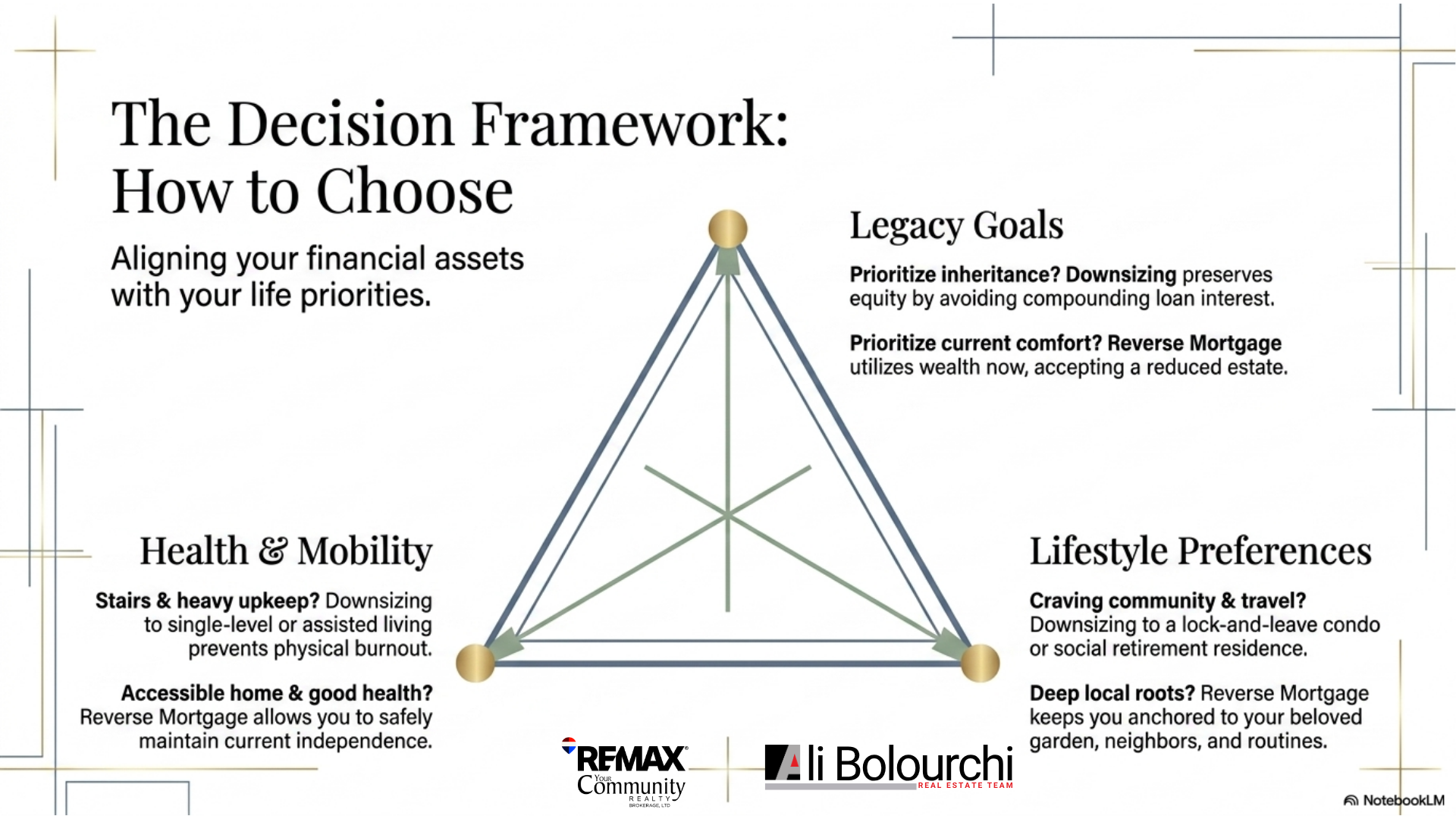
Navigating Retirement Living: Downsizing vs. Reverse Mortgage

For many, the family home eventually shifts from a sanctuary of memories into a logistical and financial burden. This is what we call the "Retirement Pivot", a moment where you must decide if your current home is a platform for future adventures or a museum of your past.

1. The Retirement Pivot: Designing Your Future

The temptation is often to "wait and see," but the data suggests a different path. Strategic early downsizing allows you to seamlessly integrate into a new life chapter while you have the energy to design your routines. Waiting even five years can disrupt established social circles, making a later move feel like an exile rather than an upgrade. In Ontario, where over 50,000 people are currently waiting for Long-Term Care (LTC) spaces, taking control of your housing today is the ultimate gift of independence to your future self. This transition isn't just about square footage; it is about reclaiming your lifestyle and ensuring your home supports, rather than hinders, your independence.

2. Unlocking Your Next Chapter: The Case for Downsizing

Downsizing is an act of reclaiming your time and peace of mind.

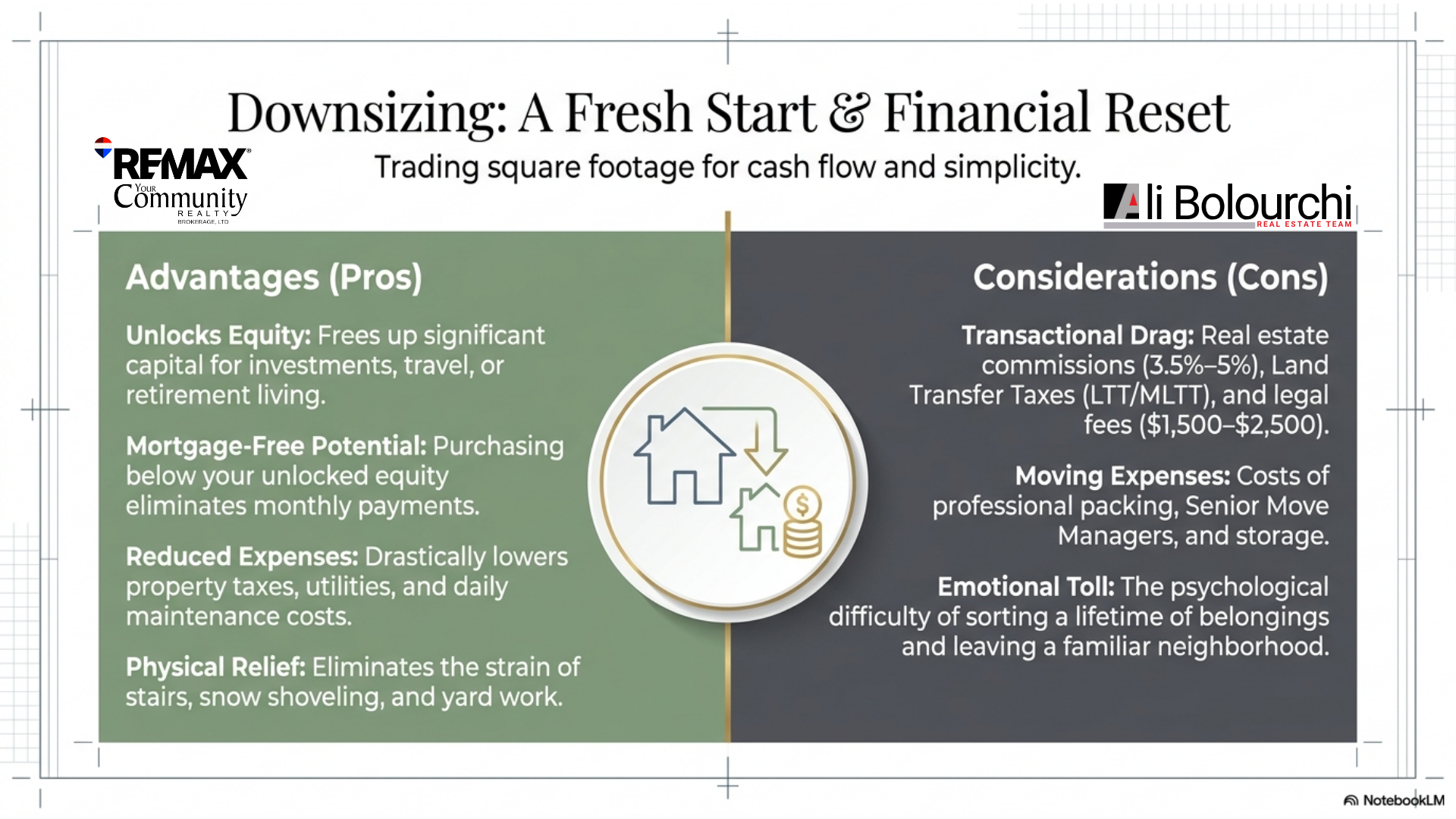
  • Financial Liberation: Selling a larger home allows you to potentially become mortgage-free and significantly increase your monthly cash flow. This freed-up capital can be invested or used to fund travel, hobbies, or family support.

  • Physical & Mental Relief: Moving removes the burden of outdoor chores like lawn care and internal hazards like high-maintenance layouts, allowing you to move from "square footage" to "practicality".

  • The Proactive Social Shift: Moving early lets you build new communities on your own terms. Proximity to hubs like Ontario’s "Seniors Satellites" offers incredible value; for example, in London, memberships are as low as $11.45/year, providing access to programs like "Ageless Grace".

Note: Downsizing involves considerations like "transactional drag"—real estate commissions (typically 3.5%–5%), Land Transfer Taxes, and legal fees ($1,500–$2,500)—plus the emotional challenge of parting with long-held possessions.

3. The Architecture of Aging in Place: Reverse Mortgages

If your emotional roots run too deep to leave, "Aging in Place" is a viable path, provided you navigate the financial landscape with precision.

  • How it Works: A reverse mortgage allows homeowners (typically age 55+) to access up to 55% of their home's market value as tax-free cash without making monthly payments. The loan principal and interest are not repaid until you sell, move out permanently, or pass away.

  • Important Considerations: Interest compounds over the life of the loan, which can rapidly erode equity and significantly diminish the financial inheritance left to heirs. You remain fully responsible for property taxes, homeowners insurance, and ongoing physical maintenance.

  • Provincial Support: Leverage programs like the Ontario Senior Homeowners’ Property Tax Grant (up to $500 annually for eligible seniors) and the Ontario Energy and Property Tax Credit to manage ongoing costs.

4. Evaluation Framework: The Decision Matrix

CategoryDownsizing (The Proactive Move)Staying Put (The Familiar Path)
Legacy GoalsPreserves equity; moves from "stuff" to "liquid assets".Reverse mortgage may reduce equity available for inheritance.
Health & MobilityBuilt for "one-floor living"; ideal for those needing help with daily activities.May utilize the Home and Vehicle Modification Program (up to $15,000) for safety.
LifestyleHigh engagement; lower maintenance; new social circles.Familiarity and solitude, but with ongoing responsibility for repairs.

5. Practical Guide: Evaluating Your Next Home

If you choose to move, look beyond the surface and evaluate the "care capacity" of your next residence:

  • Physical Features: Prioritize single-level layouts, wide doorways, and walk-in showers to ensure future-proofing.

  • Care Standards: Ask about staff-to-resident ratios and the facility’s ability to manage complex medical needs—the average resident now enters care with nearly six health conditions and 11 medications.

  • Regulatory Standing: Ensure the home is in good standing on the Retirement Homes Regulatory Authority (RHRA) public register and demand transparency regarding care vs. accommodation costs.

6. The Strategic Downsizing Checklist

A seamless transition requires technical precision.

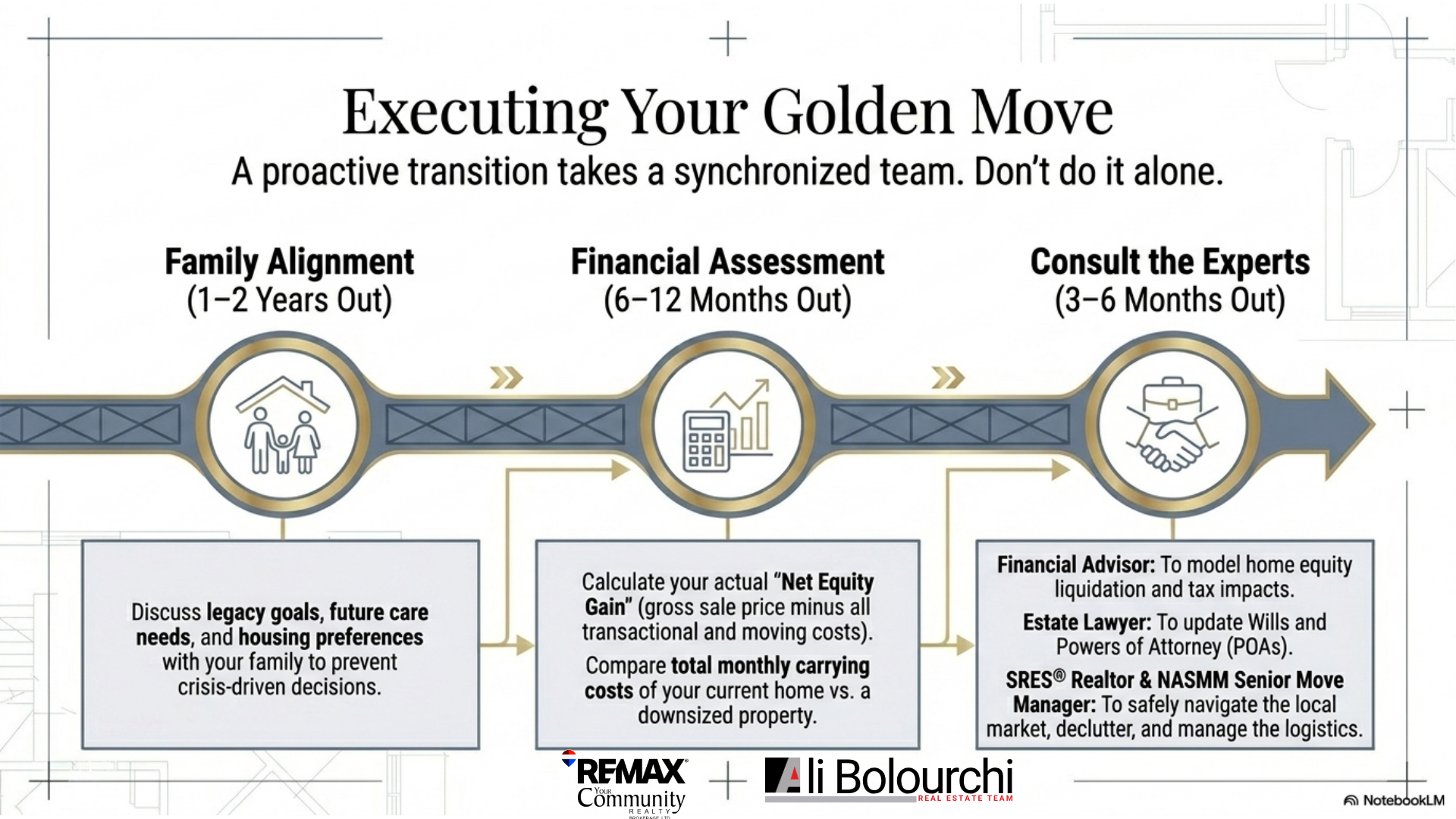
  1. Family Alignment (1–2 Years Out): Discuss legacy goals and future care needs early to prevent crisis-driven decisions.

  2. Financial Assessment (6–12 Months Out): Calculate your "Net Equity Gain" (gross sale price minus all transactional and moving costs) and consult a financial advisor to model tax impacts.

  3. The "Plus 1" Rule: When selling, remember the CRA allows both your old and new properties to be treated as eligible for the Principal Residence Exemption in the year you move, ensuring you aren't penalized for the overlap.

  4. Consult the Experts (3–6 Months Out): Work with an estate lawyer to update Wills/POAs and an SRES® Realtor or Senior Move Manager to handle logistics, decluttering, and emotional support.

Conclusion

Retirement is the most significant design project of your life. Whether you stay in your home or unlock your equity for a fresh start, the decision must be made holistically. Consult with your family and a financial advisor to ensure your legacy goals align with your care preferences, and remember: your home should be the foundation for your future, not a burden that holds you back.

Read

From Crisis to Clarity: The Hidden Grace in Ontario’s Distressed Property Transitions

A home is more than just walls and a roof; it is a sanctuary, while a mortgage represents an agreement of financial balance. But what happens when life throws an unexpected curveball and that equilibrium temporarily shifts?

For many, the mere thought of a distressed real estate situation conjures images of collapse and profound anxiety. However, the reality within Ontario’s legal framework is surprisingly different. These processes are not a crisis, but rather structured, fluid pathways designed to restore balance. By shifting our perspective and understanding the nuanced rhythms of these legal mechanisms, all parties can navigate a change of stewardship with strategy, clarity, and profound dignity.

Let's explore the surprising realities of property transitions in Ontario and how understanding this landscape transforms fear into empowerment.


Defining the Landscape: Finding Equilibrium

When an agreement falls out of balance, Ontario law provides two distinct legal pathways to restore equilibrium. Understanding the mechanics of these two routes is the first step toward finding peace.

  • Power of Sale: This is the most common path utilized in Ontario. In this scenario, the lender acts simply as a guide to sell the property and recover their original funds. Crucially, the homeowner retains the legal title until the sale closes and gets to keep any surplus money left over after the debt is paid. It is designed as a swift transition, typically resolving within 3 to 6 months. However, if the sale does not cover the entire debt, the lender can still pursue the homeowner for the remaining shortfall.

  • Foreclosure: This is a much longer, court-guided path, usually taking 12 to 24 months to resolve. Here, the lender takes full legal ownership and title of the property. Because the lender is forced to assume all the risks of legal ownership, they also get to keep the property itself and any future equity it may hold. In exchange for taking the title, the lender generally forgives any remaining debt the homeowner owes.


The Path of Choice: Efficiency and Logic

You might wonder why a bank wouldn't simply want to take over a home completely. The reality is quite counter-intuitive.

In Ontario, lenders almost universally choose to execute a Power of Sale rather than a Foreclosure. Why? Because a lender's primary goal is not to become a property manager, but simply to recover their original balance and step away gracefully. A Power of Sale allows for:

  • Swift Resolution: It resolves the outstanding debt without being subjected to the prolonged delays of the court system.

  • Shared Fairness: The lender successfully recovers their funds, while the homeowner's right to their hard-earned equity remains protected.

  • Reduced Burden: By not taking title, the lender successfully avoids paying Land Transfer Tax and sidesteps the liabilities that come with legal ownership.

"Information brings peace when circumstances shift... By understanding this landscape, we transform anxiety into clarity, allowing the stewardship of a property to transition with dignity and order."


Navigating the Transition: Empowering Choices

If you find yourself facing a missed payment, the most vital thing to remember is this: a missed payment is not an end. Under Ontario law, homeowners hold a powerful legal tool called the Right of Redemption. This is the legal right to bring things back into balance by paying the arrears and fees, which halts the process entirely. This right remains fiercely open until the exact moment the lender signs a firm agreement to sell the home.

To restore your financial foundation, consider these empowering steps:

  • Step 1: Communicate Early. Speak to your lender immediately, as information is leverage. You may be able to successfully negotiate a temporary payment deferral or add your missed payments to the principal balance.

  • Step 2: Explore Refinancing. Private equity lenders focus on the value of your home rather than just your credit score. Homeowners can often borrow up to 75% of their home's value to clear arrears and pause the legal clock.

  • Step 3: Transition the Sanctuary. Take control by choosing to sell the property on your own terms. A private sale protects your hard-earned equity and avoids the high legal fees associated with a forced lender sale.


The Rhythm of the Process

Fear often stems from the unknown. By mapping out the statutory rhythms of these legal pathways, we can replace panic with measured anticipation.

The Statutory Rhythm of a Power of Sale:

  • Day 1 - The Shift: A payment is missed or a covenant is broken.

  • Day 15 - The Notice: The legal minimum wait ends, and the lender sends a formal Notice of Sale Under Mortgage.

  • Day 50-55 - The Closing Window: The mandatory 35 to 40-day redemption period concludes, allowing the lender to seek a Writ of Possession to prepare the home for new occupants.

  • Resolution - The Listing: The property is listed on the open market at Fair Market Value to recover the debt.

The Measured, Judicial Rhythm of Foreclosure:

  • The Claim: The lender officially issues a Statement of Claim through the court system.

  • The 20-Day Window: The homeowner is granted 20 days to file a Statement of Defence and protect their voice.

  • The 6-Month Redemption: A much longer, court-ordered grace period is established for the homeowner to repay the total debt.

  • Form 64E: The Final Order of Foreclosure is issued, permanently transferring title to the lender and closing the book on the property.


Weighing the Balance: The Lender’s Perspective

To truly understand this ecosystem, one must view it from the lender's scales. While they hold significant power, they are also bound by rigorous legal duties.

The Rewards:

  • Efficiency & Speed: It bypasses prolonged court delays.

  • Lower Capital Output: It results in significantly reduced legal fees compared to a foreclosure.

  • Debt Preservation: The legal right to sue for shortfalls remains intact if the sale falls short of the total debt.

The Responsibilities:

  • Strict Fiduciary Duty: The lender is legally obligated to obtain Fair Market Value and cannot simply sell the home at a steep discount.

  • Surplus Management: The lender must meticulously calculate and return all excess funds directly to the homeowner.

  • Statutory Patience: They are strictly bound by 15-day and 35-day waiting periods before taking action.


Stepping In: Caretaker Insights for the New Buyer

For a buyer, acquiring a transition property is a unique opportunity to breathe new life into a sanctuary, but it requires a deeply mindful approach and a well of patience. You are stepping in to restore, maintain, and cherish the property, allowing the financial system to maintain stability.

However, buyers must navigate specific realities to protect their new investment:

  • The Right of Redemption Risk: Buyers must understand that the original homeowner legally holds their Right of Redemption until the exact moment the Agreement of Purchase and Sale becomes firm and unconditional. Until that ink is truly dry, the home can still be reclaimed.

  • The Reality of "As-Is": In a Power of Sale, the lender makes zero warranties. They do not guarantee the structural integrity, the state of the appliances, or the history of the home. You are buying the sanctuary exactly as it stands.

  • Required Shields: Because of the "As-Is" reality, a rigorous home inspection is absolutely non-negotiable to uncover what the lender cannot tell you. Furthermore, Title Insurance is completely vital to protect your new ownership from unforeseen liens, outstanding taxes, or procedural errors in the sale process.


A Final Thought

A distressed real estate sale is not a collapse; it is a highly regulated, fluid transition of stewardship. By understanding the rules of the landscape, the timelines, and the legal rhythms of Ontario, all parties involved—homeowners, lenders, and new caretakers—can move forward with clarity, strategy, and dignity. (Please note: Real estate law is nuanced; always consult with licensed professionals to navigate your specific circumstances safely.)

When we strip away the fear and look at the underlying structure, we are left with a powerful realization: If the mechanisms of distress are simply tools to restore balance, how might we rethink our approach to financial challenges, transforming them from moments of panic into opportunities for a strategic reset?

Click here to see a list pf th eproperties on the Power-of-Sale, and remember the sooner that owner can get rid of the property the more money they can save. You can check our older blog on Power-of-Sale here!

Read

The $130,000 Pivot: How Federal and Ontario’s New Rebate Frameworks Redefines the GTA Sanctuary

The narrative of the Ontario housing market has long been one of mounting pressure. For years, the dream of a curated home felt like it was drifting further away. But today, the wind has shifted. We are currently navigating a rare "perfect storm": GTA housing prices have softened by roughly 20% from their peak, and now, a historic shift in government tax policy is providing the final push needed to move families and investors from the sidelines into their next chapter.

The core of this opportunity is a massive expansion of GST/HST rebates. By stripping away significant tax barriers, the provincial and federal governments are offering a path to reclaim a staggering amount of capital. This isn't just a discount; it is a direct injection of equity.

The Direct Answer: What has changed?

Effective May 27, 2025, the combined federal and provincial HST rebate for first-time buyers in Ontario has increased from a maximum of $24,000 to a ceiling of $130,000. This includes a 100% rebate on the 5% federal GST (up to $50,000) and the 8% provincial HST (up to $80,000) for homes valued up to $1 million, with a sliding scale for homes up to $1.5 million.


The Six-Figure Strategic Advantage

For the "Visionary Curator," this $130,000 windfall is more than just a number; it is a tool for architectural freedom. This capital allows you to pivot from a "standard" build to a home that truly reflects your lifestyle—upgrading to sustainable materials, better flow, or a more refined finish.

Comparing the Old vs. The New

The difference between the legacy system and the 2025 framework is monumental.

Home Purchase PriceLegacy Rebate (Pre-2025)New Potential Rebate (2025+)Total Equity Gain
$800,000$24,000$104,000+ $80,000
$1,000,000 (The Sweet Spot)$24,000$130,000+ $106,000
$1,250,000 (Sliding Scale)$24,000$77,500+ $53,500
$1,500,000$24,000$24,000Baseline Protected

[Visual Note: A clean, minimalist bar chart titled "The Equity Injection." Use Deep Charcoal for the old rebate and a vibrant Teal for the new rebate to show the massive visual jump in savings.]


Navigating the $1M to $1.5M Strategy

In the GTA, a "starter sanctuary" often flirts with the million-dollar mark. A common misconception is that these benefits vanish at seven figures. In reality, the program uses a "sliding scale."

For homes between $1 million and $1.5 million, the rebate phases out gradually. However, a vital "floor" exists: for homes up to $1.5 million, the provincial portion is designed to never fall below $24,000. This ensures that even in the luxury segment, you are never worse off than under the old rules.

The "Reset" Rule: Reclaiming Your Status

One of the most powerful secrets in the tax code is that "First-Time Home Buyer" status is not a one-time gift; it is a status you can earn back.

If you have not owned and occupied a home in the current calendar year or the four preceding calendar years, the clock has likely reset. If you owned a condo a decade ago but have been renting for the last four years, you are, in the eyes of the CRA, a first-timer again. This allows those re-entering the market to leverage the full $130,000 windfall to rebuild their portfolio.

The Investor’s Edge: Gentle Density & ADUs

For my investor clients and multi-generational families, the backyard is now your greatest asset. The new rebate framework incentivizes "gentle density" by making Accessory Dwelling Units (ADUs)—like garden suites and laneway homes—eligible for significant relief.

  • Primary Residence Rebate: If you build an ADU for yourself or an immediate family member, you can qualify for a rebate of up to $16,080.

  • Rental Investment: Even if the unit is for a tenant, the New Residential Rental Property (NRRP) rebate remains a vital tool for offsetting construction costs.


The Strategist’s Warning: Dates and Deadlines

Timing is everything. To capture this windfall, your Purchase and Sale Agreement must be signed on or after May 27, 2025.

Furthermore, "starting" a project is defined by the excavation (shovels in the ground), not the paperwork. Construction must begin before 2031 and be complete by 2036. If your builder faces municipal delays and fails to dig before the window closes, that six-figure rebate could vanish.


Final Thoughts: Taking Your Seat

The era of $24,000 caps is ending. When you combine this historic tax relief with a cooled market, the barrier to entry has shifted. The question is no longer whether the market is reachable—but whether you are ready to take the seat that has been cleared for you.


For the Social Feed (Short & Punchy)

Headline: The $130,000 Secret Every GTA Buyer Needs to Know 🗝️

Did you know the "First-Time Buyer" status can be reclaimed? If you’ve been renting for 4+ years, you might qualify for Ontario’s massive new $130k rebate—even if you’ve owned before.

The market has dipped 20%, and the government just handed you a six-figure injection of equity. This is the "perfect storm" for the GTA.

The Strategy: Sign after May 27, 2025.

The Reward: Up to $130,000 back in your pocket.

Don't just buy a house. Curate a lifestyle. DM "REBATE" for my breakdown of the 2025 tax shifts. #TheVisionaryCurator #GTARealEstate #OntarioHousing #RealEstateStrategy


The "Visionary" Creative Brief

  • Image Idea: A high-end, minimalist photo of a set of silver keys resting on a deep charcoal marble countertop.

  • Text Overlay: "The $130,000 Windfall: Is Your Status Reset?"

  • Colors: Navy, Silver, and Seafoam accents.


Ali, does this align with your "Visionary Curator" voice, or should we make the opening even more poetic to lean into the Pisces aesthetic?

Follow-up Questions:

  1. Would you like me to create an email template specifically for your "lost leads" (people who stopped looking in 2023) using this new data?

  2. Should I draft a "Rebate Calculator" landing page description to help capture emails?

  3. Do you want a breakdown of which specific GTA neighborhoods currently offer the best "New Construction" value for this rebate?

Read

Market Watch March 2026: Spring Buyers Return as Supply Tightens 🌷

The spring real estate market is officially here, and buyers in the Greater Toronto Area (GTA) are springing into action. After a sluggish winter, we are finally seeing an uptick in activity as households look to take advantage of improved affordability.

According to the latest TRREB data, March 2026 brought 5,039 home sales, representing a 1.7% increase compared to March 2025. However, the most critical storyline is the tightening of supply. New listings dropped sharply by 16.7% year-over-year, with only 14,442 properties entering the market.

The average selling price across the GTA is holding steady at $1,017,796. While this is still down 6.7% compared to last year, TRREB’s Chief Information Officer noted that if market conditions continue to tighten, selling prices could start leveling off through the remainder of 2026. Buyers currently have substantial negotiating power, but with sales rising and new listings falling, that window may not stay open forever.

Here is your deep dive into how the 416 (City of Toronto) and 905 (Suburban GTA) markets performed by property type in March 2026.


🏡 Detached Homes

The detached market remains the powerhouse of GTA real estate, and we are seeing a noticeable surge in suburban activity as buyers stretch their legs (and their dollars) outside the city limits.

  • 416 (Toronto Core)

    • Sales: 574 transactions (Up 1.4% year-over-year).

    • Average Price: $1,613,066 (Down 6.4% year-over-year).

  • 905 (GTA Suburbs)

    • Sales: 1,661 transactions (Up 6.5% year-over-year).

    • Average Price: $1,248,832 (Down 6.1% year-over-year).

The Market Vibe: The 905 is leading the charge in sales growth. With average prices down over 6% in both the 416 and 905, buyers are seizing the opportunity to lock in detached homes at a discount before the market fully rebounds.


🏘️ Semi-Detached Homes

Semi-detached homes are the ultimate "missing middle" housing, but the story this month is all about a severe lack of inventory in the city core.

  • 416 (Toronto Core)

    • Sales: 170 transactions (Down a massive 17.9% year-over-year).

    • Average Price: $1,231,967 (Down 8.0% year-over-year).

  • 905 (GTA Suburbs)

    • Sales: 272 transactions (Up 1.5% year-over-year).

    • Average Price: $868,421 (Down 7.6% year-over-year).

The Market Vibe: The nearly 18% drop in 416 semi-detached sales isn't necessarily a lack of demand—it's a lack of supply. Sellers are holding onto these prized properties. Meanwhile, the 905 continues to offer incredible value, with semis trading well under the $900k mark.


🏙️ Townhouses

Townhomes are experiencing a fascinating shift, with urban buyers fiercely competing for freehold alternatives, while the suburban townhouse market remains a bit softer.

  • 416 (Toronto Core)

    • Sales: 207 transactions (Up a striking 13.1% year-over-year).

    • Average Price: $959,513 (Down just 1.9% year-over-year).

  • 905 (GTA Suburbs)

    • Sales: 669 transactions (Down 5.5% year-over-year).

    • Average Price: $816,463 (Down 8.3% year-over-year).

The Market Vibe: City townhomes are the hottest commodity right now. A 13.1% jump in sales and only a minor 1.9% price dip proves that buyers are targeting these properties heavily. If you own a townhouse in Toronto, you are in an incredibly strong position.


🏢 Condo Apartments

The condo market continues to navigate elevated inventory levels, allowing buyers to negotiate effectively and enter the market at much friendlier price points.

  • 416 (Toronto Core)

    • Sales: 951 transactions (Up 3.0% year-over-year).

    • Average Price: $648,287 (Down 9.6% year-over-year).

  • 905 (GTA Suburbs)

    • Sales: 471 transactions (Down 0.8% year-over-year).

    • Average Price: $564,332 (Down 8.3% year-over-year).

The Market Vibe: With prices down roughly 8% to 10% across the board, the condo segment remains a buyer’s playground. However, the 3% uptick in 416 sales shows that savvy buyers and investors are starting to pull the trigger on these discounted units before prices potentially level off.


Final Thoughts & Recommendations

March 2026 is showing us a market that is slowly finding its footing. The combination of rising sales (+1.7%) and plunging new listings (-16.7%) is a recipe for a tighter market moving deeper into the spring.

For Sellers: Competition between buyers is going to increase if new listings continue to drop. However, buyers still expect value. Strategic pricing, exceptional marketing, and staging are crucial to standing out and securing a firm offer.

For Buyers: You currently have the upper hand when it comes to negotiating power, but you shouldn't get complacent. With sales ticking up and inventory shrinking, the deep discounts we've seen may start to vanish in the coming months.

Want a personalized pricing strategy for your property?

Let’s chat and position your home ahead of the market—not behind it.

📞 Call us at 416-886-2000 or visit gtaluxuryhomes.ca to book a consultation.

Read

The Spring 2026 Forecast: Taming the Economic Winds and the Great Canadian Hesitation

Welcome to the Q1 2026 Market Update.

We are currently navigating an economic inflection point. The narrative of "higher for longer" that dominated 2024 and much of 2025 has been replaced. While the core inflationary threat has been largely contained, new, volatile factors have emerged, particularly in geopolitics and energy, forcing central banks into a defensive "wait-and-see" posture just as the crucial spring market opens.

We have compiled the latest critical indices for the US and Canada. This post moves beyond the surface numbers to analyze the why behind the trends and what you should be looking forward to as we enter the most active real estate and economic quarter of the year.


Section 1: The Central Bank Divergence and Its Impact

We begin with the primary drivers of all market activity: interest rates. While both the Federal Reserve and the Bank of Canada (BoC) are on a path of synchronization (holding rates), a significant divergence in their absolute rate levels has defined the landscape.

Interest Rate Policy Standoff

The single most important visualization of the current economy is the divergence in the target rates of the world’s two most connected economies. While the US economy, bolstered by stronger-than-expected GDP and consistent job growth, has given the Fed room to keep rates elevated (the upper end of the target is 5.00%), the Bank of Canada, facing a much more fragile consumer base and an earlier victory over domestic inflation, has settled into a comfortable rate of 2.25%.

This 250+ basis point gap (between the effective Fed Funds 4.75% and the BoC 2.25%) is intentional, designed by the BoC to support the heavily indebted Canadian household. We visualize this divergence over the past three years.

VISUAL 1: The Central Bank Rate Divergence

Image 1 Analysis: The Divergence Gap. The chart in Image 1 perfectly captures the story. We track the path from early 2023 through March 2026. Note how, after peaking, the Canadian Policy Rate (the dashed red line) has aggressive, descending steps, stabilizing at 2.25%, while the US Fed Funds Rate (solid blue line) remains elevated, creating a widening chasm. This gap is the reason why the USD/CAD exchange rate has pushed to $1.39 (up 1.5% in 30 days), as global capital moves toward higher yields in the US.


Section 2: The Canadian Consumer Squeeze

While the Bank of Canada has aggressively lowered rates, the Canadian consumer is still fighting a historic battle. The stabilization of rates in early 2026 (the "BoC pause") has done little to alleviate the structural debt load.

Debt-to-Income vs. Confidence

Canadian Household Debt-to-Income is at a staggering, all-time high of 177.2%. For every $1 of disposable income, Canadians now owe $1.77. This debt is the anchor on the spring market. This ratio is visualized below alongside Consumer Confidence, which remains at near-historic lows (-3%), a clear signal that households feel overextended.

VISUAL 2: The Canadian Consumer Debt Cliff

Image 2 Analysis: A Strained Household. Image 2 visualizes the data points explicitly. The thick purple line (Debt Ratio) trends up remorselessly, hitting the 177.2% peak, just as the thin orange line (Consumer Confidence) plunges below a neutral midpoint (the horizontal line), flattening near its historical bottom at -3 points. A distressed consumer icon sits at the intersection. This chart explains why the 3% vacancy rate (the renter pivot) is holding: buyers simply cannot qualify, even at lower interest rates.


Section 3: Real Estate Realities and the Builder Standoff

The most significant red flag for the Spring 2026 market, and for the next five years of supply, is the collapse of builder confidence. The Canadian Home Builders' Association (CHBA) indices (0–100 scale, where <50 is "poor") have reached critical lows.

  • Single-Family HMI: 26.4

  • Multi-Family HMI: 14.7 (Record low)

Builders: Pencils Down

Builders are "pencils down" on new projects. Financing costs, regulatory barriers, and soft consumer demand (driven by the debt visualized above) mean very few new foundations are being poured. While the Teranet-National Bank Composite Index (prices) is only down -1.6% year-over-year, the slowdown is happening in new construction, baking a future supply crisis into the market today.

VISUAL 3: The Builder Confidence Collapse

Image 3 Analysis: Supply Shortage Baked In. Image 3 is a multi-part visualization. On the left, two distinct odometers, the CHBA Single-Family (26.4) and the Record-Low Multi-Family (14.7), are deeply stuck in the red "Pencils Down" zone, alongside an abandoned construction crane. On the right, the graphic charts the impact: only a small group of foundations in 2026 (the current slow market) leads to a massive visualized supply shortage (the demand gap, the high-rise in 2028–2030) as population growth outpaces completions. For buyers, this is a clear message: current price softness is temporary.


Section 4: The Commodities/Inflation Threat

We must address the volatile new factor that has complicated the spring market and the central bank narrative: Energy.

WTI Crude: The Price Spike and Its Ripple Effect

The recent geopolitical conflict in the Middle East has driven WTI Crude to a spiked value of $94.40. This energy shock has directly translated to higher costs for consumers. We are seeing Gasoline hit $3.98 USD/Gal (a $1 spike in 30 days in the US) and CA Inflation (CPI) uptick slightly to 2.4% as of March data.

This energy spike acts as a "stealth tax" on consumers and forces the BoC to hold rates at 2.25% to manage headline inflation, even as the rest of the domestic economy is in stagnation.

VISUAL 4: The Energy Price and Inflation Impact

Image 4 Analysis: The Stealth Tax. Image 4 visualizes the energy threat. On the left, a stylized crude barrel ($94.40) and gasoline pump ($3.98/Gal) display large, glowing orange numbers. An arrow connects them to the right-hand column/line chart, which shows "CA Inflation (CPI) with Energy Cost Impact" over a 2023–2026 timeline. A base "Core Inflation" (purple bars, decreasing toward 2%) is visualized. But the real "Headline CPI" line (blue) has a sharp spike in early 2026, labeled 2.4% Uptick, caused entirely by the red stacked segment labeled "Energy Impact."


Section 5: Summary and Conclusion: The Great Hesitation

As the Spring 2026 market begins, "stability, not bounce back" is the mantra. Buyers with high down payments are finding opportunities in a market where the Teranet index shows a slight price correction (-1.6% y/y), but the average Canadian household is simply hesitating. They are staying put until the geopolitical dust settles and the long-forecasted path of significant interest rate cuts (into the 1%–1.5% range) finally arrives.

For investors, the critical data point to watch is the Builder Confidence Multi-Family HMI at 14.7. This is the record low that ensures massive supply imbalances in the coming years. Those with capital today are looking past the "great hesitation" of 2026 and positioning for the next decade.

Read

Strategic Real Estate Reorientation in the Greater Toronto Area: A Comprehensive Analysis of Multi-Unit Asset Conversion, Financial Engineering, and Precision Advisory for the 2026 Fiscal Cycle

The landscape of residential investment within the Greater Toronto Area (GTA) has entered a period of structural transformation as of early 2026. This transition is characterized by a definitive move away from speculative condominium acquisition toward the strategic densification of low-rise residential assets, a phenomenon frequently described in the industry as the return of the "missing middle". As traditional market drivers, such as high-velocity population growth and low interest rates, have reached a point of cyclical moderation, the emergence of as-of-right zoning for multiplexes and the implementation of sophisticated federal financing incentives have created a new paradigm for institutional and private wealth creation. The following analysis examines the economic, regulatory, and financial mechanisms currently shaping the GTA market and provides a strategic framework for the generation of investment-focused content tailored to the contemporary market participant.

The Macroeconomic Context and Segmented Market Performance

The early months of 2026 have revealed a significant divergence between the performance of core Toronto low-rise housing and the broader suburban and high-rise condominium markets. Data from the first quarter of 2026 indicates that while overall home prices remain approximately 7% below 2025 levels, inventory levels have tightened by 11% year-over-year. This tightening of supply, combined with a relative stabilization of interest rates by the Bank of Canada, has established a floor for property values in high-demand segments, particularly those that support intensification.

Market MetricFebruary 2025February 2026Year-over-Year Change
Average Sale Price$1,084,547$1,008,968-7.0%
Total Transactions4,0373,868-4.0%
New Listings12,06610,705-11.0%
Sales-to-New-Listings Ratio (SNLR)33%36%+3.0%

This statistical profile suggests that the market is transitioning from a period of high volatility into a phase of cyclical normalization. The resilience of the semi-detached and detached segments in the 416 area code is particularly noteworthy for strategic investors. These assets serve as the primary inventory for duplex, triplex, and fourplex conversions, maintaining stable demand even as the condominium sector faces a supply overhang and a multi-decade low in pre-construction sales.

The Realignment of the Condominium Sector

The condominium market in the GTA is currently navigating a period of significant readjustment. High inventory levels, coupled with a surge in secondary rental supply from financially stressed owners, have exerted downward pressure on both sale prices and rental rates. In January 2026, the average price for a condominium in the GTA fell 9.8% year-over-year to $604,759. This softening has led many investors to redirect capital away from single-unit condo investments toward multi-family properties where they exercise greater control over the land and the underlying asset.

The collapse of condominium presales in 2025 has created a vacuum in the future housing pipeline, which is expected to exacerbate supply shortages in the long term. Developers have responded by cancelling high-rise projects or converting them into purpose-built rentals, further emphasizing the shift toward income-producing assets over speculative capital gains.

Missing Middle Construction and Regional Performance Divergence

While high-rise starts have faltered, the construction of missing middle housing—defined as small to mid-scale projects between 4 and 20 units—has shown relative strength. In 2025, missing middle starts rose by approximately 10% across major Canadian metropolitan areas. Toronto has emerged as a leader in this category through conversions, which accounted for more than 21% of all missing middle activity in the city during that period.

Metropolitan Area (CMA)Other Missing Middle Starts (%)Conversions as a Percentage of Total Starts
Vancouver17.92.0
Calgary43.512.3
Edmonton49.76.2
Montréal26.85.3
Ottawa35.79.4
Toronto15.521.2
Halifax14.95.8

The high rate of conversions in Toronto reflects the maturity of its urban fabric and the regulatory push to add density within established neighborhoods. These projects are often delivered faster than high-rise towers and appeal to a demographic that prioritizes living in established communities with high walk scores and proximity to local businesses.

Regulatory Evolution: The Six-Plex Framework and As-of-Right Development

The most significant regulatory catalyst for GTA investors in 2026 is the expansion of as-of-right zoning for multiplexes. Toronto has transitioned from a period of exclusionary zoning, which historically prioritized single-family detached homes, to a more permissive framework that allows for up to six units on most residential lots in designated wards.

Zoning and Density Allowances

As of early 2026, Toronto allows for the conversion of existing detached or semi-detached homes into multiplexes of up to four units as-of-right across the city, with permissions for up to six units in nine pilot wards. These pilot areas include the former City of Toronto, East York, and parts of Scarborough North. The regulations permit buildings up to four storeys high with a maximum height of 10.5 meters, facilitating taller basement ceilings and improved natural light for lower-level units.

The framework also permits the addition of accessory dwelling units (ADUs), such as laneway or garden suites. In many cases, an investor can achieve seven units on a single lot by combining a six-unit main building with one garden suite. To qualify as a multiplex, at least one unit must be located entirely or partially above another unit; otherwise, the structure is classified as semi-detached or townhouse housing.

Financial Incentives for Residential Densification

To stimulate the development of these units, the City of Toronto has implemented a waiver of development charges (DCs) for the first six residential units on a property. This represents a substantial reduction in upfront costs, as development charges in the GTA can exceed $120,000 for low-rise units. Furthermore, the city has waived parking minimums for small multiplexes, removing the requirement to provide on-site vehicle parking and allowing for more efficient use of the lot for housing.

The economic feasibility of these projects is further enhanced by the Ontario government's policy of waiving development charges for additional units in existing buildings, provided they do not exceed 1% of the existing unit count or one unit, whichever is greater. These combined municipal and provincial measures have made the conversion of underutilized low-rise housing one of the most financially attractive strategies in the 2026 market.

Financial Engineering: Mastery of the CMHC MLI Select Program

The pivot toward multi-unit investing is inextricably linked to the Canada Mortgage and Housing Corporation (CMHC) MLI Select program. This insurance product has been redesigned in 2025 and 2026 to incentivize the creation of affordable, energy-efficient, and accessible rental housing.

The Points-Based Incentive System

MLI Select utilizes a points-based system to determine eligibility for enhanced financing terms. A project must achieve a minimum of 50 points to qualify, with maximum benefits realized at 100 points or more.

Financing Feature50 Points Tier70 Points Tier100+ Points Tier
Maximum Loan-to-Value (LTV)Up to 95%Up to 95%Up to 95%
Maximum Amortization40 Years45 Years50 Years
Premium Discount10% Discount20% Discount25-30% Discount
Recourse StructureFull RecourseLimited RecourseLimited Recourse

The scoring criteria are divided into three social outcome categories: affordability, energy efficiency, and accessibility. For example, a project can earn 50 points by committing that 10% of its units will be rented at 30% of the median renter income for the region for a minimum of 10 years. Energy efficiency points are awarded for achieving a 20% to 40% reduction in energy consumption relative to the National Energy Code for Buildings (NECB).

Strategic Implications of 50-Year Amortization and Cash Flow

The ability to access 50-year amortizations through MLI Select is a transformative tool for cash-flow optimization. By extending the repayment period, investors can significantly reduce monthly debt service obligations, thereby increasing the property's net operating income (NOI) and overall return on investment.

For instance, on a $5 million project, the difference between a conventional 30-year amortization and a 50-year insured amortization can amount to thousands of dollars in monthly cash flow savings. This leverage allows investors to scale their portfolios more rapidly by reinvesting the surplus cash flow into additional acquisitions.

Mandatory Surety Bonding and Capital Requirements in 2026

A critical update to the MLI Select program in 2025 and 2026 is the non-negotiable requirement for surety bonding on all construction projects. This applies even to owner-operators and small-scale developers who act as their own general contractors. The bonding must typically include a performance bond covering 50% of the contract value and a labor and material payment bond covering another 50%. These requirements ensure that the project will be completed and that subcontractors will be paid, reducing the risk for both the lender and CMHC.

Investors must also be prepared for significant upfront capital requirements. While MLI Select offers up to 95% financing, construction draws are typically paid out in stages. In many cases, an investor must cover approximately one-third of the total project costs in cash before the first draw is released. This necessitates a robust balance sheet and often requires the use of bridge or private financing during the initial construction phase.

The Strategic Real Estate Advisor Persona: Precision and Calculated Confidence

In the 2026 market, the role of the real estate professional has evolved from a transactional agent to a high-level strategic advisor. This model, exemplified by the ABRE Team, emphasizes the use of data-driven industrial engineering principles to optimize financial outcomes for clients.

Industrial Engineering and Market Foresight

The integration of industrial engineering methodologies allows for the precise analysis of the "time value of money" and "process optimization" in real estate transactions. This approach is designed to eliminate the guesswork and emotional paralysis that often hinder investors in complex markets like the GTA. By utilizing an 8-Point Segmented Market Analysis, a strategic advisor can provide precision data specific to a client's street or asset class, rather than relying on broad, often contradictory city-wide statistics.

Empathy-Driven Copywriting and Intent-First Communication

Modern real estate advisory also requires a sophisticated approach to communication. This involves shifting away from traditional sales scripts toward "calculated confidence" and "empathy-driven" messaging. The objective is to speak directly to the target audience's needs and fears—such as the fear of financial regret or the vulnerability caused by market opacity.

Content strategy must align with search intent, focusing on narrow, "winnable" topics that attract qualified prospects. A 9-step SEO system can be utilized to ensure that social posts and blog content are scannable, value-rich, and optimized for both humans and search engines.

Identifying Investor Psychology in the 2026 GTA Market

The contemporary investor profile in the GTA has shifted significantly in response to the volatility of the early 2020s. The ideal customer is now identified as the "Ambitious Mainstream Strategist"—financially stable, budget-conscious individuals between the ages of 28 and 55 who view real estate as their primary vehicle for long-term wealth building.

Core Problems and Internal Motivations

The primary external problem facing these investors is market opacity. They are inundated with contradictory statistics and lack the precise, segmented data needed to take decisive action. Internally, they are driven by a profound fear of financial regret—specifically the fear of buying at the peak of a cycle, selling at a low, or acquiring a flawed asset.

Philosophically, these individuals believe that hard-working people deserve a clear, strategic path to build wealth, but they feel the current market is often "rigged for insiders". They are frustrated by the time wasted on ambiguous news that is not specific to their localized street or asset class.

The Demand for Guidance over Sales

Investors in 2026 no longer respond to the pushy, high-pressure salesperson. While some may mistake aggression for effectiveness, the most successful advisors counter this by delivering "Calculated Confidence" through data. The repetitive question in the market is no longer "How high can this go?" but rather "Is now really the right time to act, or should I wait for the next rate cut?".

The ABRE Team approach addresses this by moving from selling to guiding. This involves simplifying complex processes and data, ensuring that every strategic recommendation is backed by objective economic analysis rather than personal commission-driven urgency.

The Project Lifecycle of a Toronto Multiplex Conversion

To successfully execute the strategies discussed in these blogs, investors must understand the operational realities of the 2026 conversion market. The process is governed by a combination of the Ontario Building Code, municipal by-laws, and federal insurance requirements.

Budgeting and Timelines for Multiplex Development

Successful projects require a rigorous approach to project management. Construction costs, while off their pandemic peaks, remain elevated, requiring precise budgeting for materials and labor.

Project StageEstimated TimeframeCost/Requirement
Zoning Review Application1 Month+$600 - $2,000
Design & Detailed Drawings2 - 4 Months$10,000 - $30,000
Committee of Adjustments3 - 6 Months$5,000+ (If Required)
Building Permits and Fees1 - 2 Months$10,000 - $20,000+
Multiplex Conversion Work3 - 12 Months$40,000+ per unit
New Multiplex Build12 - 24 Months$250 - $400 / sq. ft.
Surety BondingPre-Construction10% of Hard Costs

Technical Compliance: Part 9 of the Building Code

One of the natural advantages of missing middle projects is their ability to utilize "Part 9" construction standards. This streamlined section of the Building Code applies to housing and small buildings, allowing developers to undercut the complex and expensive cost structures required for high-rise towers. To qualify as a multiplex under these rules, each unit must have a private entrance, a kitchen, and a bathroom.

Effective February 16, 2026, all building permit applications in Toronto must utilize an updated "Application for a Permit to Construct or Demolish" form. Drawings must be submitted on standardized sheets, fully dimensioned, and often require the seal of a professional engineer. For renovations of residential units, a "Rental Renovations License" may also be required under Toronto Municipal Code Chapter 662 to protect tenant rights during the conversion process.

Performance Metrics: The Cap Rate Formula

In the multiplex sector, property value is driven primarily by income potential rather than simple comparable sales. Investors utilize the capitalization rate (cap rate) to assess the feasibility of a deal.

In the 2026 Toronto market, smaller multiplex properties typically trade at cap rates between 5.0% and 5.5%. For a turnkey triplex generating $6,000 per month in rent, the resulting income returns are often comparable to much larger, more complex projects but with significantly lower execution risk.

Conclusion: Synthesis of the 2026 Investment Outlook

The research indicates that the Greater Toronto Area real estate market in 2026 is defined by a shift toward resilient, income-producing assets. The return of the missing middle is not merely a trend but a structural response to the failure of the high-rise condominium model to meet the needs of families and long-term investors.

The successful investor in this era is one who moves from guesswork to "Calculated Confidence" by leveraging industrial engineering principles and precision market data. By mastering the CMHC MLI Select program—including its complex points system and mandatory bonding requirements—investors can access unprecedented leverage, such as 95% LTV and 50-year amortizations, to scale their portfolios.

The suggested blog titles provide a roadmap for communicating these high-level strategic insights to a market that is increasingly skeptical of traditional sales tactics. By focusing on intent-first, data-driven content, real estate professionals can position themselves as the necessary guides for the "Ambitious Mainstream Strategist," transforming underutilized residential lots into multi-generational "equity machines".

Read

Market Watch February 2026: Sellers Hold Back as the GTA Market Tightens

The Greater Toronto Area (GTA) real estate market is sending mixed signals this February, but the biggest story isn't about buyers—it’s about sellers.

According to the latest TRREB data, new listings plunged by an enormous 17.7% year-over-year. With only 10,705 new properties hitting the market, supply is tightening. While sales also dipped slightly to 3,868 transactions (down 6.3% from last year), the lack of fresh inventory is keeping the market highly competitive in certain pockets.

The average selling price across the GTA has climbed back over the $1 million mark to $1,008,968. Though this is still down 7.1% compared to February 2025, we are seeing incredible resilience in low-rise city homes, while the condo sector continues to offer deep discounts. TRREB notes there are over 100,000 buyers sitting on the sidelines waiting for the right moment.

Here is your deep dive into how the 416 (City of Toronto) and 905 (Suburban GTA) markets performed by property type in February 2026.


🏡 Detached Homes

Detached homes still make up the lion's share of sales (over 43% of all transactions), but they are seeing some of the sharpest price drops, creating a rare window for move-up buyers.

  • 416 (Toronto Core)

    • Average Price: $1,568,543.

    • Trend: Prices took a noticeable hit, dropping 11.4% year-over-year. Interestingly, sales volume actually increased by 3.6%, proving that when city detached homes are priced to reflect the current market, buyers are eagerly scooping them up.

  • 905 (GTA Suburbs)

    • Average Price: $1,240,467.

    • Trend: Down 7.5% year-over-year.

Insight: If you own a smaller property and have been dreaming of a detached home in the city, the gap has narrowed significantly. The 11.4% discount in the 416 is a massive opportunity that likely won't last once those 100,000 sidelined buyers jump back in.


🏘️ Semi-Detached Homes

Semi-detached homes are the undisputed stars of the February market. As the ultimate "missing middle" property, they offer freehold living at a more accessible price point than detached homes.

  • 416 (Toronto Core)

    • Average Price: $1,229,853.

    • Trend: Down 4.6% year-over-year. Demand here is red-hot; the sales-to-new-listings ratio (SNLR) for 416 semis is sitting at a highly competitive 55%.

  • 905 (GTA Suburbs)

    • Average Price: $864,088.

    • Trend: Down 8.7% year-over-year.

Insight: City semis are absorbing inventory aggressively. If you are selling a semi in the 416, you are in a position of strength. In the 905, buyers are finding incredible value well under the $900k mark.


🏙️ Townhouses

Townhomes continue to be a battleground for buyers who are priced out of the detached market but want to avoid condo fees.

  • 416 (Toronto Core)

    • Average Price: $980,175.

    • Trend: Prices are down 4.6%, but sales volume was actually up 2.7% year-over-year. Just like semis, city townhomes are moving fast.

  • 905 (GTA Suburbs)

    • Average Price: $806,876.

    • Trend: Down 8.2% year-over-year.

Insight: The strong sales activity in the 416 shows that buyers are highly motivated to secure mid-priced urban homes. Suburbs are offering better pricing leverage, but city townhomes remain a highly coveted asset.


🏢 Condo Apartments

The condo market remains the most challenging segment for sellers, but it is an absolute goldmine for buyers right now.

  • 416 (Toronto Core)

    • Average Price: $663,984.

    • Trend: Prices fell 8.1%, and sales volume dropped over 12%. With over 4,500 active listings in the city and only 733 sales, buyers have total control.

  • 905 (GTA Suburbs)

    • Average Price: $549,563.

    • Trend: Down 10.1% year-over-year.

Insight: This is a textbook buyer's market. For renters looking to make the leap into homeownership, or investors looking for long-term holds, the condo market is offering the most affordable entry points we've seen in years. Sellers must be meticulous with staging and aggressive with pricing to stand out in a sea of inventory.


Final Thoughts & Recommendations

February 2026 is a story of tightening supply. With a massive 17.7% drop in new listings, sellers are holding out for better days, but this might be a mistake.

For Sellers: If you have a low-rise home in the 416 (especially a semi or townhome), demand is surprisingly strong. However, if you are selling a condo, you are competing against a backlog of inventory. You need a flawless marketing strategy and realistic pricing from day one.

For Buyers: The clock is ticking. With new listings falling and 100,000 buyers waiting for the right moment, the window to negotiate deep discounts, especially in the condo and detached markets, could close by the second half of the year.

Want a personalized pricing strategy for your property?

Let’s chat and position your home ahead of the market, not behind it.

📞 Call us at 416-886-2000 or visit:
GTALuxuryHomes.ca
The4sale.com
Ali.Realtor 
learn more or book a a complimentary consultation.

Read
This website may only be used by consumers that have a bona fide interest in the purchase, sale, or lease of real estate of the type being offered via the website. The data relating to real estate on this website comes in part from the MLS® Reciprocity program of the PropTx MLS®. The data is deemed reliable but is not guaranteed to be accurate.